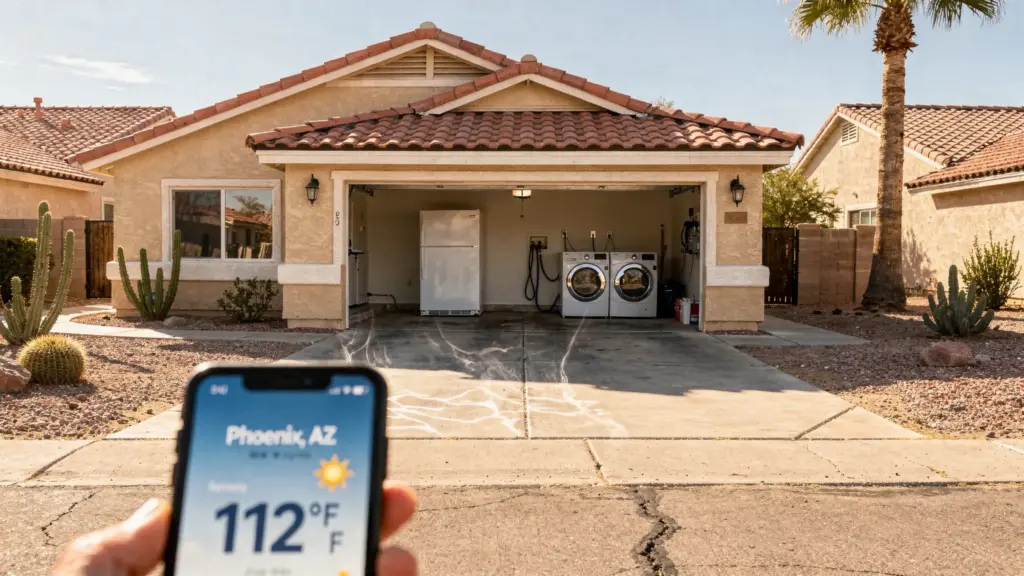
Phoenix heat is brutal on more than your energy bill. When daily temps push past 100°F, appliances run longer, electronics bake inside tight cabinets, and dust and hard water add extra stress. The result is predictable: certain parts fail far more often in the Valley than they might in cooler climates.
This guide breaks down what appliances in Phoenix tend to break first in extreme heat, the early warning signs homeowners can spot, and the practical steps that can prevent a mid-summer emergency.
Why Phoenix heat causes more appliance breakdowns
Heat changes the “normal” workload of an appliance. In Phoenix, three conditions show up again and again in repair calls:
1) Higher ambient temperatures (especially in garages)
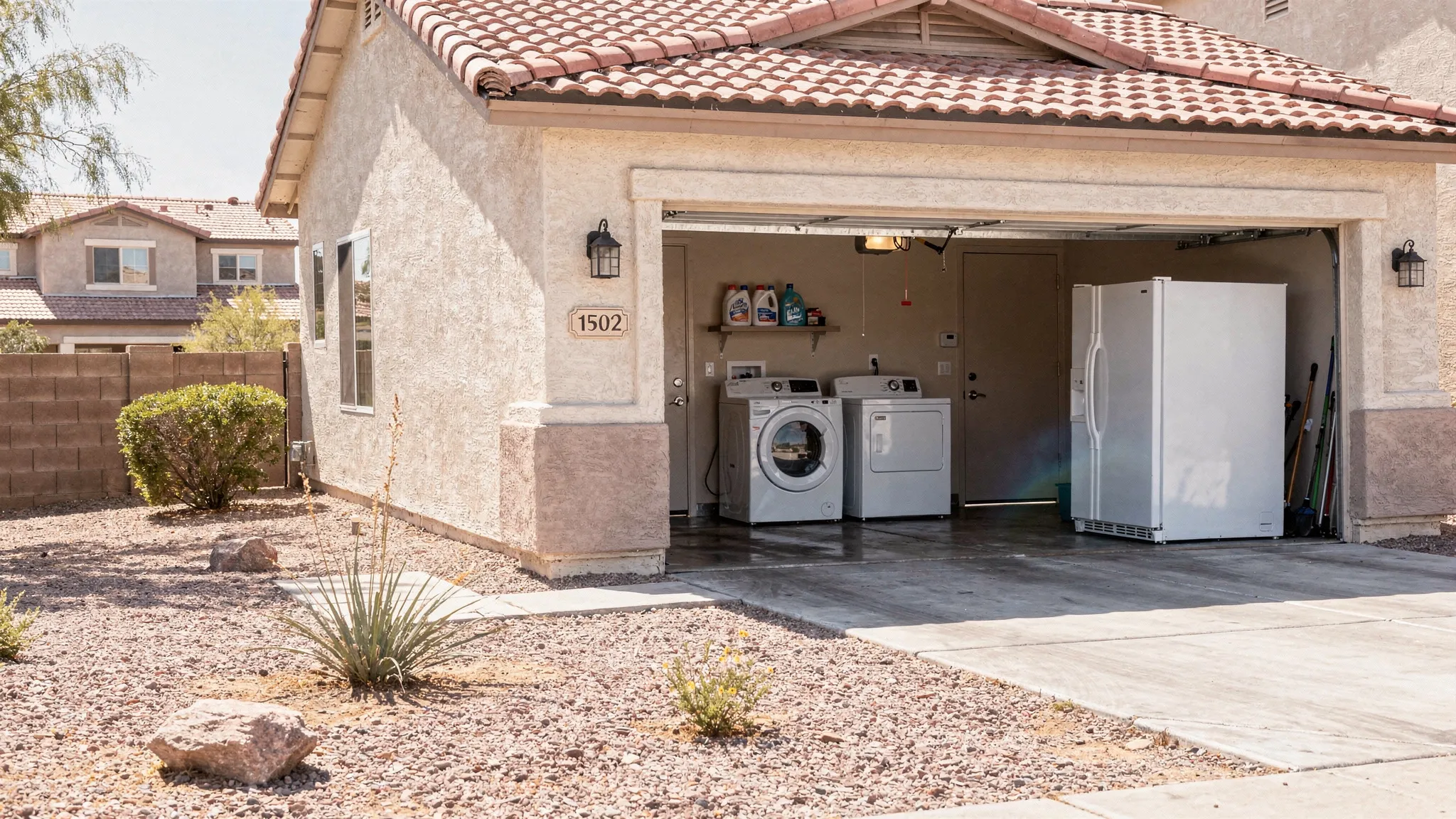
Refrigerators, freezers, and even laundry rooms in garages or poorly ventilated spaces are asked to remove heat from an environment that is already hot. That makes components cycle longer and wear faster.
2) Dust and airflow restrictions
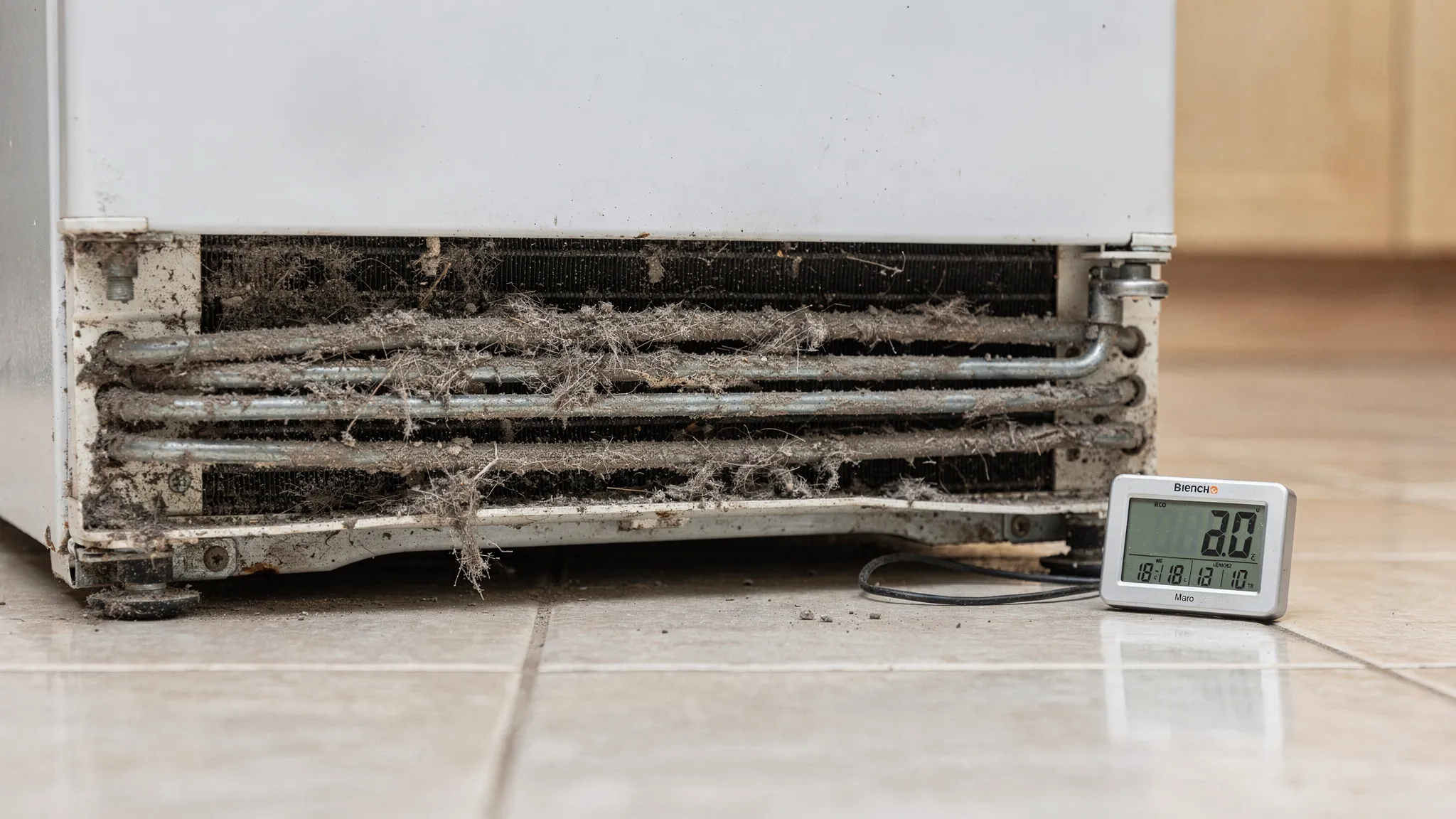
Phoenix dust (plus pet hair and lint) clogs refrigerator condenser coils, dryer vents, and ventilation pathways behind ovens and microwaves. When airflow drops, temperatures rise inside motors and control boards.
3) Hard water and mineral buildup
Minerals can clog inlet screens, valves, sprayers, and pumps, which can trigger errors and slow fills in washers and dishwashers. If you have already dealt with fill errors, our related troubleshooting guide on the Samsung washer 4C error is a good example of how sediment and low flow show up in real homes.
What breaks most often in Phoenix heat (by appliance)
Refrigerators and freezers: the top “heat casualty”
In Phoenix, refrigerators get hit from two directions: high room temperatures and frequent door openings (more warm air and moisture entering the box). The most common heat-related failures include:
- Dirty condenser coils and poor ventilation: This is one of the most common causes of “not cooling enough” calls in summer. When coils are packed with dust, the system cannot shed heat efficiently.
- Condenser fan motor issues: If the fan is weak, noisy, or not spinning, head pressure rises and cooling performance drops.
- Start relay and capacitor failures: High heat and frequent cycling can push these components over the edge, leading to clicking, hard starts, or a compressor that will not stay running.
- Evaporator fan problems: A failed or iced-up evaporator fan can cause warm fridge temps even if the freezer seems “sort of” cold.
- Door gasket leaks: Warm air infiltration increases runtimes and frost buildup.
If you are comparing repair vs replacement, or you want real local pricing context, see our Phoenix-focused guide on refrigerator repair cost in Phoenix and our decision article, Is it worth repairing a refrigerator in Phoenix’s heat?.
Phoenix-specific red flags
A fridge that “kind of cools” in winter can fully fail in summer. Watch for:
- Fridge temp hovering above 40°F
- Freezer soft ice cream or clumping ice
- Loud humming, repeated clicking, or long continuous runs
- Heat blasting from the side walls (some warmth is normal, excessive heat is not)
For food safety, the USDA notes that the “danger zone” begins above 40°F, and perishable food should not sit out too long at unsafe temps. If your refrigerator is warming rapidly, it can become urgent. (Source: USDA FSIS food safety guidance)
Ovens and ranges: seals, igniters, and heat-stressed electronics
It may sound odd to blame Phoenix heat for oven issues, since ovens are designed to get hot. The problem is that ambient heat plus long preheats and poor ventilation can be rough on surrounding components.
Common failures we see homeowners asking about:
- Oven door gasket (seal) drying and cracking: Heat leaks cause longer cook times, temperature swings, and hotter kitchen air.
- Igniters and gas ignition issues: Weak igniters can cause slow ignition, uneven heating, or failure to heat.
- Control boards and touch panels: Electronics generally do not love being baked day after day, especially if the range sits in a tight cutout with minimal airflow.
If you suspect a leaking gasket, our step-by-step guide on oven door seal repair in Phoenix goes deeper without turning this post into a full how-to. For a broader overview of typical fixes, see Can ovens be repaired? Phoenix technicians explain common fixes.
Washers: fill problems, drains, and mineral-related clogs
Washers are not “heat appliances,” but Phoenix conditions still impact them:
- Water inlet issues (slow fill, error codes): Mineral buildup can clog inlet screens and valves.
- Drain pump strain: Sand, lint, and small debris add load, and a partial clog can create intermittent draining problems.
- Hose aging: In hot garages, rubber hoses can age faster.
If you are seeing fill-related symptoms (slow fill, long cycle times, or inlet errors), start with the basics: open valves fully, check for kinked hoses, and clean inlet screens as appropriate.
Dryers: overheating, thermal fuses, and vent restrictions
Dryers in Phoenix often fail because they cannot move air.
- Lint buildup in the vent line raises operating temps and can trip a thermal fuse.
- Blower wheel and motor wear increases if airflow is restricted.
- Moisture sensor misreads can happen when loads are inconsistent, but overheating is the bigger summer risk.
If your laundry room is already warm, a clogged vent can turn “normal dryer heat” into repeated shutdowns.
Dishwashers: hard-water performance problems and leaks
Dishwashers in Phoenix can struggle when minerals and heat team up:
- Clogged filters and spray arms reduce cleaning performance.
- Inlet valve and fill issues can appear in hard-water homes.
- Door gasket wear can lead to small leaks that only show up during longer, hotter cycles.
Quick reference: common Phoenix heat breakdowns
| Appliance | What breaks most in heat | Common symptoms | Safe first check | When to stop and call a pro |
|---|---|---|---|---|
| Refrigerator / freezer | Dirty condenser coils, fan motors, start relay/capacitor, gasket leaks | Warm fridge, soft freezer, clicking, nonstop running | Check temp settings, clear airflow, clean coils (power off), inspect gasket | Burning smell, repeated clicking with no start, rapid warming, suspected sealed-system issue |
| Oven / range | Door seal, igniter, control board | Uneven cooking, long preheat, heat escaping, no ignition | Inspect gasket, verify burner ignition behavior, check breaker | Gas smell, persistent ignition failures, error codes, control panel glitches |
| Washer | Inlet screens/valve clogs, drain pump strain | Slow fill, fill errors, not draining, long cycles | Confirm water valves open, inspect hoses for kinks, clean inlet screens | Water leaking, electrical smell, repeated error codes after basic checks |
| Dryer | Vent restriction, thermal fuse, motor stress | Long dry times, shuts off mid-cycle, very hot cabinet | Clean lint trap, check vent airflow outside | Burning smell, scorching cabinet, repeated fuse trips |
| Dishwasher | Filter clogs, inlet issues, gasket wear | Poor cleaning, cloudy residue, not filling, leaking | Clean filter, inspect spray arms, check door gasket | Active leaking, electrical issues, recurring fill/drain faults |
Prevention tips that actually matter in Phoenix
Most “summer breakdowns” are a mix of climate stress and small maintenance gaps. The best prevention is not complicated, but it has to be consistent.
Give heat-making appliances room to breathe
If your refrigerator is wedged tight into a cabinet or sits in a garage corner with stagnant air, it will run hotter and longer. Aim for adequate clearance per the manufacturer’s guidelines and keep vents unobstructed.
Clean what Phoenix clogs: coils, vents, and filters
A good seasonal rhythm for many homes is:
- Refrigerator condenser coil cleaning (especially if you have pets)
- Dryer vent airflow check at the exterior hood
- Dishwasher filter rinse and spray-arm inspection
Even Energy Star notes that cleaning refrigerator coils can improve performance and efficiency in many cases. (Source: ENERGY STAR refrigerator maintenance tips
)
Watch garage installations
A “garage fridge” is a common Phoenix setup, and also a common failure point when temperatures spike. If the unit is not designed for high-ambient environments, it may struggle to maintain safe temps.
Take hard water seriously
If you see frequent sediment in aerators or cloudy glassware, your appliances are seeing it too. Regularly cleaning inlet screens and filters can prevent many fill and wash-performance issues.
When to treat it as an emergency in Phoenix
Some appliance failures are inconvenient. Others are time-sensitive.
Refrigerator emergencies
If the fridge is above 40°F and climbing, move quickly to protect food. Use an appliance thermometer if you have one, keep doors closed, and consider a cooler plan. USDA food safety guidance is a helpful reference point for deciding what to keep or discard. (Source: USDA FSIS)
In peak summer, many homeowners search for same day refrigerator repair in Phoenix for a reason: once temperatures rise, the food clock starts.
Gas and electrical safety
If you smell gas around a range, or you notice burning smells, sparking, or repeated breaker trips, stop troubleshooting and get professional help. Safety beats DIY.
Choosing Phoenix appliance repair services without guesswork
If you decide the job is beyond DIY, a little screening can save money and frustration. When comparing appliance repair in Phoenix providers (including “best appliance repair companies Phoenix” searches), look for:
- Clear diagnostic fees and what they cover
- Written estimates before major parts are installed
- Warranty terms on parts and labor
- Experience with your brand and model type
- Reviews that mention follow-through, not just speed
For time-critical situations like a failing refrigerator, ask directly about emergency appliance repair in Phoenix availability and realistic arrival windows.
Frequently Asked Questions
What appliance breaks most often in Phoenix heat? Refrigerators tend to generate the most heat-related service calls, especially units in garages or with dirty condenser coils and poor airflow.
Can Phoenix heat really cause a refrigerator to stop cooling? Indirectly, yes. High ambient temperatures make the fridge work harder, and if coils are clogged or a fan is weak, the system may not keep up and can overheat or fail.
What are the first signs my fridge is struggling in summer? Longer run times, warm spots in the fridge, softening freezer items, clicking sounds, and temperatures creeping above 40°F are common early warnings.
Do ovens fail more in summer too? They can. Door gaskets dry out, ignition components wear, and control boards can be stressed by extra ambient heat and tight cabinet ventilation.
Is it safe to DIY an oven door seal repair? Often yes, if you follow the correct steps and use the right part. If you want a Phoenix-specific walkthrough, see our oven door seal repair guide.
When should I call for same day refrigerator repair in Phoenix? If temps rise above safe levels, you hear repeated clicking with no cooling recovery, or the unit is warming quickly, same-day help can prevent food loss and secondary damage.
Get Phoenix-specific repair guidance (and realistic cost expectations)
If you are trying to decide whether to DIY, repair, or replace, start with the most relevant local guides:
- Refrigerator repair cost in Phoenix (real local price ranges)
- Is it worth repairing a refrigerator in Phoenix’s heat?
- How to repair an oven door seal in Phoenix
- Can ovens be repaired? Common fixes Phoenix techs see
If you are dealing with an urgent breakdown, use this article to identify the likely failure point, then gather your model number and symptoms before contacting a local technician. It speeds up diagnosis and helps you get an accurate estimate faster.