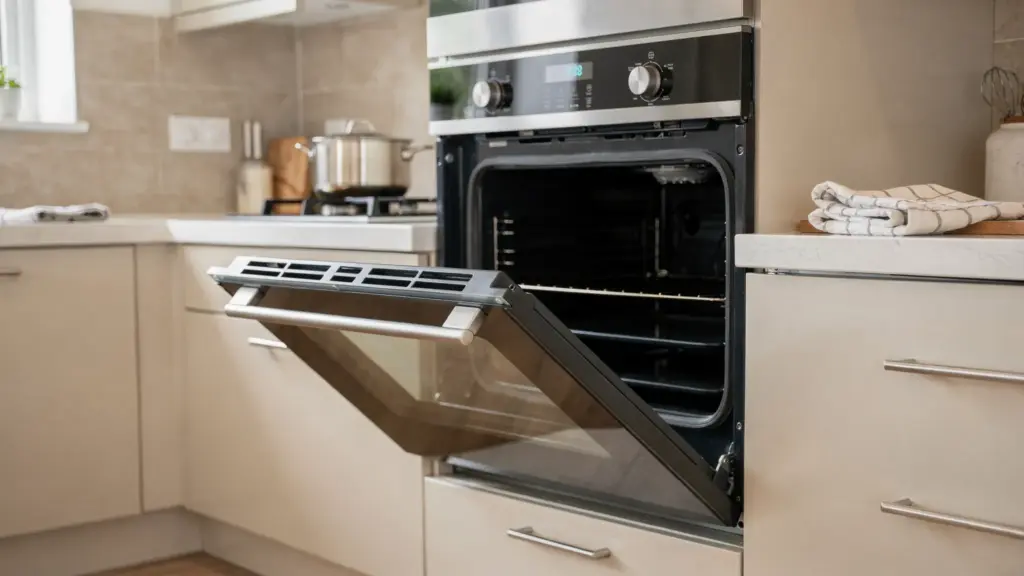
An oven door that won’t close is more than an annoyance. It can cause uneven cooking, longer bake times, wasted energy, and in some cases it can be a safety issue (especially if the door is hanging open on a gas range). The good news is that most “won’t close” problems come down to a small set of causes you can troubleshoot in under an hour.
Below is a practical oven door repair guide for homeowners, with clear “try this first” checks, safe DIY fixes, and signs it’s time to call a Phoenix pro.
First, a quick safety check
Before touching anything:
- Turn the oven off and let it cool completely.
- Cut power at the breaker if you’ll be removing the door or inspecting wiring near a control panel.
- If you smell gas, do not troubleshoot. Leave the home and contact your gas provider or emergency services. You can also review general home fire and gas safety guidance from the U.S. Consumer Product Safety Commission.
Oven doors are heavier than they look. If you plan to remove the door, get a second person to help.
Why an oven door won’t close (most common causes)
In most homes, the problem falls into one of these buckets:
- Something is physically blocking the door (racks not seated, foil buildup, dropped crumbs, a warped drip tray).
- The door is out of alignment (hinges bent, hinge receivers loosened, door reinstalled incorrectly after cleaning).
- The latch or lock mechanism is stuck (common after a self-clean cycle or when the lock motor fails).
- The gasket is bunched, torn, or hardened (the door touches the seal and “bounces” back open).
- A structural part is damaged (warped door frame, broken hinge spring/cable on some models).
This table helps you match symptoms to likely fixes.
| Symptom | Likely cause | What you can try | When to call a pro |
|---|---|---|---|
| Door won’t close all the way and hits something | Rack/liner obstruction, food debris, foil | Clean edges, reseat racks, remove foil | If the cavity lip is bent or enamel is damaged |
| Door “springs” open or won’t stay shut | Worn/bent hinges, hinge springs | Tighten screws, inspect hinges, reset door | If hinges are bent, spring/cable snapped, or door is sagging |
| Door won’t close after self-clean | Lock/latch stuck out | Gently reset latch, power cycle | If latch motor, switch, or control board is involved |
| Door closes but leaks heat, light visible at corners | Gasket worn, door misalignment | Paper test, clean/reshape gasket | If gasket mount is damaged or door is warped |
| Door sits uneven (one side higher) | Hinge damage or receiver issue | Inspect both hinges, re-seat door | If hinge receiver is loose in frame or stripped |
Step 1: Check for simple obstructions (5 minutes)
Many “door won’t close” calls end up being a blockage.
What to check
- Oven racks: Make sure the rack is fully seated on the side rails and not pulled forward.
- Bakeware or a pizza stone: Remove anything resting against the inner door.
- Foil on the bottom panel: Foil can bunch up and keep the door from sealing.
- Buildup on the front lip: Grease and carbon can accumulate where the door meets the frame.
Wipe the front frame (where the gasket contacts) with warm soapy water and a non-scratch pad. Avoid soaking the gasket.
Step 2: Confirm the door is actually aligned
Stand in front of the range and look at the door gap.
- If the gap is even left to right, the issue is more likely the gasket or latch.
- If one corner sits higher, the issue is often a hinge, hinge receiver, or a door that isn’t seated correctly.
A misaligned door can also make it feel like the door “won’t close,” when it’s really closing crooked and catching.
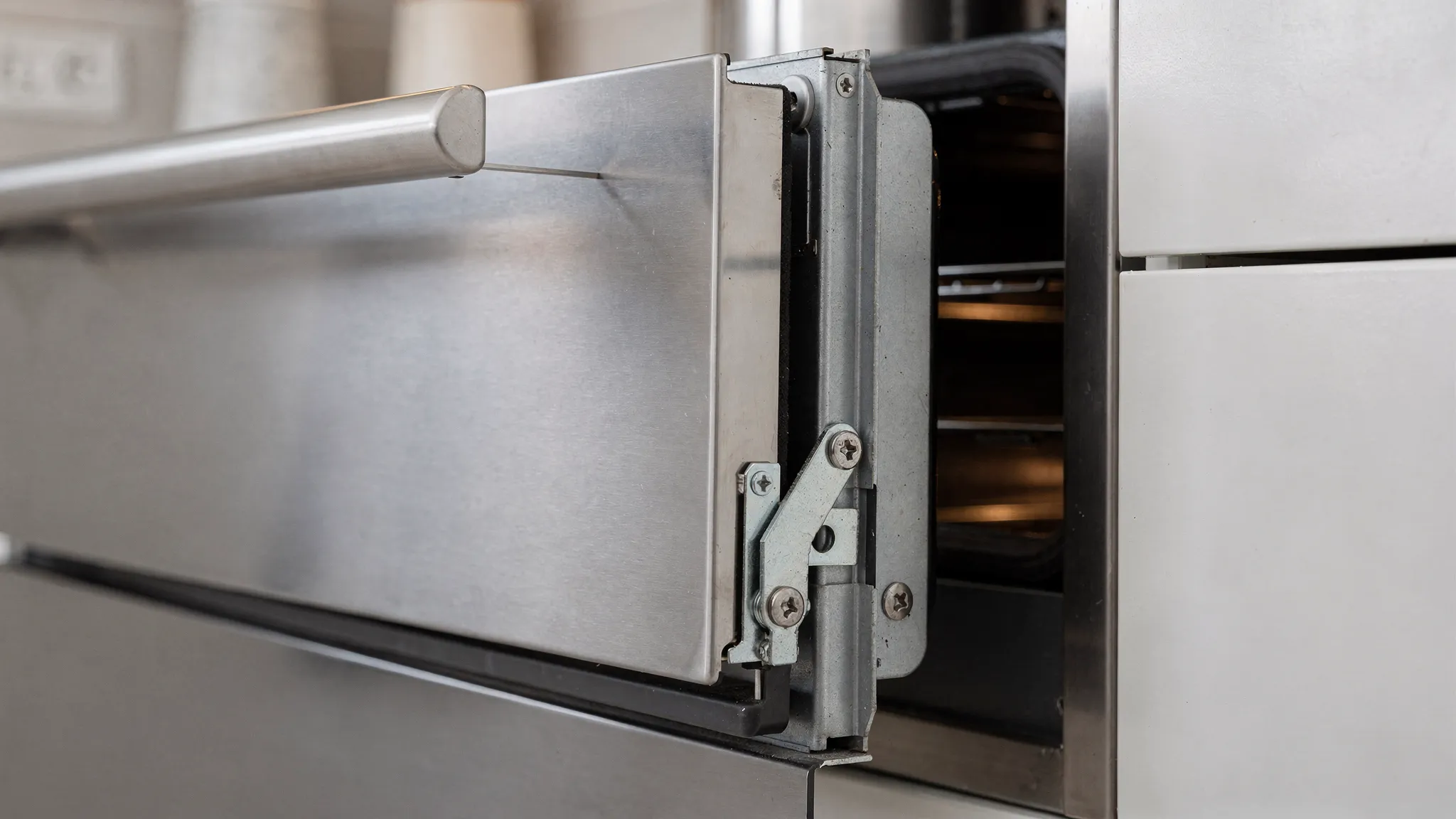
Step 3: Inspect the hinges (the most common hardware failure)
Oven hinges take a lot of abuse: leaning, slamming, heavy door pulls, and frequent opening in a hot environment.
Signs your hinges are the problem
- The door drops when you open it.
- The door won’t stay closed unless you push it.
- The door looks tilted or sagging.
- You see a hinge that looks bent or sits at a different angle than the other side.
DIY fixes to try (in order)
- Tighten hinge mounting screws (door side): With the oven off, open the door slightly and check for loose screws around the hinge brackets on the door. Tighten gently, do not strip them.
- Tighten hinge receiver screws (frame side): Some models have accessible screws inside the oven frame near where the hinge slides in.
- Re-seat the door: If the door was removed recently, it may not be fully seated on the hinge arms.
How to remove and re-seat an oven door (general method)
Because designs vary, check your owner’s manual if possible, but many ovens follow this basic approach:
- Open the door to the first stop (partially open).
- Locate the hinge locks (small tabs) on both hinges.
- Flip the locks toward you (or down, depending on the model).
- Close the door partway until it stops.
- Lift the door up and away from the oven.
- Reinstall by sliding the hinge arms back into the slots evenly, then unlock the hinge tabs.
If the door still won’t close after re-seating, the hinges may be worn or bent and need replacement.
Step 4: Check the latch or door lock (especially after self-clean)
If your oven has a self-clean feature, it likely has a lock mechanism that extends a latch to keep the door closed during cleaning.
Common latch symptoms
- The latch is sticking out and physically blocking the door.
- The door won’t close right after self-clean.
- You hear the lock motor trying to move, clicking, or buzzing.
What you can do safely
- Power cycle the oven: Turn off the breaker for 1 to 3 minutes, then restore power.
- Let the oven fully cool: Some locks won’t retract until sensors detect a safe temperature.
- Do not force the latch with heavy tools. Bending it can create a bigger repair.
If the latch keeps sticking, you may be dealing with a worn latch assembly, lock motor, or a switch issue. That’s typically a good point to involve a technician.
Step 5: Inspect the oven door gasket (seal) for bunching or damage
A gasket usually won’t prevent the door from physically closing, but it can cause a frustrating “bounce” effect where the door touches the gasket and pops back open.
Quick gasket checks
- Look for twists, gaps, tears, or hardened sections.
- Make sure the gasket is fully seated in its channel.
- Clean the gasket gently with mild soap and water, then dry.
The “paper test” for sealing
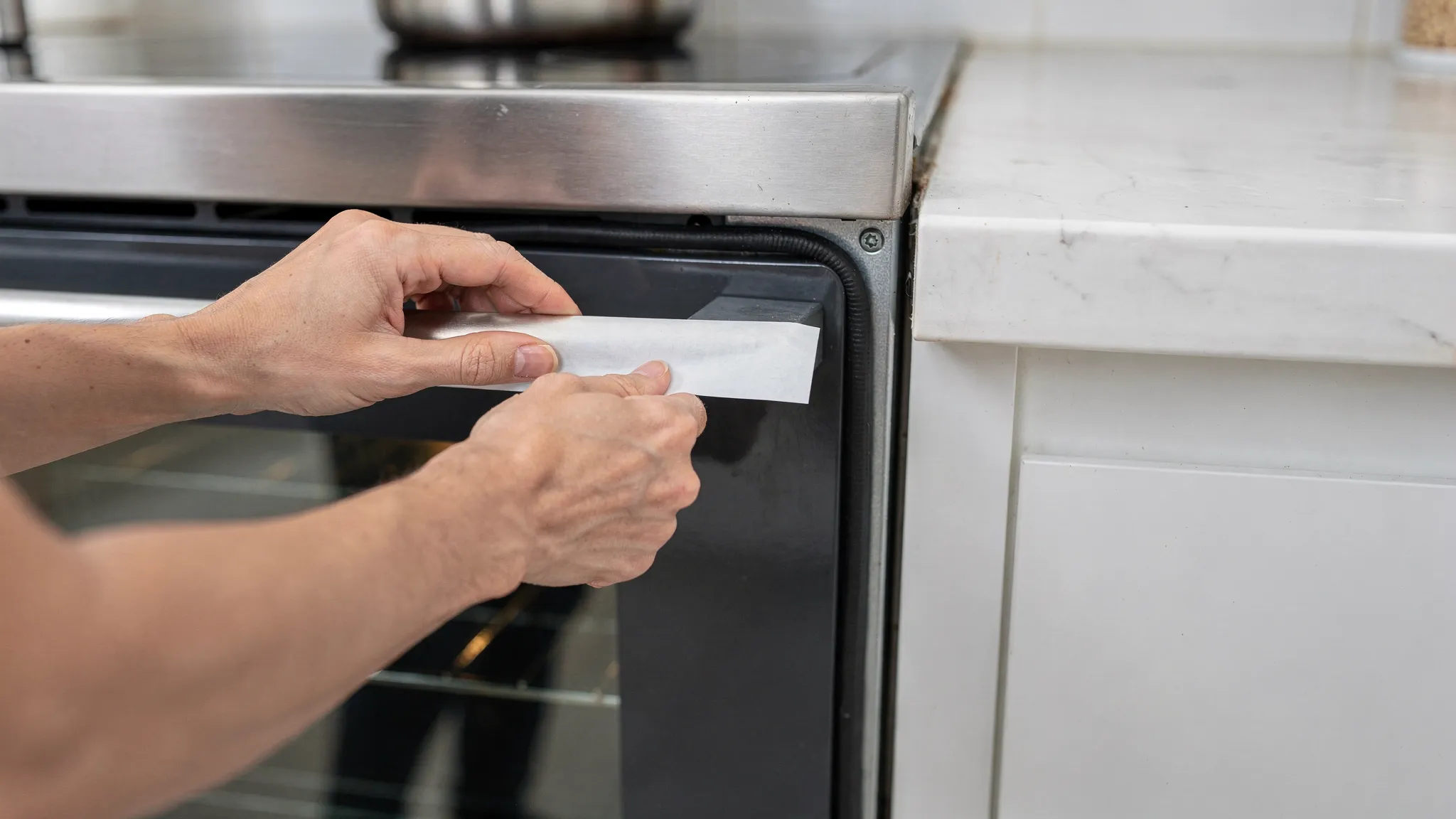
- Close the door on a strip of paper.
- Gently pull the paper.
If it slides out with almost no resistance in multiple areas, you likely have a seal or alignment problem.
If you determine the gasket is the issue, see our more detailed local guide: How to Repair an Oven Door Seal in Phoenix – Stop Heat Leaks Fast.
Step 6: Look for a warped door or damaged frame
If you’ve ruled out obstructions, hinges, latch position, and gasket issues, the remaining possibility is warping.
What causes warping
- Repeated high-heat cycles over years
- Slamming the door
- Leaning on an open door (common when basting or removing heavy roasts)
How to spot it
- Door looks “bowed” when viewed from the side.
- Gaps are consistent even after hinge work.
- You see heat leaks at the same spot no matter what you adjust.
Warped doors and frames are often repairable, but parts and labor vary widely by model. If you’re debating repair vs replacement, our overview of common fixes may help: Can Ovens Be Repaired? Phoenix Technicians Explain Common Fixes.
When an oven door problem is an “emergency”
Most door issues are inconvenient, not urgent. But consider same-day help if:
- The door is hanging off one hinge or feels like it could fall.
- The door won’t close on a gas oven and you smell gas or see soot.
- The oven is overheating your kitchen or tripping breakers.
- You have small children and the door won’t latch or stay closed.
In Phoenix, fast turnaround matters, especially when the oven is a daily-use appliance.
What a technician will usually check (so you can talk confidently)
If you call for service, a good tech typically confirms:
- Hinge wear and hinge receiver integrity
- Door alignment and any stripped mounting points
- Latch motor operation (if equipped)
- Gasket condition and mounting
- Evidence of frame or door warping
Having your model number ready (usually on the door frame or storage drawer area) speeds up parts identification.
Frequently Asked Questions
Can I use my oven if the door won’t close all the way? In most cases, you should avoid using it. Heat loss can cause poor cooking results and can overheat nearby surfaces. If it’s a gas oven or you smell gas, treat it as urgent and stop immediately.
Why did my oven door stop closing after I removed it to clean? The door often isn’t fully seated on both hinge arms, or the hinge locks weren’t reset properly. Removing and reinstalling the door carefully (with hinge locks positioned correctly) fixes many cases.
How do I know if my hinges are bad or it’s just the gasket? Bad hinges usually show sagging, uneven gaps, or a door that feels heavy and “drops.” A gasket issue more often shows heat leaks or a door that closes but does not seal evenly.
My oven door won’t close after self-clean. What should I do? Let the oven cool fully, then try a breaker power cycle. If the latch remains extended or you hear repeated clicking, the lock mechanism may need service.
Is oven door hinge replacement a DIY job? Sometimes, yes, if you’re comfortable lifting the door, matching parts by model number, and reinstalling safely. If the receiver is stripped, the frame is damaged, or the door is very heavy, professional repair is safer.
Need help diagnosing an oven door that won’t close in Phoenix?
If you’ve tried the basic checks and the door still won’t close, the issue is often a worn hinge set, a stuck latch assembly, or alignment problems that need parts and proper fitting. Browse more Phoenix-focused troubleshooting on the PHX Appliance Fix Blog to compare likely fixes and understand what a fair repair looks like before you schedule service.