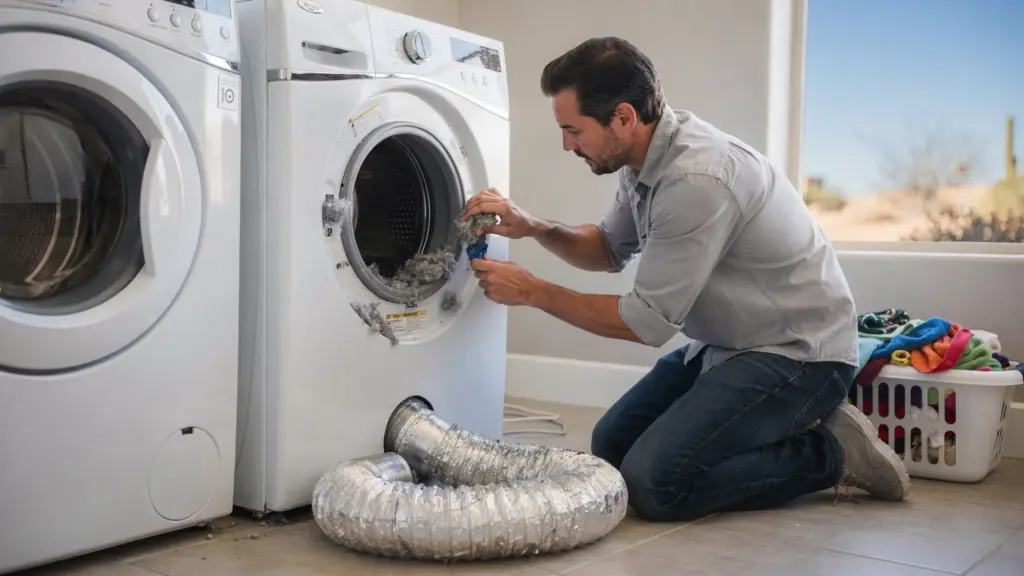
Long dry times and a dryer that won’t heat are two of the most frustrating laundry problems because they waste hours and can become a safety issue if the airflow system is clogged. The good news is that many “no heat” and “takes forever to dry” calls come down to a short list of causes: restricted venting, a tripped power supply issue, or a failed safety part like a thermal fuse.
This guide walks you through practical, homeowner-friendly clothes dryer repair checks, starting with the most common (and most important) fixes first. If you’re in the Phoenix area, these steps are especially worth doing because dust, lint, and long vent runs in attics or tight laundry closets can make airflow problems more likely.
Safety first (before any clothes dryer repair)
Dryers combine heat, electricity, and (sometimes) gas. Take these precautions seriously:
- Unplug the dryer (or switch off the breaker) before removing any panels.
- For gas dryers, turn the gas shutoff valve off if you’ll be inspecting internal components.
- If you smell gas, do not run the dryer. Ventilate the area and contact your gas provider or a qualified technician.
- Avoid running the dryer with the vent disconnected unless you’re doing a brief test with the area well ventilated. Lint can blow everywhere and become a hazard.
For context on why airflow and lint matter: the National Fire Protection Association (NFPA) has reported that failure to clean is a leading factor in home fires involving dryers and washing machines. See NFPA’s overview here: Home Fires Involving Clothes Dryers and Washing Machines.
No heat vs long dry times: what the symptom usually means
These two symptoms overlap, but they often point you in different directions.
If the dryer has no heat at all
Common causes include:
- Power supply problem (especially electric dryers that need 240V)
- Blown thermal fuse (a safety device that opens when overheating occurs)
- Failed heating element (electric) or failed ignition/gas components (gas)
- Control or timer issue (less common than airflow and safety parts)
If the dryer heats but takes too long
Common causes include:
- Restricted venting (most common)
- Lint buildup inside the dryer cabinet or blower housing
- Crushed, kinked, or too-long vent duct
- Weak airflow from a failing blower wheel
- Moisture sensor issues (sensor-dry cycles end incorrectly)
- Overloading, heavy fabrics, or incorrect cycle settings
Start here: airflow checks (the #1 cause of long dry times)
Even if your dryer “has no heat,” always check airflow early. A severely clogged vent can cause overheating, which can blow the thermal fuse, and then you’ll be stuck with no heat until the fuse is replaced.
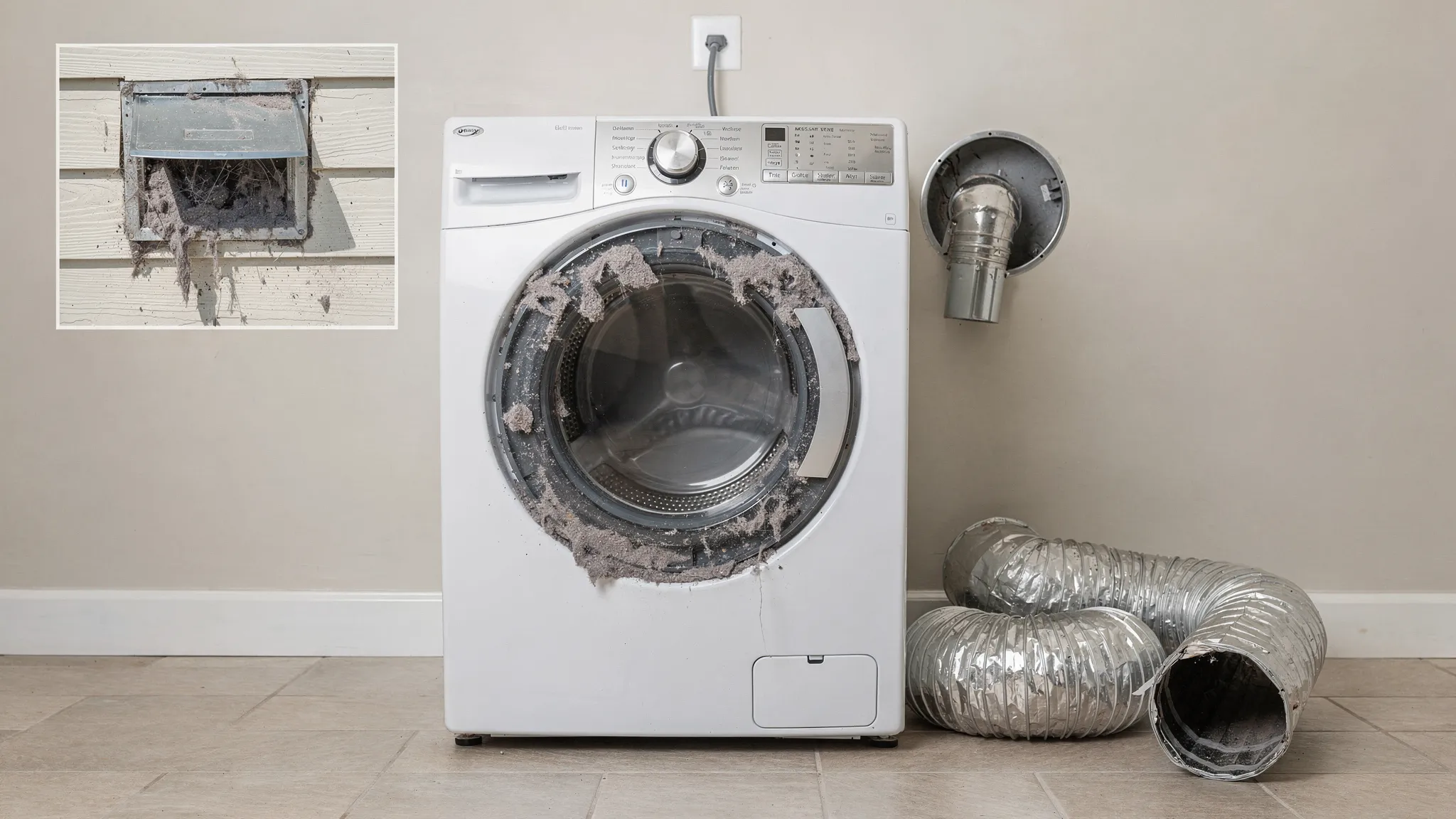
1) Check the lint screen and lint screen housing
- Clean the lint screen with every load.
- If you use dryer sheets often, wash the lint screen with warm water and a soft brush. A waxy film can reduce airflow even when the screen looks clean.
- Vacuum inside the lint screen slot (the vertical chute). Lint can build up in pockets you can’t see.
2) Inspect the vent duct behind the dryer
Look for:
- Kinks, crushing, or sagging flexible duct
- Plastic or foil “accordion” vents (these trap lint and are not recommended)
- Excessively long runs with multiple sharp elbows
If possible, use rigid or semi-rigid metal ducting for better airflow and easier cleaning.
3) Confirm strong airflow at the exterior vent hood
With the dryer running on high heat:
- Go outside and feel for strong, steady air.
- The flap should open fully.
- Remove any lint matting, bird nests, or stuck louvers.
Weak airflow outside usually means a restriction in the duct run or a blower problem.
4) Quick “vent disconnected” test (short diagnostic)
If it’s safe and accessible, disconnect the vent from the dryer and run a 5 to 10 minute test.
- If dry times improve dramatically, your vent run is restricted.
- If airflow at the dryer outlet is weak even with the vent off, suspect internal lint buildup, a clogged blower housing, or a damaged blower wheel.
Common causes and quick tests (at a glance)
Use this table to match the symptom to the fastest, safest checks.
| Symptom | Most likely causes | Quick check you can do | Typical DIY level |
|---|---|---|---|
| No heat (electric dryer) | Tripped breaker, lost 240V leg, blown thermal fuse, bad heating element | Confirm drum turns, check breaker (double-pole), test airflow, look for overheated smell | Medium (multimeter often needed) |
| No heat (gas dryer) | Igniter/flame sensor issue, gas valve coils, thermal fuse, gas supply off | Confirm gas valve is on, listen for ignition sequence, check exterior vent airflow | Medium to High |
| Long dry times | Restricted vent, lint buildup, crushed duct, weak blower wheel | Exterior vent airflow test, inspect duct, clean lint screen housing | Low to Medium |
| Clothes hot but still damp | Moisture sensor dirty, wrong cycle, vent restriction causing poor moisture removal | Try timed dry, clean moisture sensor strips, vent test | Low |
| Dryer shuts off mid-cycle | Overheating from restriction, failing thermostat, motor overheating | Check venting first, clean lint buildup, confirm room has makeup air | Medium |
Electric dryer: fix “no heat” step by step
Electric dryers typically use a heating element and one or more thermostats plus a thermal fuse. Many “no heat” problems are simple once you narrow them down.
Verify the dryer is getting the full 240 volts
This is the most overlooked check.
- Electric dryers can still run the motor on 120V but not heat if one side of the 240V supply is lost.
- Check for a tripped breaker. Many dryer circuits use a double-pole breaker that can trip only halfway.
If resetting the breaker restores heat temporarily and then it trips again, stop and get help. That can indicate a wiring, outlet, or internal short.
Check for a blown thermal fuse (and why it blew)
A thermal fuse is designed to open if the dryer overheats. Replacing it without fixing airflow often leads to another blown fuse.
Typical causes of overheating:
- Clogged vent run
- Lint-packed blower housing
- Crushed duct behind the dryer
A fuse is usually tested with a multimeter for continuity. If it’s open, it must be replaced (it cannot be reset).
Test the heating element and thermostats
If airflow is good and power is correct:
- A failed heating element can read “open” on a multimeter.
- A failed cycling thermostat or high-limit thermostat can also prevent heating (depending on design).
If you’re not comfortable testing live circuits, don’t. Unplug the dryer and test components properly, or call a pro.
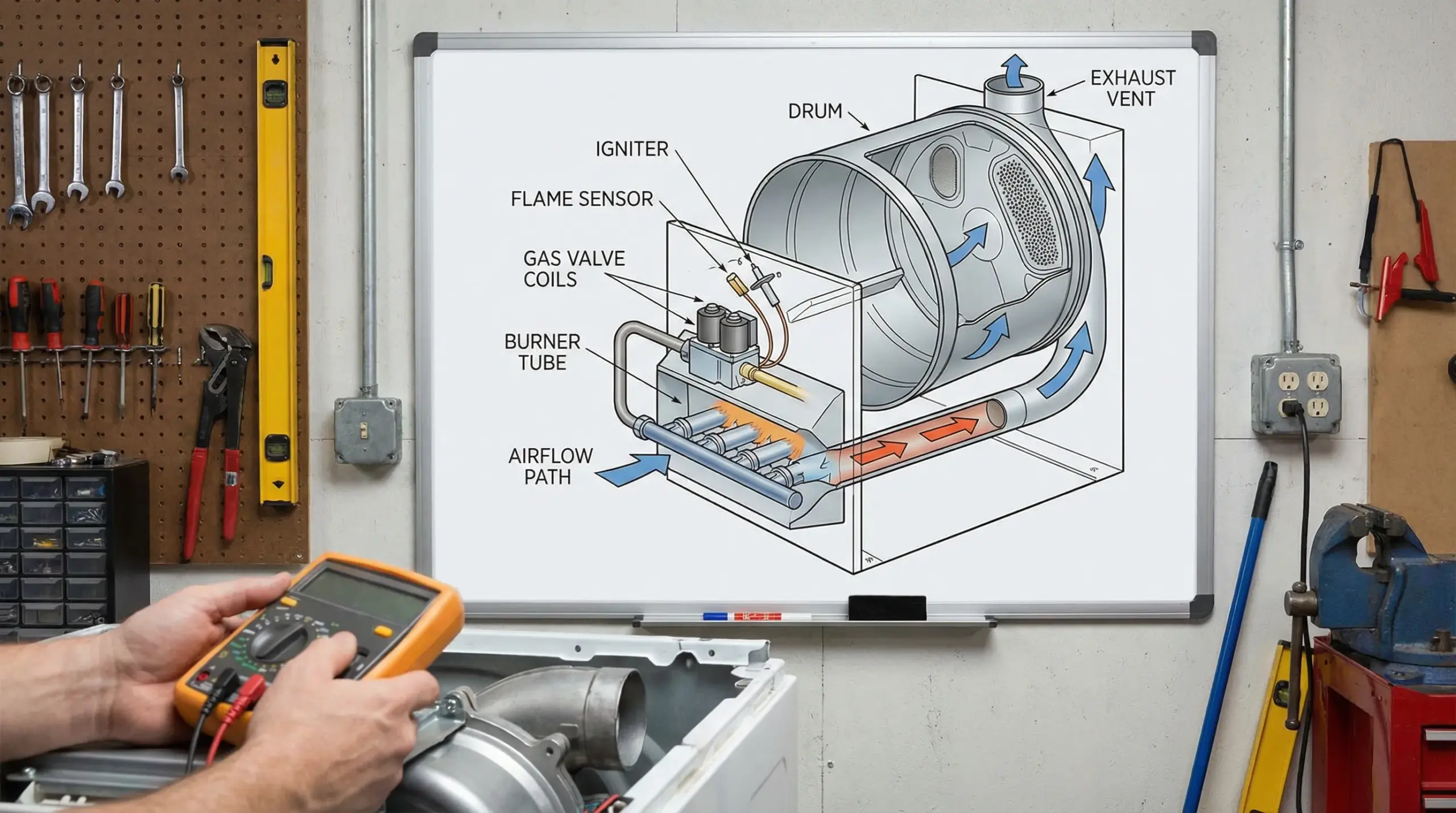
Gas dryer: fix “no heat” step by step
Gas dryers add an ignition system and gas valve components. Many gas dryer “no heat” issues show up as an ignition sequence that starts and then fails.
Confirm gas supply and basic ignition behavior
- Make sure the gas shutoff valve is fully open.
- Start the dryer and listen.
Common patterns:
- No glow from igniter: could be a thermal fuse, igniter, flame sensor, or control issue.
- Igniter glows but no flame: often gas valve coils, flame sensor, or gas supply.
- Flame lights briefly then goes out: frequently failing gas valve coils.
Because gas components and combustion safety are involved, this is a good point to consider professional help if you’re unsure.
Long dry times: how to fix the root cause (not just the symptom)
If your dryer produces heat but loads take two cycles, focus on moisture removal. Drying is airflow plus heat plus proper exhaust.
Venting problems (again, because it’s that common)
Long dry times are often caused by one of these vent issues:
- Exterior hood blocked or flap stuck shut
- Duct run too long or has too many elbows
- Lint accumulation in the duct (especially corrugated flex duct)
- Duct routed where it gets crushed (behind the dryer, in a tight closet)
A professional vent cleaning can be worth it if your duct run goes through walls or the attic, or if you can’t access the full length.
Blower wheel or internal lint buildup
If the outside vent airflow is weak and the duct is clear, the dryer may not be moving air effectively.
Signs include:
- Little airflow even with the vent disconnected
- Rattling or thumping sounds (a loose blower wheel)
- Visible lint piles inside the cabinet when panels are opened
Internal lint cleanup can significantly improve performance, but opening the cabinet involves more disassembly and is a common time to call for appliance repair in Phoenix if you want it done safely.
Moisture sensor problems (sensor dry cycles end wrong)
Many modern dryers use metal sensor strips inside the drum. If they’re coated, the dryer may misread moisture.
- Clean sensor strips with rubbing alcohol and a soft cloth.
- Test with a timed dry cycle. If timed dry works normally but sensor dry doesn’t, the sensor or control logic may be the issue.
Overloading and cycle selection
This sounds basic, but it’s real:
- Mixed loads (towels + lightweight shirts) often dry unevenly.
- High-spin washer settings reduce dryer time. If your washer isn’t spinning well, the dryer is doing extra work.
DIY fixes you can usually do safely
These are the repairs that most homeowners can handle with basic tools, as long as you follow safety precautions.
Clean the full vent path
- Clean the lint screen and lint chute.
- Replace flimsy foil or plastic ducting with semi-rigid or rigid metal.
- Ensure the duct run is as short and straight as possible.
- Clean the exterior vent hood.
Replace a worn vent duct behind the dryer
If your dryer is pushed close to the wall, use a setup that resists kinking. Even one major pinch point can double dry time.
Clean moisture sensor strips
This takes minutes and can restore normal sensor-cycle behavior.
When to call a pro (and why it’s worth it)
DIY is great for cleaning and simple checks. It’s time to call a technician when:
- You have a gas dryer and suspect ignition or gas valve component failure.
- The breaker trips repeatedly, or you suspect outlet/cord damage.
- The thermal fuse keeps blowing (airflow problems or failing thermostats may be involved).
- The vent run is long, hidden, or routed through walls or attic.
- You see scorching, melting, or smell electrical burning.
If you’re looking for Phoenix appliance repair services, a good tech will typically verify airflow, confirm correct power or gas supply, and test components (fuse, thermostats, element, igniter, coils) efficiently with the right meters.
Prevent dryer problems with a simple maintenance schedule
A little maintenance goes a long way for both performance and safety.
| Task | How often | Why it matters |
|---|---|---|
| Clean lint screen | Every load | Keeps airflow strong and prevents overheating |
| Wash lint screen (soap + brush) | Monthly (or if using dryer sheets) | Removes film that blocks airflow |
| Check exterior vent hood flap | Monthly | Catches lint mats, stuck louvers, and nests early |
| Inspect duct for kinks/crushing | Every 3 to 6 months | Prevents slow drying and thermal fuse blowouts |
| Deep clean vent run | Every 12 months (more if heavy use) | Reduces fire risk and restores drying speed |
Frequently Asked Questions
Why does my dryer run but not heat? Electric dryers can run on 120V but need 240V to heat, so a half-tripped breaker is common. Blown thermal fuses, bad heating elements (electric), and failed ignition parts (gas) are also frequent causes.
What is the most common reason a dryer takes too long to dry? Restricted airflow from lint buildup in the vent duct or a crushed/kinked vent hose is the top cause. Always check the exterior vent hood airflow.
Can I replace a thermal fuse myself? Sometimes, yes, but it’s critical to fix the overheating cause first (usually vent restriction). If you replace the fuse without restoring airflow, it may blow again.
Why is my dryer hot but clothes are still damp? Poor exhaust airflow can keep moist air trapped, so clothes feel warm but stay damp. Dirty moisture sensors can also make sensor cycles end at the wrong time.
Is it safe to use a dryer without a vent temporarily? Only as a brief diagnostic with good ventilation, and never as a long-term solution. Venting removes moisture and lint from your home.
Need help diagnosing a dryer in Phoenix?
If you’ve checked airflow, confirmed power or gas supply, and your dryer still has no heat or long dry times, it may be time for professional diagnosis. Explore more practical repair guidance on the PHX Appliance Fix Blog, and if you’re deciding whether to repair or replace another major appliance, you may also find this helpful: Is It Worth Repairing a Refrigerator in Phoenix’s Heat?.