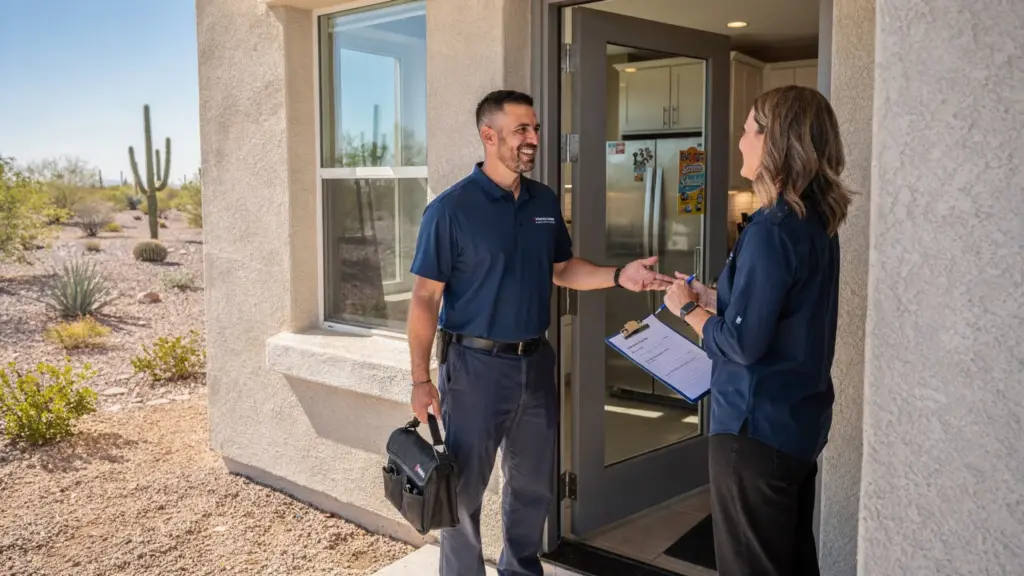
When you search “home appliance repair near me”, you usually need help fast. A refrigerator that stopped cooling in Phoenix heat, a washer leaking onto the laundry room floor, or an oven that will not ignite can turn into an expensive mess quickly.
The tricky part is that urgency makes it easier to hire the wrong person. A great technician will diagnose accurately, quote clearly, use the right parts, and stand behind the work. A bad one may guess, upsell, or disappear after taking a deposit.
This guide gives you a practical, Phoenix-friendly way to vet an appliance repair tech before you book, while they are in your home, and after the repair is done.
Why vetting matters more in Phoenix
Phoenix homes put appliances under extra stress. High ambient temperatures can expose weak refrigerator components, garages can run hotter than the kitchen, and hard water conditions can contribute to valve and inlet issues over time. When breakdowns happen during a heat wave, many homeowners search for same day refrigerator repair Phoenix services, and scammers know it.
Vetting is not about being suspicious of every company. It is about confirming that you are hiring a qualified pro who can safely work on electricity, gas, and sealed refrigeration systems.
The fast vetting framework (use this in 10 minutes)
If you are in a hurry, focus on these four checks first:
- Identity and legitimacy: real business name, local address or service area, and a website with consistent contact info.
- Clear pricing structure: diagnostic fee, labor approach, and how parts are handled.
- Credentials for the job type: especially for refrigeration (refrigerant handling) and gas appliances.
- Warranty in writing: parts and labor terms, plus what voids it.
Then, if they pass, you can go deeper.
Step 1: Confirm they are a real local business
Start with basics that filter out many problems.
What to look for on their website or listing
A trustworthy provider of Phoenix appliance repair services typically shows:
- A business name that matches what they answer the phone with
- A physical address (or a clearly stated Phoenix metro service area)
- A working local phone number
- Brand and appliance types they service (refrigerators, ovens, washers, etc.)
- A clear process for scheduling and estimates
Be cautious if the listing is only a call center, the business name changes between platforms, or the address is missing or clearly not local.
Check reviews the right way (not just the star rating)
Reviews are useful when you read for patterns:
- Do people mention the same technician by name?
- Do reviews describe the same strengths (punctual, explains diagnosis, no surprise fees)?
- Are there repeated complaints about “bait-and-switch” pricing or pressure to replace the appliance?
Also look at review recency. A company can be great in 2022 and chaotic in 2026 if ownership or staffing changed.
Step 2: Ask the right questions before booking
A quick phone call (or text exchange) can tell you a lot. Here are questions that separate pros from guessers.
Pricing and estimates
A reputable tech should be able to explain their pricing model clearly, even if they cannot give an exact quote without diagnosing.
Ask:
- What is your diagnostic fee, and is it applied toward the repair?
- Do you quote a flat rate repair, or time-and-materials labor?
- What could change the price after diagnosis? (for example, discovering multiple failed parts)
- Do you charge extra for evenings, weekends, or emergency calls?
If you are comparing options for appliance repair Phoenix, clarity beats the lowest “starting at” price.
Parts and timelines
Ask:
- Do you carry common parts, or order after diagnosis?
- If you order parts, how long does it typically take?
- Do you use OEM parts, aftermarket parts, or both? (and how that affects warranty)
For urgent situations, ask what “same day” actually means. Same-day service can mean same-day diagnosis, not always same-day completion.
Warranties
Ask:
- What is your labor warranty?
- What is the parts warranty, and who honors it (you or the manufacturer)?
- Is the warranty in writing on the invoice?
A vague “we guarantee our work” without written terms is not enough.
Step 3: Verify the right credentials (especially for refrigerators)
Not every repair has the same risk. A dryer belt replacement is different from sealed-system refrigerator work or gas oven diagnostics.
Refrigeration: EPA Section 608 certification
If the job might involve refrigerant (sealed system work), the technician should be properly certified. In the U.S., refrigerant handling is regulated under EPA rules.
- Reference: EPA Section 608 Technician Certification
You can simply ask: “Are you EPA 608 certified for refrigerant handling?” A legitimate company will understand the question.
Gas appliances: safety and shutoff discipline
For gas ovens and ranges, you want a tech who is comfortable explaining basic safety steps (gas shutoff location, leak checking approach, ventilation). If they dismiss safety questions, choose someone else.
If you are dealing with a known oven issue, you can also review our Phoenix-specific guide on common fixes: Can ovens be repaired? Phoenix technicians explain common fixes.
Insurance
Ask if they carry liability insurance. This is a reasonable request because techs work around water lines, electrical components, floors, and cabinetry.
You do not need to argue about it. Just ask for confirmation, and if they hesitate or get defensive, that is a useful signal.
Step 4: Know the common “near me” red flags
Some bad experiences are preventable if you know what to watch for.
| Red flag | Why it matters | What to do instead |
|---|---|---|
| Price quoted only after they arrive, with no diagnostic fee disclosed | Surprise pricing is where scams live | Get diagnostic fee and pricing model in writing before booking |
| Push for a large deposit before any diagnosis | Can indicate parts never ordered or vanishing contractor | Pay after diagnosis, or pay by card with documentation |
| Refuses to give a written invoice with part numbers and labor | Hard to enforce warranty or dispute charges | Require an invoice that lists work performed |
| “We can fix anything” but cannot name common failure points | Often guessing | Choose a specialist who regularly services your appliance type |
| Pressure to replace the appliance immediately | May be valid sometimes, but pressure is a bad sign | Ask for the failure explanation and options (repair vs replace) |
If you want local cost context before you call anyone, see: Refrigerator repair cost in Phoenix, real prices from local experts.
Step 5: What to watch for when the technician arrives
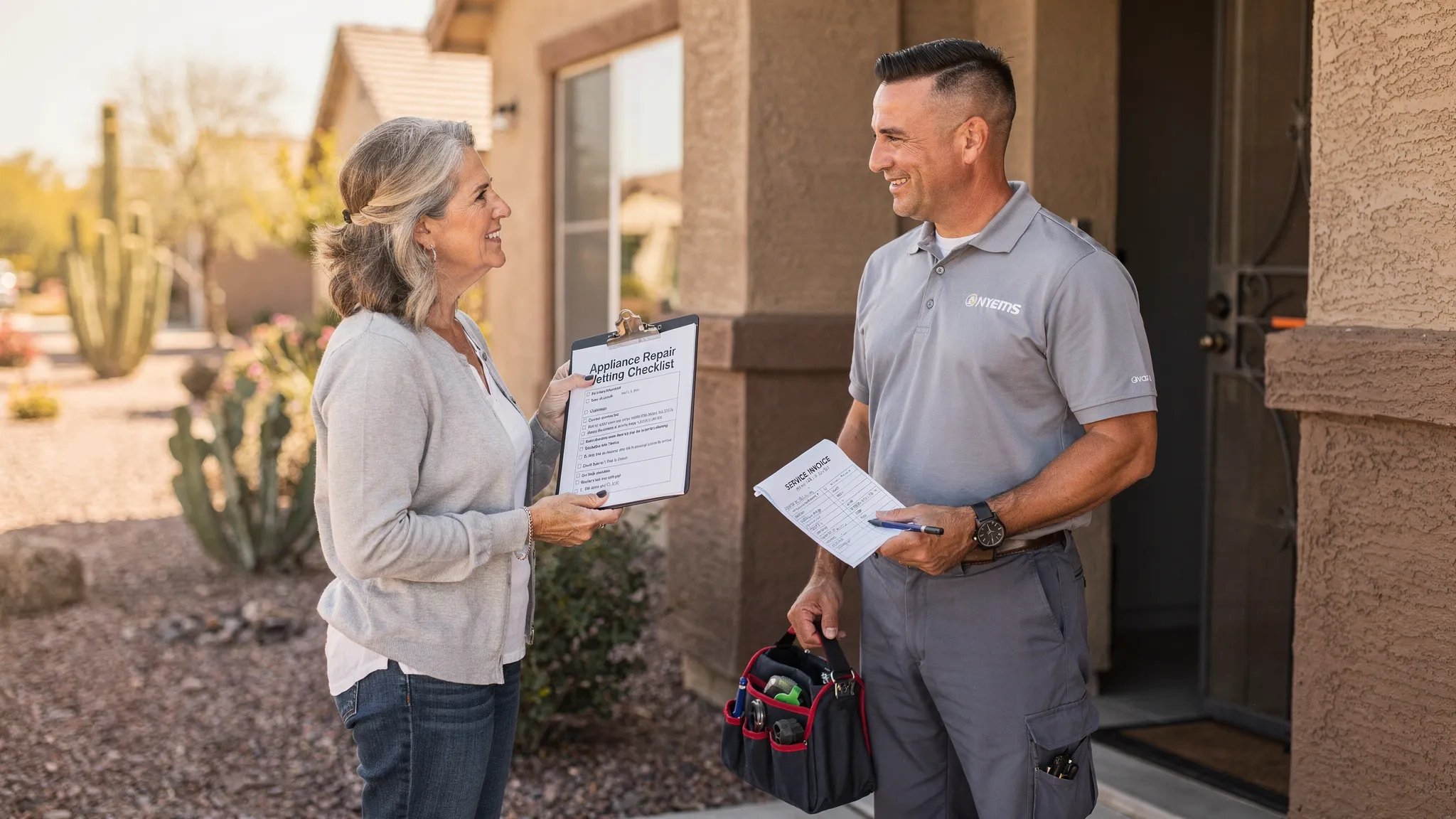
Your vetting does not end when the doorbell rings. The best technicians show professionalism immediately.
Professional signals (green flags)
- They confirm the issue and ask follow-up questions before touching the appliance
- They take basic precautions (shoe covers or mindful handling, towels for water risk, careful moving)
- They unplug or shut off power when appropriate
- They explain what they are checking and why
The diagnosis should be specific, not vague
A solid diagnosis sounds like:
- “The condenser fan is not running, which is why the compressor is overheating.”
- “The inlet valve is not opening consistently, so the washer is not filling.”
A weak diagnosis sounds like:
- “It is probably the board.”
- “These models always do this.”
If you are troubleshooting a washer water fill problem yourself first, this guide is a good sanity check: Samsung washer 4C error, water inlet troubleshooting.
Ask to see the failed part or the evidence
You are not being difficult. You are being an informed homeowner.
You can ask:
- “Can you show me the test result or the part that failed?”
- “Is there a photo you can include on the invoice?” (many techs already document)
For example, with ovens, a worn gasket is often visible. If you suspect heat leaks, compare symptoms with: How to repair an oven door seal in Phoenix.
Step 6: Understand quotes and invoices (so you can compare apples to apples)
Not all quotes are structured the same way. To compare the best appliance repair companies Phoenix homeowners recommend, standardize what you are comparing.
What a clear estimate should include
| Line item | What it should tell you |
|---|---|
| Diagnostic/service call fee | What you pay for the visit and troubleshooting |
| Labor | Flat rate or hourly, and what tasks are covered |
| Parts | Part name/description, whether OEM/aftermarket, and cost |
| Additional fees | Emergency, after-hours, trip charges, disposal fees (if any) |
| Warranty | Parts and labor terms, plus duration |
Payment method matters
If possible, pay by card so you have documentation. Cash is not automatically suspicious, but it reduces your paper trail. Whatever you pay with, get the invoice before the tech leaves.
Step 7: How to handle emergency and same-day service in Phoenix
During peak summer heat, you may need emergency appliance repair Phoenix homeowners can rely on. Here is how to stay safe and still move quickly.
Triage first: what is truly urgent?
- Refrigerator not cooling in 100+ degree weather is often urgent, especially with medications or infant food.
- Active water leaks are urgent because of flooring and drywall damage.
- Gas smell is urgent and should be treated as a safety issue first.
If you smell gas or suspect a serious electrical hazard, prioritize safety and follow your utility provider’s guidance.
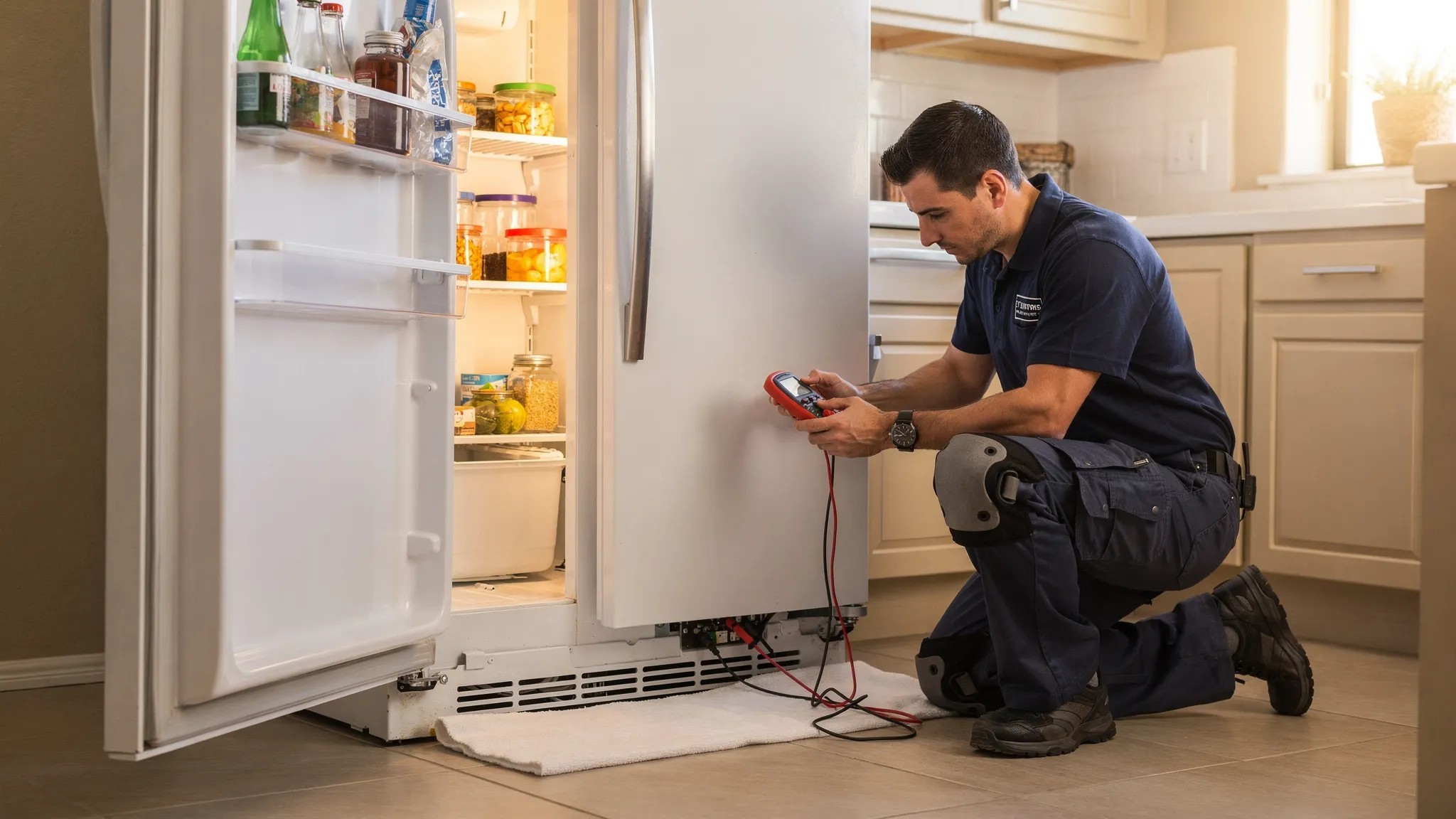
How to vet “same-day refrigerator repair” offers
When you see same day refrigerator repair Phoenix advertising, ask:
- Is same-day diagnosis guaranteed, or same-day repair?
- Do you stock common refrigerator parts for my brand?
- If it is a sealed-system issue, do you do that work in-house?
Some companies diagnose same day and return later with parts, which can still be a good outcome if it is communicated upfront.
Step 8: Decide whether to repair or replace (without getting pressured)
A trustworthy technician can explain when replacement is the smarter choice, but they should not use fear or urgency tactics.
If you want a Phoenix-specific decision framework for fridges, read: Is it worth repairing a refrigerator in Phoenix’s heat?.
A good rule of thumb is to ask for:
- The likely repair outcome (temporary vs long-term fix)
- The total cost today
- Any known “next likely failure” risks based on age and condition
Step 9: Keep your own service record (it helps with future repairs)
Homeowners who get the best results tend to keep a simple appliance record:
- Date of repair
- Symptoms
- Part replaced (as written on invoice)
- Total cost
- Warranty term
This makes it easier to get accurate help next time, and it can help you avoid repeat misdiagnoses.
Frequently Asked Questions
How do I choose home appliance repair near me without getting overcharged? Ask for the diagnostic fee and pricing model upfront, request a written estimate after diagnosis, and compare quotes that list labor, parts, and warranty.
What should I ask before scheduling appliance repair in Phoenix? Confirm diagnostic fee, how labor is billed, whether parts are OEM or aftermarket, expected timeline, and the warranty terms in writing.
Is same day refrigerator repair Phoenix always possible? Same-day diagnosis is often possible, but same-day completion depends on parts availability and whether the issue involves sealed-system work.
Should an appliance repair tech be insured? Ideally, yes. Liability insurance helps protect you if accidental damage occurs during service.
How can I tell if a refrigerator tech is qualified to handle refrigerant? Ask if they are EPA Section 608 certified. Refrigerant handling in the U.S. is regulated, and qualified techs will recognize this requirement.
What is a common red flag when hiring an appliance repair company? Surprise pricing. If a company will not disclose a diagnostic fee or pricing approach before arrival, you risk a bait-and-switch situation.
Want more Phoenix-specific repair guidance before you book?
If you are comparing options for oven repair Phoenix, refrigerator service, or washer troubleshooting, browse the latest Phoenix-focused guides and cost explainers at PHX Appliance Fix Blog. You will be able to spot red flags faster, ask better questions, and make a confident repair decision.