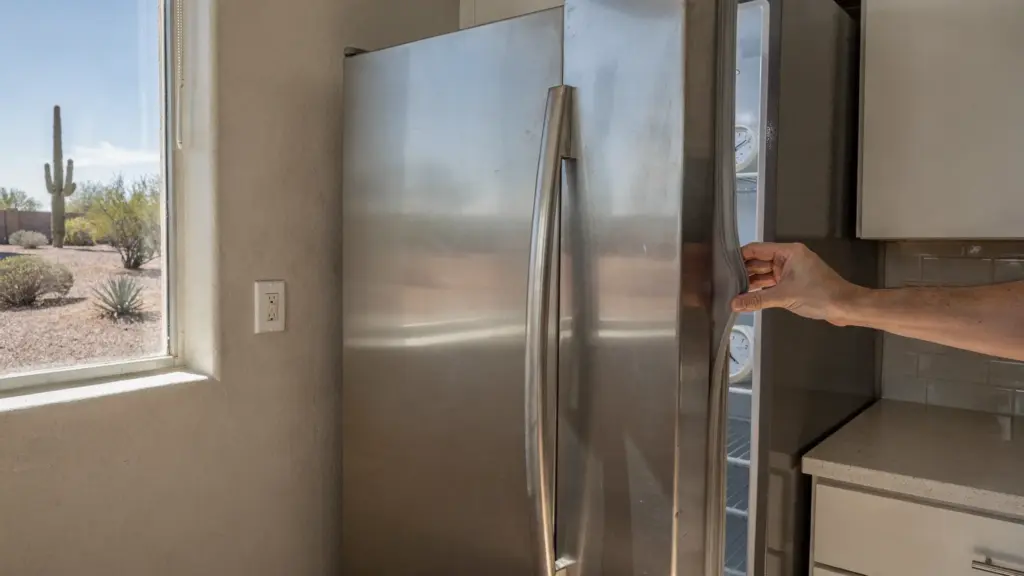
A refrigerator door seal (also called a gasket) is one of those “small part, big consequences” components. When it starts failing, your fridge can struggle to hold safe temperatures, run longer than it should, and build up moisture or frost. In Phoenix, that problem can snowball fast because your refrigerator is already working harder against higher ambient temperatures.
Below are the clearest signs your refrigerator door seal is going bad, why it happens, and what you can do next (from quick DIY checks to knowing when it’s time to call a pro).
What a refrigerator door seal actually does
Your refrigerator’s cooling system is designed around one assumption: the cabinet is mostly airtight when the doors are closed. The door seal’s job is to:
- Keep cold air in and warm air out
- Prevent excess moisture from entering the fridge (which helps reduce frost)
- Help the fridge reach and maintain safe food storage temperatures with less run time
Even a small leak around the door can make the compressor and fans work longer. That can show up as higher energy use and more wear on expensive components.
Signs your refrigerator door seal is failing
Some gasket failures are obvious (torn rubber), but many start as subtle performance problems. Here are the most common signs Phoenix homeowners notice.
1) Condensation or “sweating” around the door
If you see water droplets on the door edge, along the gasket, or on nearby shelves, warm air is likely sneaking in and condensing when it hits cold surfaces.
In Phoenix, indoor humidity is often low, so visible condensation can be an even stronger clue that something is off with the seal, door alignment, or door closing pressure.
2) Frost buildup in the freezer (especially near the door)
A leaky seal can pull humid air into the freezer. That moisture freezes, often creating frost:
- Along the inner edge of the freezer door
- On packages near the front
- Around the top corners where seals commonly lose contact
If you have a frost-free freezer that suddenly needs frequent manual defrosting, check the gasket early.
3) The fridge runs “all the time”
If your refrigerator seems like it never stops running, a poor seal can be a major contributor. A leak means the unit is constantly replacing cold air that escapes.
Continuous run time can also point to other issues (dirty condenser coils, weak compressor, airflow problems), but the door seal is one of the quickest things to rule in or out.
If you’re weighing repair versus replacement, you may also like: Is It Worth Repairing a Refrigerator in Phoenix’s Heat?
4) Food spoils faster or temperatures seem inconsistent
A failing seal can create warm spots near the door and lead to wider temperature swings after each door opening.
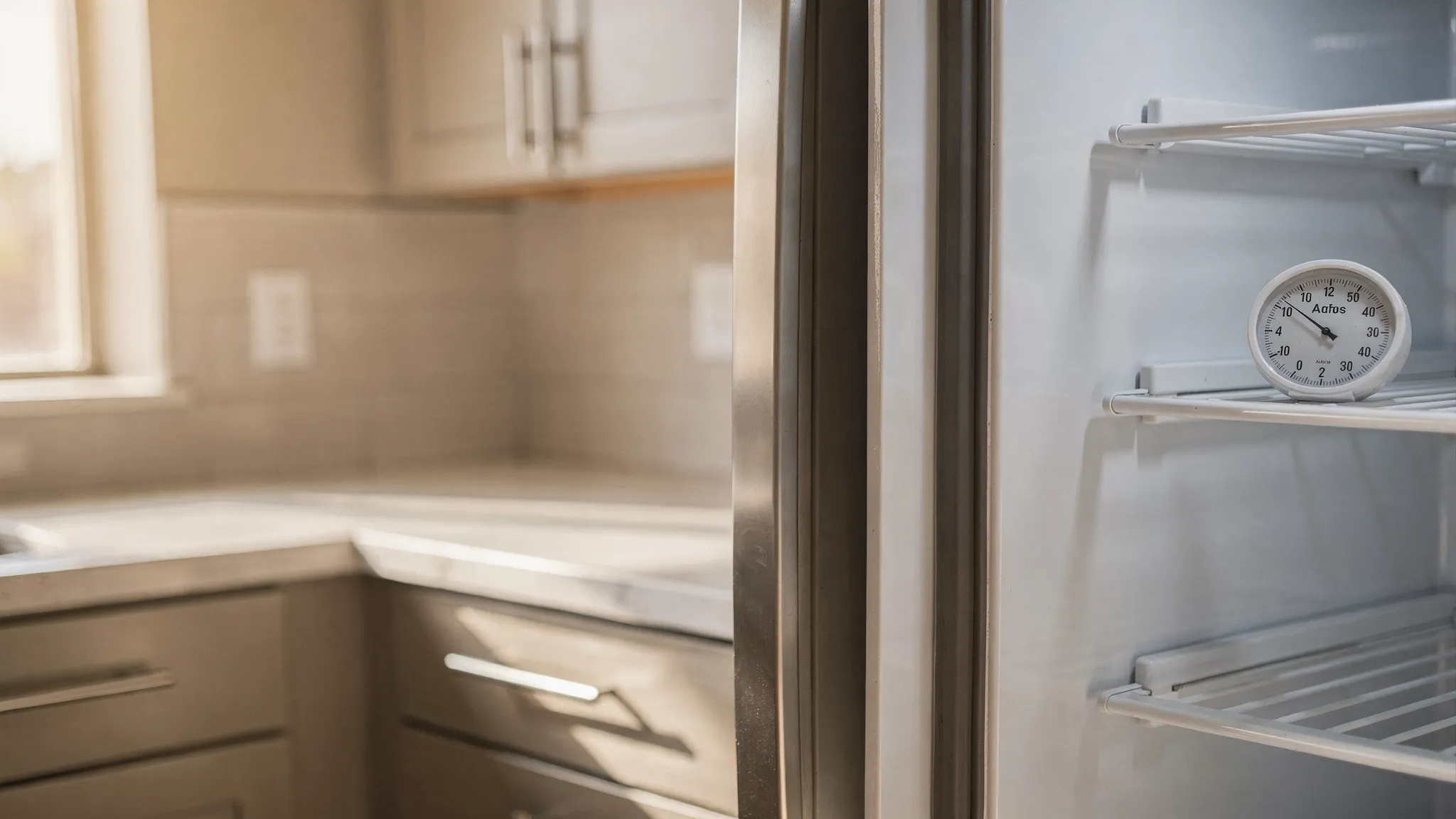
For food safety, the USDA recommends keeping your refrigerator at 40°F (4°C) or below. If you are not sure where you stand, use a simple fridge thermometer and check multiple spots, including near the door. (USDA guidance: Refrigeration and Food Safety)
5) The door does not “pull closed” or pops open
Many refrigerators rely on a combination of hinge alignment, a slight door tilt, and gasket grip to pull the door shut. If you close the door and it:
- Bounces back open
- Needs a push to fully seal
- Feels unusually light with no resistance
…you may have a worn gasket, a sagging door, or both.
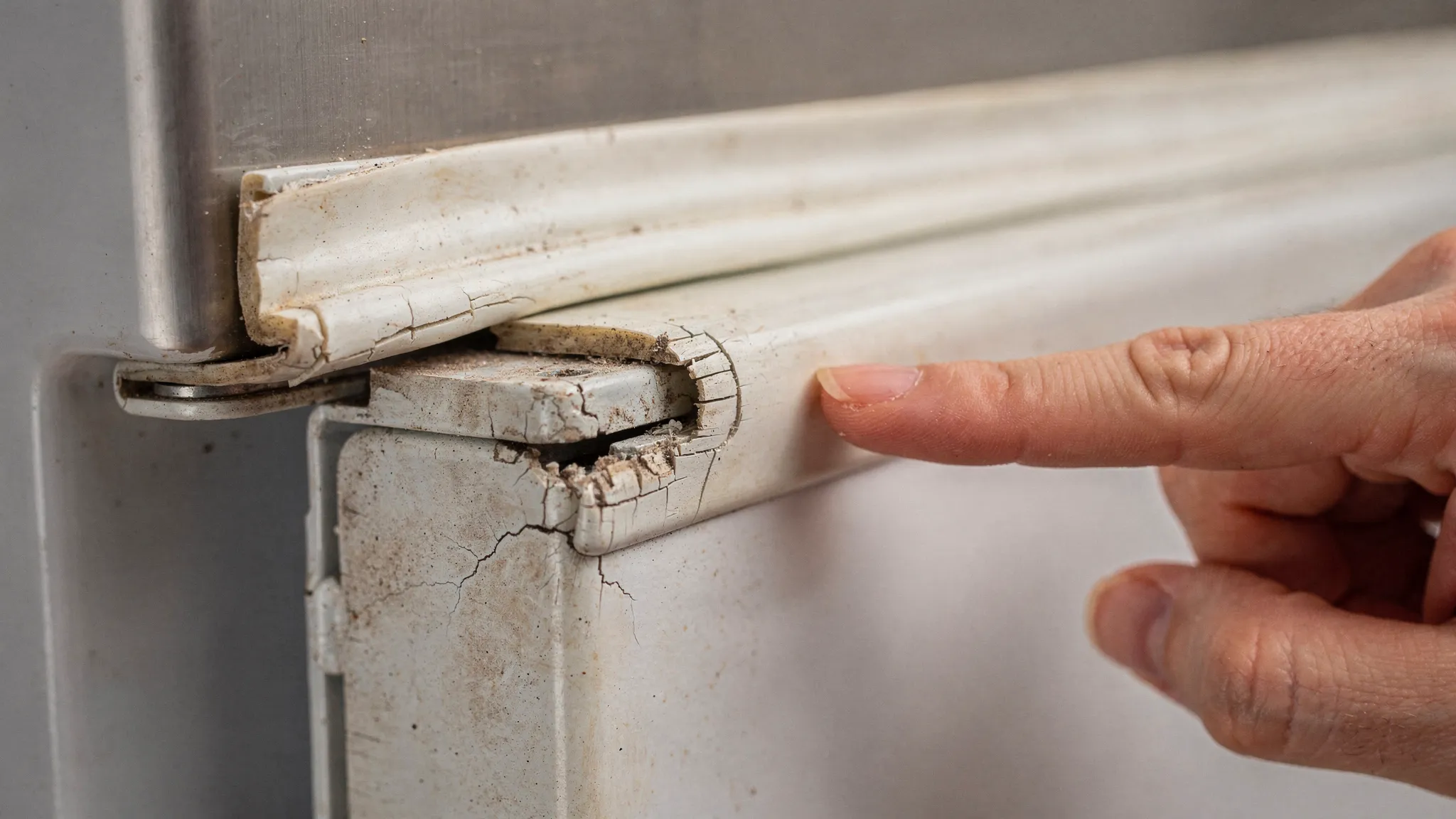
6) Visible gasket damage: cracks, tears, brittleness, or mold
Inspect the seal along the entire perimeter. Common red flags include:
- Tears or missing chunks
- Cracks at the corners
- Flattened sections that no longer “spring back”
- Sticky residue or hardened grime that keeps it from sealing
Mold or mildew can also build up in gasket folds. Cleaning can help, but if the rubber is deformed or deteriorated, cleaning alone will not restore the seal.
Quick at-home tests to confirm a bad seal
Before you order parts, run a couple of simple checks.
The “dollar bill” test
- Place a dollar bill (or a thin strip of paper) between the gasket and the fridge frame.
- Close the door on it.
- Gently pull the bill.
What to look for:
- If it slides out easily with little resistance, the seal may be weak at that spot.
- Repeat around the full door, especially corners.
Flashlight test (in a darker room)
- Put a flashlight inside the fridge pointing toward the door seal.
- Close the door.
- Look for light leaking out around the edges.
Light leaks often indicate gaps, warped doors, or areas where the gasket is not making full contact.
Visual “contact line” check
When the gasket is doing its job, you often see a consistent contact line where it presses against the cabinet. Inconsistent contact (pressed in some areas, barely touching in others) is a clue to misalignment or warping.
Why refrigerator door seals fail (and why Phoenix can make it worse)
Gaskets are durable, but they are not lifetime parts. These are the most common reasons they stop sealing.
Normal wear and compression over time
Rubber gaskets compress from thousands of door openings. Over the years, they can flatten out and lose elasticity.
Dirt, grease, and sticky spills
Even a good gasket cannot seal if it is coated with residue. Kitchen grease, sugary spills, and dust can prevent full contact.
Door misalignment or sagging hinges
A slightly sagging door can create a gap at the top corner that no amount of gasket cleaning will fix. Misalignment can be caused by:
- Loose hinge screws
- Wear in hinge bushings
- Overloaded door bins (heavy bottles add leverage)
Heat exposure and tough operating conditions
Phoenix kitchens, and especially garage refrigerators, can face higher ambient temperatures for long stretches. That can increase:
- How often the compressor runs
- How quickly a small air leak becomes a big cooling problem
- Stress on gasket material near the warm outer edge
If your fridge is in a hot garage, a “minor” seal leak can turn into noticeable temperature problems sooner than you would expect.
What to do next (clean, adjust, or replace?)
The right fix depends on what you find during inspection.
Step 1: Clean the gasket and mating surface
Many sealing problems are simply grime-related.
- Use warm water with mild dish soap and a soft cloth.
- Clean inside the gasket folds.
- Wipe the cabinet surface the gasket presses against.
- Dry thoroughly.
Avoid harsh chemicals that can dry out rubber, and avoid abrasive pads that can damage the gasket surface.
Step 2: Check for simple door-closing issues
If the gasket looks intact but the door does not close well:
- Make sure shelves and bins are not preventing full closure.
- Reduce weight in the door bins temporarily (milk jugs and large bottles can pull the door out of alignment).
- Confirm the fridge is level. Many refrigerators seal best when slightly tilted back, but follow your manufacturer’s guidance.
If the door is visibly sagging, hinge adjustment may be needed. This is often doable, but it can require careful support of the door and the correct tools.
Step 3: Replace the gasket when rubber is damaged or permanently deformed
Replacement is usually the right call when:
- The gasket is torn, cracked, or missing material
- Corners no longer sit flat
- The dollar-bill test fails in multiple spots even after cleaning
Important: Gaskets are model-specific. Use your refrigerator’s model number (usually on a label inside the fridge compartment) when ordering.
DIY gasket replacement: what the process generally looks like
Exact steps vary by brand and model, but most gasket replacements follow a similar pattern:
- Confirm the correct replacement gasket for your model number.
- Remove the old gasket (some are held in by retaining tabs, others by screws under a trim).
- Clean the channel and contact surfaces.
- Install the new gasket evenly, working around the perimeter.
- Close the door and re-check sealing contact.
Some gaskets ship folded and may need time to relax and flatten. Many homeowners use warm (not boiling) water to help soften the gasket so it seats properly, but you should follow the instructions provided with your part.
If you are not comfortable with removing door trim, handling hinges, or troubleshooting gaps after installation, a technician can usually complete the job quickly and confirm there is not an underlying door alignment issue.
Why you should not ignore a failing refrigerator door seal
A leaking seal is not just an “efficiency” issue.
Food safety risk
If temperatures creep above safe ranges, perishable foods can spoil faster. Use a thermometer to verify your fridge stays at or below 40°F, and take action quickly if it does not.
Higher energy use and added wear
When cold air escapes, your refrigerator must run longer to recover. Over time, that extra runtime can contribute to more frequent breakdowns.
For broader context on repair costs and common refrigerator fixes in the Phoenix area, see: Refrigerator Repair Cost in Phoenix (Real Prices from Local Experts)
Secondary symptoms that lead to bigger service calls
A seal problem can cause issues that look like other failures, for example:
- Frost that restricts airflow
- Ice buildup that interferes with door closure
- Moisture that damages packaging and surfaces
Catching the gasket early can prevent a chain of problems that is harder to diagnose later.
When to call a professional (especially in Phoenix heat)
A gasket replacement is sometimes straightforward, but not always. Consider professional help if:
- The door is sagging, scraping, or visibly misaligned
- You replaced the gasket and still fail the seal tests
- The refrigerator cannot reliably hold safe temperatures
- You see persistent frost patterns that return quickly after defrosting
- The fridge is in a garage or unconditioned space and performance is borderline
If food is at risk and the refrigerator is warming, treat it as time-sensitive. In Phoenix summers, indoor temperatures and frequent door openings can accelerate temperature rise.
Refrigerator door seal symptoms and what they usually mean
Use this quick table to connect what you are seeing to the most likely next step.
| Symptom | What it often indicates | What to check first | Typical next step |
|---|---|---|---|
| Condensation near door edge | Warm air leak at gasket or poor door closure | Clean gasket and frame, check for gaps | Replace gasket or adjust door |
| Frost near freezer door | Humid air entering through a leak | Dollar-bill test around freezer door | Replace gasket, check alignment |
| Door pops open | Weak seal grip or misalignment | Leveling, overloaded door bins, hinge looseness | Adjust hinges or replace gasket |
| Cracks/tears in rubber | Physical gasket failure | Full perimeter inspection | Replace gasket |
| Inconsistent temps near door | Air leak and warm spots | Thermometer readings, seal tests | Fix seal, then re-check temps |
Frequently Asked Questions
How long do refrigerator door seals usually last? Gasket lifespan varies by usage and environment, but frequent door openings, heavy door loading, and heat can shorten it. Inspect yearly and replace when sealing tests consistently fail.
Can I just clean a refrigerator gasket instead of replacing it? If the gasket is dirty but still flexible and intact, cleaning can restore a good seal. If it is torn, cracked, or permanently flattened, cleaning will not fix the leak.
Why do I see frost in the freezer even though it is “frost-free”? Frost-free systems still rely on a good door seal. If humid air leaks in, moisture can freeze faster than the defrost cycle can remove it, especially near the door edges.
Is a leaky door seal a big deal in Phoenix? Yes. Higher ambient temperatures can make a small leak more noticeable because the refrigerator has to work harder to recover after each door opening.
Do I need a technician to replace a refrigerator door gasket? Not always. Many homeowners can replace a gasket if they order the correct part and follow model-specific instructions. If the door is misaligned, the gasket will not seal well until the alignment issue is fixed.
Keep your fridge efficient (and your food safe) year-round
If your refrigerator seal is failing, addressing it early can help your fridge cool more consistently and avoid unnecessary strain, especially during Phoenix heat waves. For more Phoenix-focused repair guidance and local price context, browse the PHX Appliance Fix Blog, including our guide to refrigerator repair costs in Phoenix and our breakdown of whether it’s worth repairing a refrigerator in Phoenix’s heat.