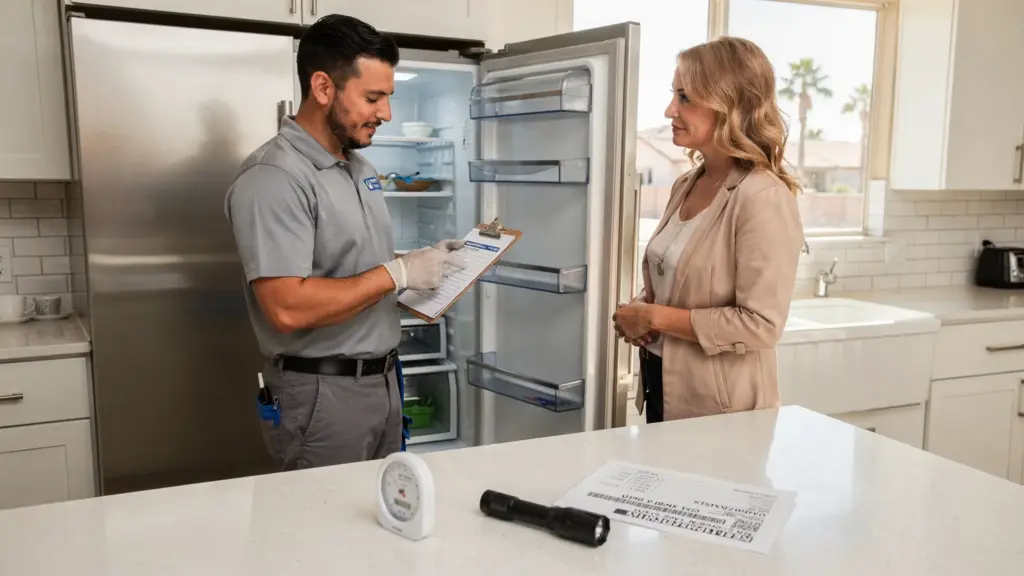
A refrigerator problem in Phoenix is rarely “just inconvenient.” In triple digit heat, a warm fridge can turn into a food safety issue fast, and the wrong technician can turn a manageable repair into days of delays and repeat visits.
This guide gives you practical, refrigerator-specific questions to ask before you hire, plus what good answers sound like, and which red flags should make you hang up.
Before you call a refrigerator technician (2 minutes of prep)
The fastest way to get an accurate quote and a quicker fix is to give the tech the right details upfront.
Have this ready:
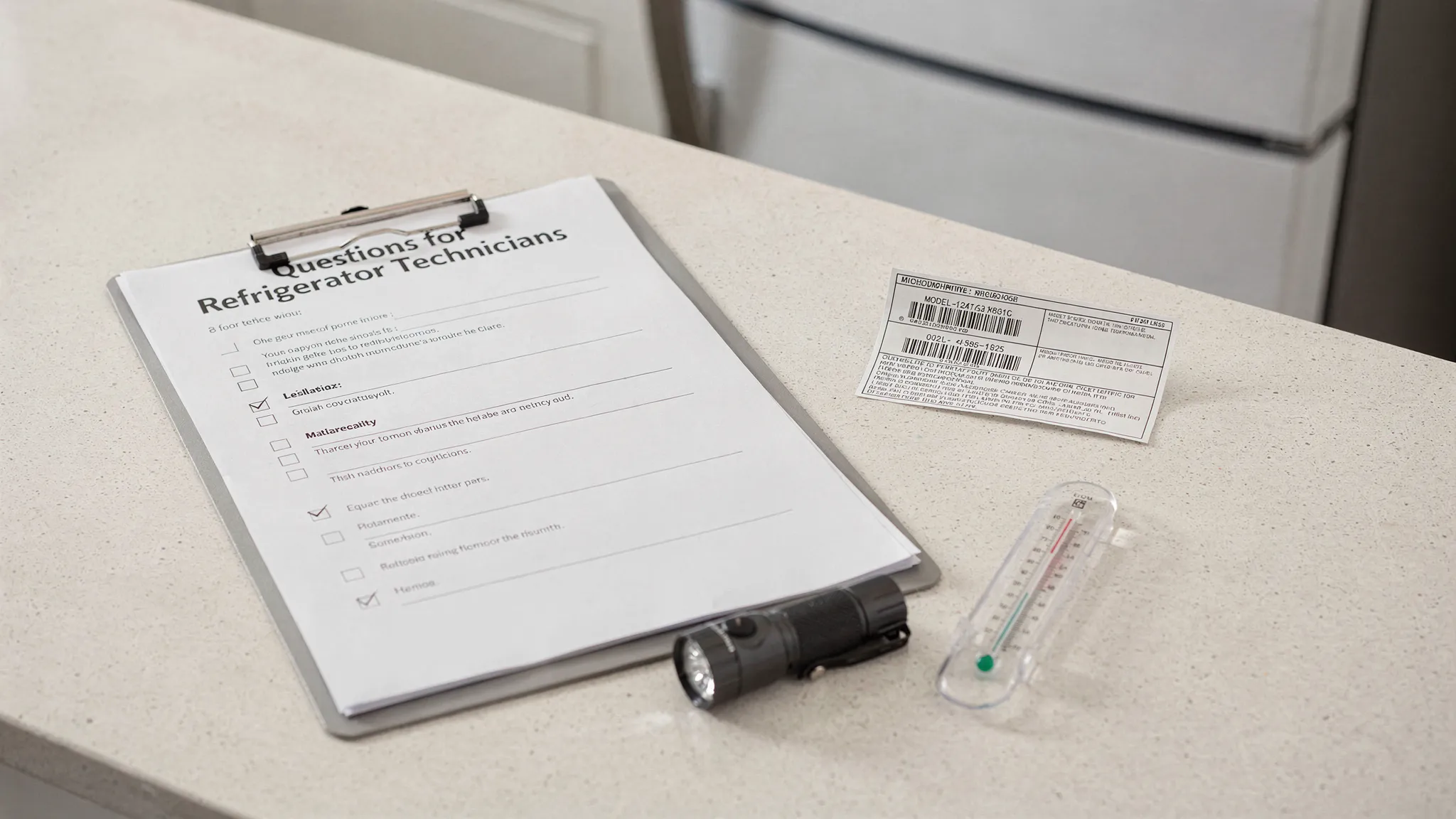
- Model number and serial number (usually on a sticker inside the fresh food section or door jamb)
- What changed and when (sudden failure vs gradual warming, after a power outage, after moving the unit, etc.)
- Current temperatures (use a fridge thermometer if you have one)
- Symptom pattern (freezer cold but fridge warm, loud clicking, water under the unit, constant running)
- Photos of frost buildup, error codes, or the back/bottom area (only if safely accessible)
If you need quick DIY steps while you’re scheduling service, use:
- Refrigerator Repair How To: Safe DIY Steps to Try First
- What Happens When Your Fridge Stops Cooling? Food Safety Timeline
The most important questions to ask refrigerator technicians
Not every appliance tech is equally strong on refrigeration. Fridges involve airflow systems, electronics, and sometimes sealed-system refrigerant work that should only be handled by properly credentialed pros.
1) “Do you work on my fridge type and brand regularly?”
Start here. A technician who mainly does washers and ovens may not be the best fit for a modern French door refrigerator with multiple fans, sensors, and boards.
What you want to hear:
- They’ve repaired your style (top-freezer, side-by-side, French door, built-in, counter-depth)
- They’re comfortable with your brand and its common failure points
- They ask follow-up questions about symptoms and temps, not just “we can come out”
2) “Are you EPA Section 608 certified for refrigerant work (if needed)?”
Many refrigerator issues are not sealed-system problems, but if the diagnosis points to refrigerant handling, leak repair, compressor replacement, or system evacuation, EPA certification matters.
You can reference the EPA’s overview of certification requirements here: EPA Section 608 Technician Certification.
What you want to hear:
- A clear “yes,” and they can explain that sealed-system work requires proper recovery equipment and compliance
Red flag:
- Vague answers like “we don’t need that” or “we just top it off”
3) “What is your diagnostic fee, and is it applied to the repair?”
This question keeps pricing transparent from the start. Diagnostic fees vary by company and time of year, and Phoenix summer demand can affect availability.
What to confirm:
- The service call/diagnostic fee amount
- Whether that fee is credited toward the repair if you proceed
- Whether there are after-hours or same-day surcharges
For a deeper breakdown of how repair invoices are commonly structured, see: Appliance Repair Costs: Service Fees vs Parts Explained
4) “Do you quote flat-rate pricing, hourly labor, or both?”
You’re not looking for one “best” method, you’re looking for clarity.
What you want to hear:
- A clear explanation of labor billing
- How they handle a repair that turns out to be more complex than expected
- Whether they’ll provide an itemized estimate before work begins
5) “What are the most likely causes based on my symptoms, and what will you test first?”
A strong refrigerator tech can outline a sensible diagnostic path without overpromising.
For example, if the freezer is cold but the fridge is warm, a tech might mention airflow and defrost-related checks. (You can also review that pattern here: Warm Fridge, Cold Freezer Fix Guide.)
What you want to hear:
- A short list of plausible causes
- The first tests they’ll run (temps, fan operation, frost pattern, airflow restrictions, door seal integrity)
Red flag:
- Immediate certainty on an expensive part (like a compressor) without seeing the unit or asking diagnostic questions
6) “If parts are needed, do you use OEM parts, aftermarket, or give me options?”
Parts choice can affect reliability, lead time, and warranty coverage.
What you want to hear:
- They can explain OEM vs aftermarket tradeoffs
- They’ll tell you if a part is backordered, and what that means for timeline
- They document part numbers on the invoice
7) “What warranty do you provide on parts and labor, and what does it exclude?”
Get specifics. “We warranty our work” is not enough.
Ask:
- Labor warranty length
- Whether the part is covered by the manufacturer separately
- Whether return trips for the same issue are covered
- Common exclusions (power surges, user damage, unrelated failures)
8) “Do you do same-day refrigerator repair in Phoenix, and what counts as ‘same-day’?”
“Same-day” can mean same-day arrival, same-day diagnosis, or same-day complete repair. In peak heat, those are not the same thing.
If you’re trying to secure fast service, this guide can help you set expectations: Kitchen Appliance Repair Near Me: Same-Day Options
What you want to hear:
- An arrival window you can plan around
- Honest constraints (parts availability, sealed-system complexity)
- A plan for food safety while waiting
9) “If this becomes an emergency, how do you handle after-hours calls?”
For emergency appliance repair in Phoenix, you need to know the rules before you need them.
Confirm:
- After-hours availability
- Additional fees and how they’re calculated
- Whether you’ll get a real technician or an answering service
10) “Will you document temperatures, findings, and the final repair on the invoice?”
Good documentation protects you if the issue recurs, and it helps if you sell the home or need to reference the repair later.
What you want to hear:
- They provide a written estimate and final invoice with diagnosis, part numbers, and warranty details
Quick cheat sheet: questions, good answers, and red flags
Use this table as a call script.
| What to ask | Why it matters | Good sign | Red flag |
|---|---|---|---|
| “Do you service my brand and fridge type often?” | Experience reduces misdiagnosis | They ask model number, symptoms, temps | “All fridges are the same” |
| “Are you EPA 608 certified if refrigerant work is needed?” | Required for sealed-system refrigerant handling | Clear “yes,” explains process | “We can just add refrigerant” |
| “What’s the diagnostic fee and is it applied to the repair?” | Avoid surprise charges | Fee disclosed, credit policy stated | Won’t quote fees until after visit |
| “Flat-rate or hourly? Do you itemize?” | Lets you compare apples to apples | Written, itemized estimate | One lump sum with no breakdown |
| “What will you test first?” | Shows real diagnostic process | Mentions temps, airflow, fans, frost | Jumps straight to expensive parts |
| “OEM vs aftermarket parts?” | Impacts reliability and warranty | Explains options and lead times | Won’t say what parts they use |
| “What warranty covers parts and labor?” | Limits repeat-pay situations | Clear terms in writing | “No warranty” or “depends” |
| “What does same-day mean for you?” | Sets realistic expectations | Defines arrival vs completion | Vague promises, no window |
What a transparent refrigerator repair estimate should include
You don’t need a “perfect” quote on the first phone call, but you should expect a clear structure once the tech diagnoses the issue.
Here’s what an itemized estimate commonly contains:
| Line item | What it typically covers | Notes to clarify |
|---|---|---|
| Service call / diagnostic | Trip, initial testing, basic evaluation | Is it credited toward repair? |
| Labor | Time to complete repair | Flat-rate vs hourly, minimum charges |
| Parts | Replacement components | OEM vs aftermarket, return policy |
| Additional materials | Small consumables | Ask if included in labor |
| Surcharges (if any) | After-hours, same-day priority, difficult access | Should be disclosed before dispatch |
| Warranty | Terms for labor and parts | Get it in writing |
If you want local context on pricing ranges for common repairs, reference: Refrigerator Repair Cost in Phoenix: Real Prices from Local Experts
Phoenix-specific hiring tips (what locals should ask that others don’t)
Phoenix conditions change refrigerator performance and failure rates, especially during the hottest months.
Ask if they’ll check airflow and heat load factors
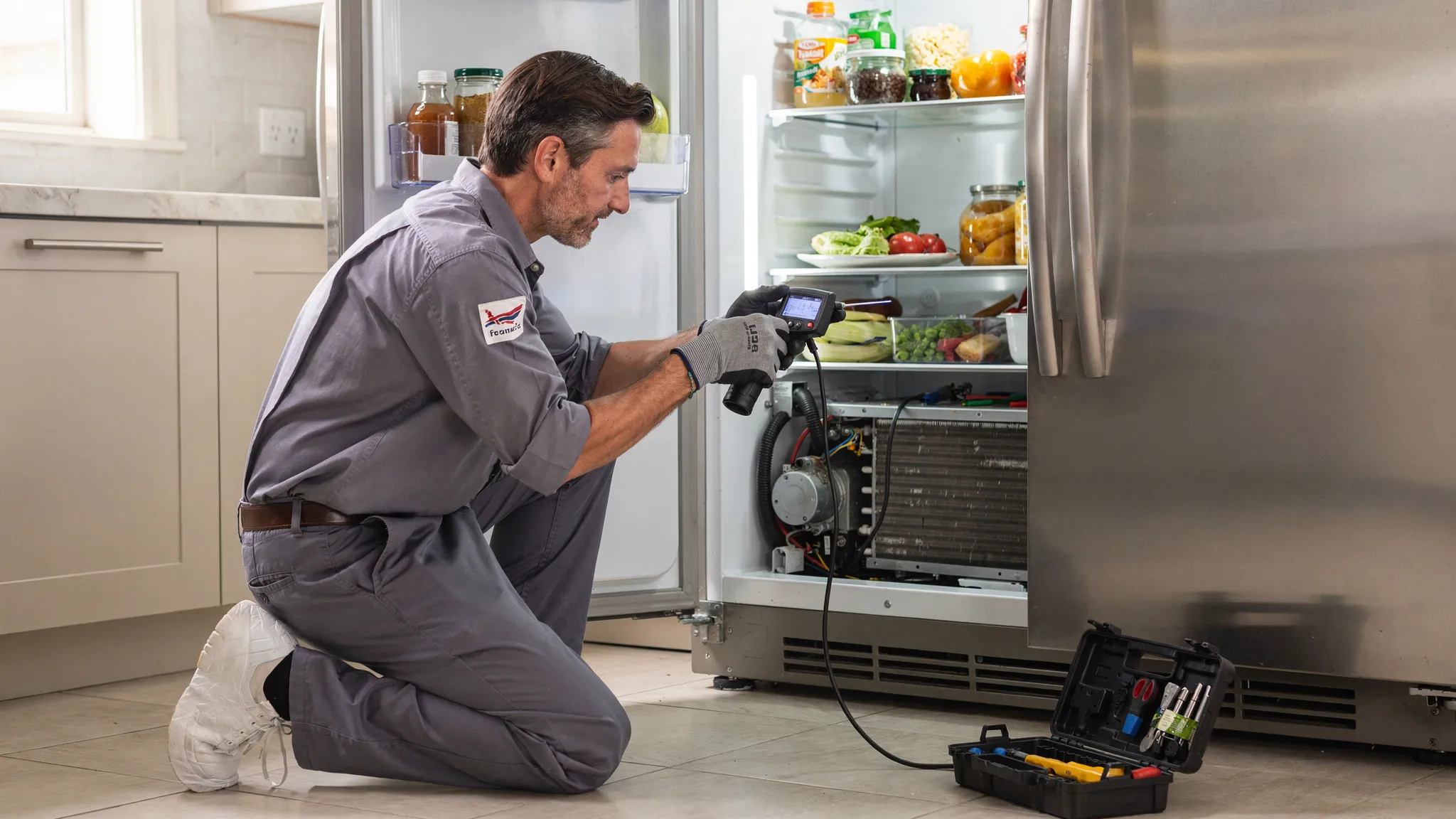
In extreme heat, a fridge can run nearly nonstop. A good tech will consider factors like:
- Dirty condenser coils (dust builds up fast)
- Poor clearance around the unit
- Garage installations (often exposed to higher ambient temps)
- Door gasket leaks that worsen with heat
If you suspect a gasket issue, these guides can help you confirm it:
- Refrigerator Door Seal: Signs It’s Failing and Why
- Refrigerator Door Seal Repair: Stop Leaks and Frost
Ask how they prioritize no-cooling calls
In Phoenix, “fridge not cooling” is time-sensitive. Ask:
- Whether they triage no-cooling calls ahead of non-urgent repairs
- Whether they carry common parts (fans, relays, sensors) for faster same-day refrigerator repair in Phoenix
If you want to understand the most common culprits before the visit, see: What Causes a Refrigerator to Stop Cooling? Top Culprits
Red flags when hiring a refrigerator technician
A few warning signs correlate strongly with bad outcomes (misdiagnosis, repeat visits, price surprises).
Watch out for:
- They won’t discuss pricing structure at all (diagnostic fee, labor method)
- They won’t answer refrigerant credential questions for sealed-system scenarios
- They push a compressor diagnosis immediately without basic troubleshooting questions
- They won’t provide anything in writing (estimate, warranty terms)
- They pressure you to decide on the spot without explaining findings
If you want a broader vetting framework for any appliance, this Phoenix-focused guide complements the fridge-specific questions here: Home Appliance Repair Near Me: How to Vet a Tech
After the repair: what to document (so you’re protected)
Before the technician leaves, take 60 seconds to capture the details that matter.
- Final invoice showing diagnosis, parts, labor, and warranty
- Any temperature readings they took (or take your own)
- A note of what to watch over the next 24 hours (normal run time, noise, frost)
- Maintenance recommendations (coil cleaning frequency, gasket care)
If food safety is a concern during a cooling failure, the USDA’s guidance is the gold standard for when to discard perishable foods (the “2-hour rule,” and a 1-hour window above 90°F). See: USDA Food Safety Basics.
A simple repair vs replace question to ask the tech
Not every refrigerator should be repaired, especially if the repair is major and the unit is older. A good technician should be willing to talk through the decision.
Ask:
“Based on the diagnosis, does repair make sense financially, and what other failures are common on this model?”
For a Phoenix-specific framework, read: Is It Worth Repairing a Refrigerator in Phoenix’s Heat?
Bottom line
Hiring the right refrigerator technician is less about finding the lowest price and more about getting clear answers on credentials, diagnostic approach, warranty, and realistic timing. In Phoenix, where heat raises the stakes, these questions help you avoid delays, protect your food, and make sure the repair is done correctly the first time.