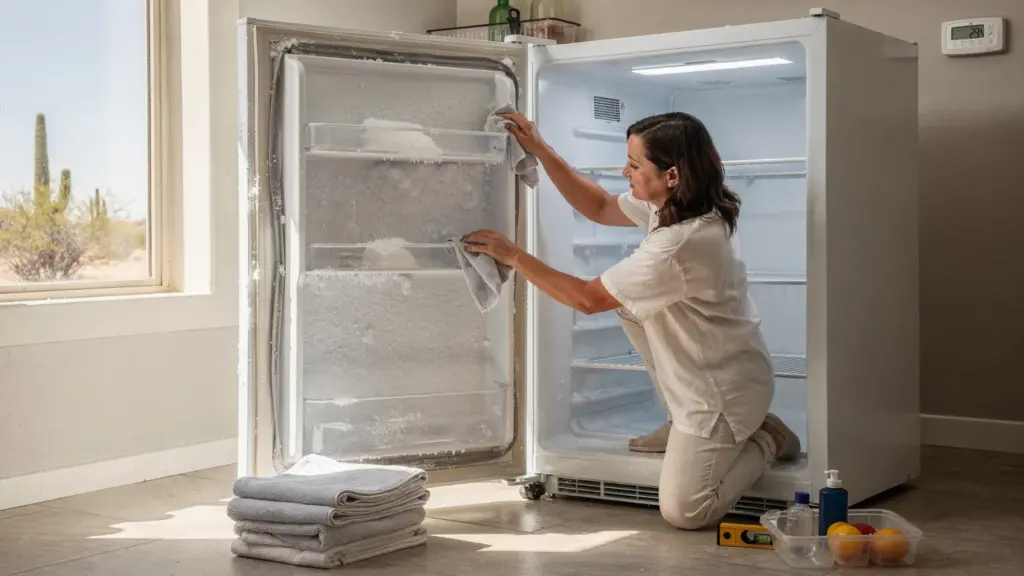
Frost in the freezer is more than a minor annoyance. It can keep the door from sealing, steal usable space, raise energy use, and eventually cause temperature swings that put food at risk. In Phoenix, garages and hot kitchens can make freezers run longer, which amplifies small problems like a weak gasket or a partially clogged defrost drain.
The good news is that most freezer frost buildup comes from a short list of causes, and you can usually narrow it down in under 20 minutes.
What “normal” frost looks like vs a problem
A light, even “snow dusting” after lots of door openings can be normal, especially during humid monsoon weeks. A problem is when frost is thick, returns quickly, or is concentrated in specific areas.
Here are the most useful patterns:
- Frost around the door frame or on the front edges usually points to a door seal leak or alignment issue.
- A solid sheet of frost on the freezer’s back wall (inside panel) often points to a defrost system problem.
- Ice collecting on the freezer floor is commonly a defrost drain issue (meltwater cannot flow to the drain pan).
- Frost in one corner only often indicates a gasket gap, hinge sag, or a warped door.
Safety first (before you touch anything)
Freezers combine electricity, moving fans, and sharp metal fins.
- Unplug the refrigerator (or turn off the dedicated breaker) before removing any interior panels.
- Do not chip ice with a knife or screwdriver. Puncturing the evaporator can turn a DIY job into a major sealed-system repair.
- If you smell burning plastic, see scorched wiring, or the unit trips the breaker, stop and call a pro.
Fast diagnosis: door leak or defrost issue?
Step 1: Check for the “door not really closed” problem
Before assuming parts are bad, look for the simple stuff that creates constant air leaks:
- A bag or pizza box blocking the door
- A bin or shelf out of position
- Ice buildup preventing full closure
- A door that swings open because the fridge is not level
If the freezer door does not “self close” the last inch or so (common on some models), leveling can matter a lot.
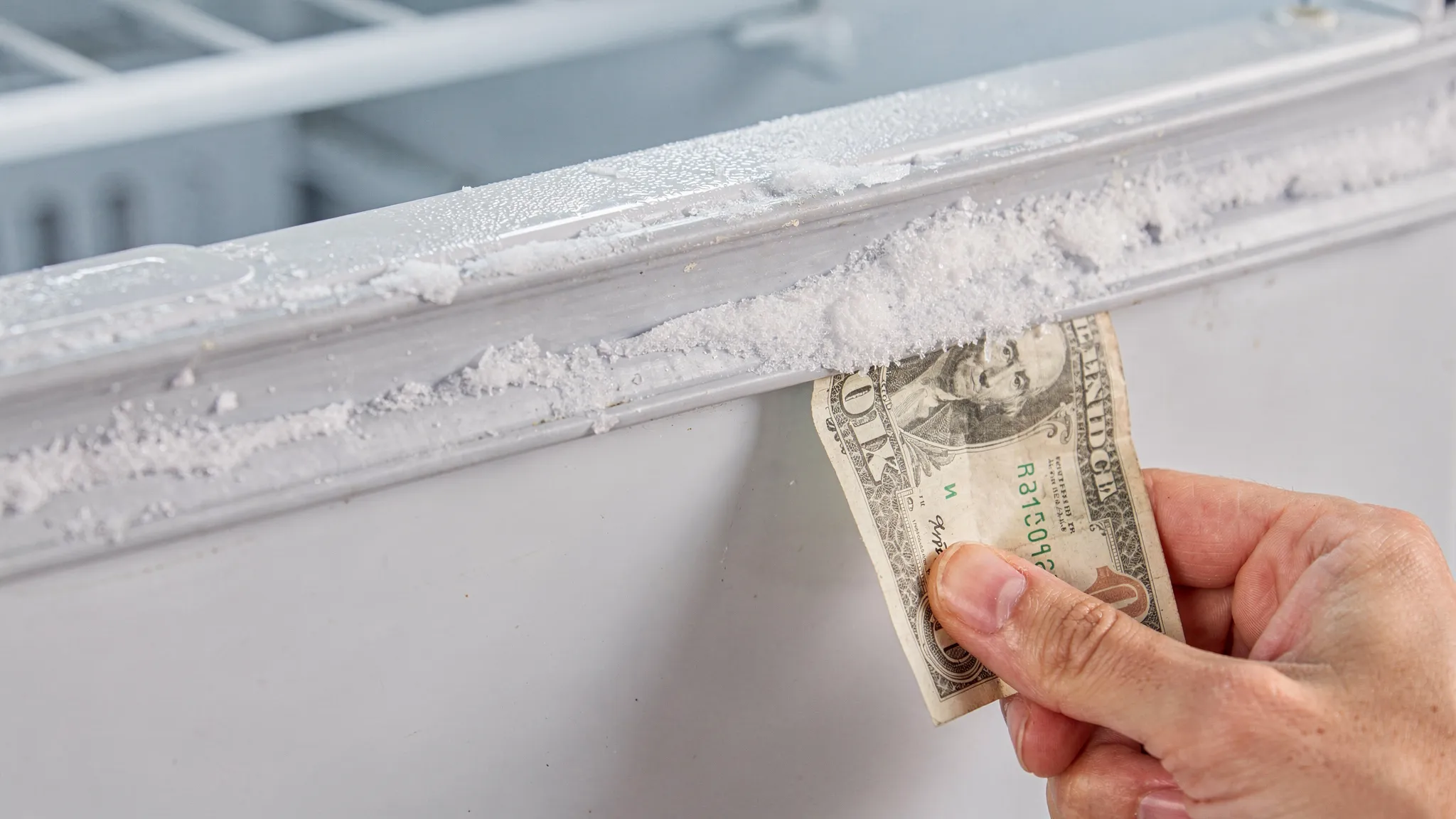
Step 2: Do the dollar-bill test on the gasket
Close the freezer door on a dollar bill (or a strip of paper) and pull it out.
- Good seal: you feel resistance all around.
- Leak likely: it slides out easily in one spot (often corners).
Repeat on all four sides, especially the top corners.
Step 3: Look at where the frost is forming
Use this quick guide.
| Frost pattern you see | Most likely cause | Best first check | Typical next step |
|---|---|---|---|
| Frost on door edge, corners, or gasket | Door not sealing (dirty gasket, torn gasket, hinge sag, misalignment) | Clean gasket and do dollar-bill test again | Adjust door alignment, reshape gasket, or replace gasket |
| Thick frost behind the rear freezer wall | Defrost system not clearing evaporator frost | Listen for evaporator fan, check airflow, consider controlled manual defrost | Diagnose heater, thermostat/thermistor, defrost control (often pro) |
| Ice sheet on freezer bottom | Defrost drain clogged or frozen | Inspect drain trough area, look for water pooling then freezing | Clear drain and flush, verify drain heater (if equipped) |
| Frost returns within days after full defrost | Ongoing air leak or defrost failure | Confirm door closes and seals, confirm temps | Call a technician to test defrost components |
Fix 1: Clean and “re-seat” the door gasket (no parts)
Door gaskets fail in two ways: they get dirty and stiff, or they get deformed/torn.
Clean the gasket correctly
Dust and food residue can prevent the soft vinyl from sealing.
- Mix warm water with a small amount of mild dish soap.
- Wipe the gasket folds thoroughly.
- Wipe again with clean water and dry.
Also clean the mating surface on the cabinet where the gasket touches.
Check for deformation and reshape it
If a section is bent outward, warm it gently.
- Use a hair dryer on low for short bursts.
- Warm the area until it’s flexible, not hot.
- Press it into the correct shape and hold for 30 to 60 seconds.
If the gasket is cracked, torn, or missing chunks, reshaping will not last.
For a deeper gasket-focused walkthrough, see: Refrigerator Door Seal Repair: Stop Leaks and Frost.
Fix 2: Correct door alignment and closing force
A perfect gasket will still leak if the door is sagging.
Quick alignment checks
- Look at the gap around the door: it should be even.
- Confirm the door closes smoothly without “popping back.”
- Make sure drawers or baskets are not pushing the door outward.
Level the refrigerator (often overlooked)
Many fridges are designed so the doors swing shut when the front is slightly higher than the back.
- Place a small level on the cabinet (or check a flat shelf inside).
- Adjust the front leveling feet until the unit is stable and the doors close confidently.
If hinges are loose or worn, tightening may help, but hinge replacement is a common pro repair.
Fix 3: Do a controlled manual defrost (the right way)
Manual defrost is both a fix and a diagnostic step. If the freezer works normally for a week or two after a complete defrost, then frosts up again, you likely have a defrost system problem or an ongoing air leak.
What you’ll need
- Cooler and ice packs (or a neighbor’s freezer space)
- Towels
- A fan (optional, speeds the melt)
- A thermometer (recommended)
Steps
- Move food to a cooler.
- Unplug the refrigerator.
- Open freezer door and place towels to catch water.
- Let it defrost fully (often 8 to 24 hours depending on ice thickness).
- Clean up water, then restart the unit.
Avoid “speed” methods that can damage liners or wiring, like boiling water inside the compartment or using high heat close to plastic.
Food safety note: USDA guidance is to keep freezers at 0°F and refrigerators at 40°F or below. If temps rise and you are unsure, use a thermometer and follow safe discard rules. (Source: USDA Food Safety and Inspection Service)
Fix 4: Clear a clogged or frozen defrost drain (common “ice floor” culprit)
If the defrost system is melting ice off the evaporator, that water must drain through a small hole and down to a pan underneath the fridge. When the drain clogs (food bits, ice, slime), water backs up, refreezes, and creates an ice rink on the freezer bottom.
Signs your drain is the issue
- Ice on the freezer floor
- Water leaking out the front of the fridge after defrost cycles
- A recurring slab of ice under the lower drawer/basket
What you can try safely
Exact access depends on model, but the general approach is:
- Unplug the unit.
- Remove the lower freezer basket/drawer.
- If you can see the drain trough/hole, melt visible ice with gentle warm air.
- Flush the drain with warm water (a turkey baster works well).
If you must remove interior panels to reach the drain area and you are not comfortable doing that, it is a good moment to stop. Panels can hide fan wiring, heaters, and sharp fins.
When frost is a true defrost system failure (and what that usually means)
Modern refrigerators typically use an automatic defrost cycle. The system generally includes:
- A defrost heater (melts frost off the evaporator)
- A defrost thermostat or sensor (thermistor) (prevents overheating, signals temperature)
- A defrost control (timer or electronic board that schedules defrost)
When one of these fails, frost builds on the evaporator coil until airflow is blocked. A common outcome is warm fridge, still-cold freezer, because cold air cannot move into the refrigerator section.
If that symptom matches your situation, this companion guide is a better fit: Fridge Freezer Repair: Fix Warm Fridge, Cold Freezer.
Phoenix-specific reasons frost problems show up more often
Phoenix does not have constant high humidity, but the environment still creates unique stress:
- Garage installations: a hot garage forces longer run times, and longer run time makes small air leaks more costly.
- Dust: dirty condenser coils can increase run time and worsen temperature recovery after door openings.
- Monsoon humidity spikes: frequent door opening during humid days brings in more moisture to freeze.
If you have not cleaned condenser coils in a while, do it. (Unplug first.) Coil maintenance is also covered in: Refrigerator Repair How To: Safe DIY Steps to Try First.
When to call a technician (and when it’s an emergency)
DIY makes sense for gasket cleaning, leveling, and a careful manual defrost. Beyond that, the risk and complexity ramp up quickly.
Call for professional appliance repair in Phoenix when:
- Frost returns within a few days of a full defrost
- You see heavy frost on the back interior panel and cooling performance is dropping
- The evaporator fan is hitting ice (loud ticking, grinding, or sudden fan noise changes)
- You suspect a failed heater, sensor, or control board
- The unit is in a Phoenix garage and cannot maintain safe temps during hot afternoons
Treat it as urgent (same-day if possible) when:
- Your refrigerator section rises above 40°F and food is at risk
- The freezer cannot stay near 0°F
- You have medication, breastmilk, or high-risk foods that must stay frozen
For realistic timing expectations, triage steps, and how “same-day” is defined, see: Kitchen Appliance Repair Near Me: Same-Day Options.
If you are trying to decide whether a repair is financially sensible, these Phoenix-focused reads can help:
- Refrigerator Repair Cost in Phoenix – Real Prices from Local Experts
- Is It Worth Repairing a Refrigerator in Phoenix’s Heat?
Prevent frost from coming back (simple habits that work)
Once you fix the cause, prevention is mostly about reducing moisture entry and keeping airflow consistent.
- Keep freezer vents clear, avoid packing food tightly against the rear panel.
- Close the door firmly, do a quick “tug check” if you have kids or frequent snacking.
- Wipe spills and crumbs from the gasket area before they harden.
- During humid weeks, minimize “standing open” time while deciding what to grab.
- In Phoenix garages, give the fridge proper clearance and keep coils clean so it can recover faster.
Frequently Asked Questions
Is freezer frost buildup always a bad door gasket? Not always. Frost around the door often is a gasket or alignment issue, but frost behind the back wall can be a defrost failure, and ice on the floor often points to a clogged drain.
How fast should frost come back after I defrost the freezer? If you did a full manual defrost and frost returns noticeably within a few days, that suggests an ongoing air leak or a defrost system problem that needs diagnosis.
Can I use a heat gun or sharp tool to remove ice faster? Avoid both. Heat guns can warp plastic liners and damage wiring, and sharp tools can puncture the evaporator. Use time, towels, and gentle warm airflow instead.
Why is there ice on the bottom of my freezer? A very common cause is a clogged or frozen defrost drain. During defrost, meltwater cannot drain away, so it refreezes on the floor.
When should I request same-day refrigerator repair in Phoenix? If the fridge section is above 40°F, the freezer cannot stay near 0°F, or you have critical items to keep frozen, it is worth pursuing same-day service to protect food safety.
Need help pinpointing the cause?
If you want more Phoenix-specific troubleshooting, start with Refrigerator Repair How To: Safe DIY Steps to Try First and then compare symptoms in What Causes a Refrigerator to Stop Cooling? Top Culprits. When the signs point to a defrost component or persistent door leak, it may be time to contact a local refrigerator technician so you can stop the frost cycle before it impacts temperatures and food safety.