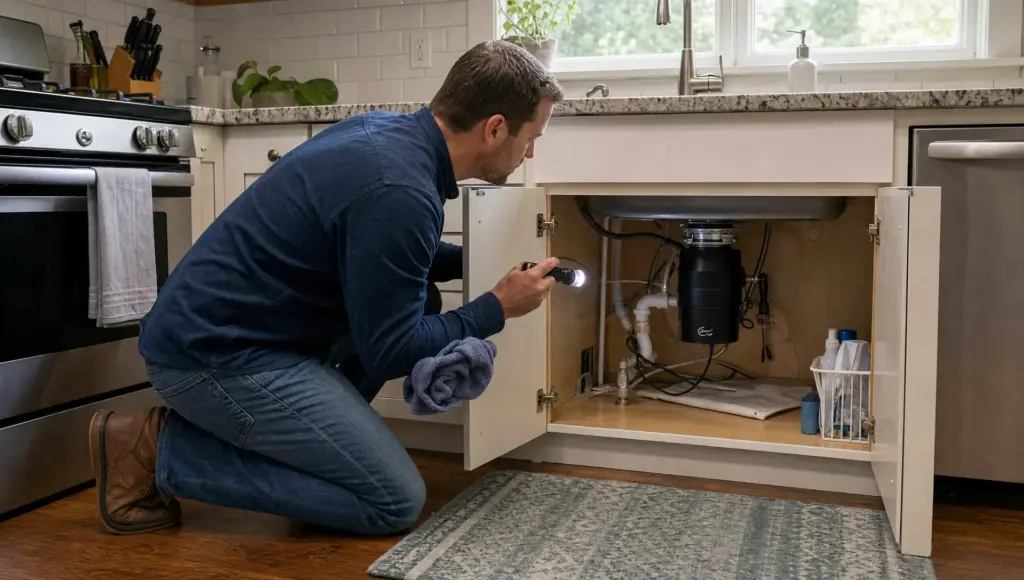
A garbage disposal that leaks from the reset button is usually telling you something more serious than “press the button again.” The reset button sits on the bottom of the unit near the motor, not on a normal water connection. If water is coming from that area, the disposal often has an internal seal failure and replacement is usually safer than repair.
Before you buy a new unit, though, confirm the leak is truly coming from the reset button. Water can run down from the sink flange, discharge pipe or dishwasher inlet and drip off the lowest point, making the reset button look guilty when it is not.
If a Garbage Disposal Leaks From the Reset Button, Replacement Is Usually the Safe Call
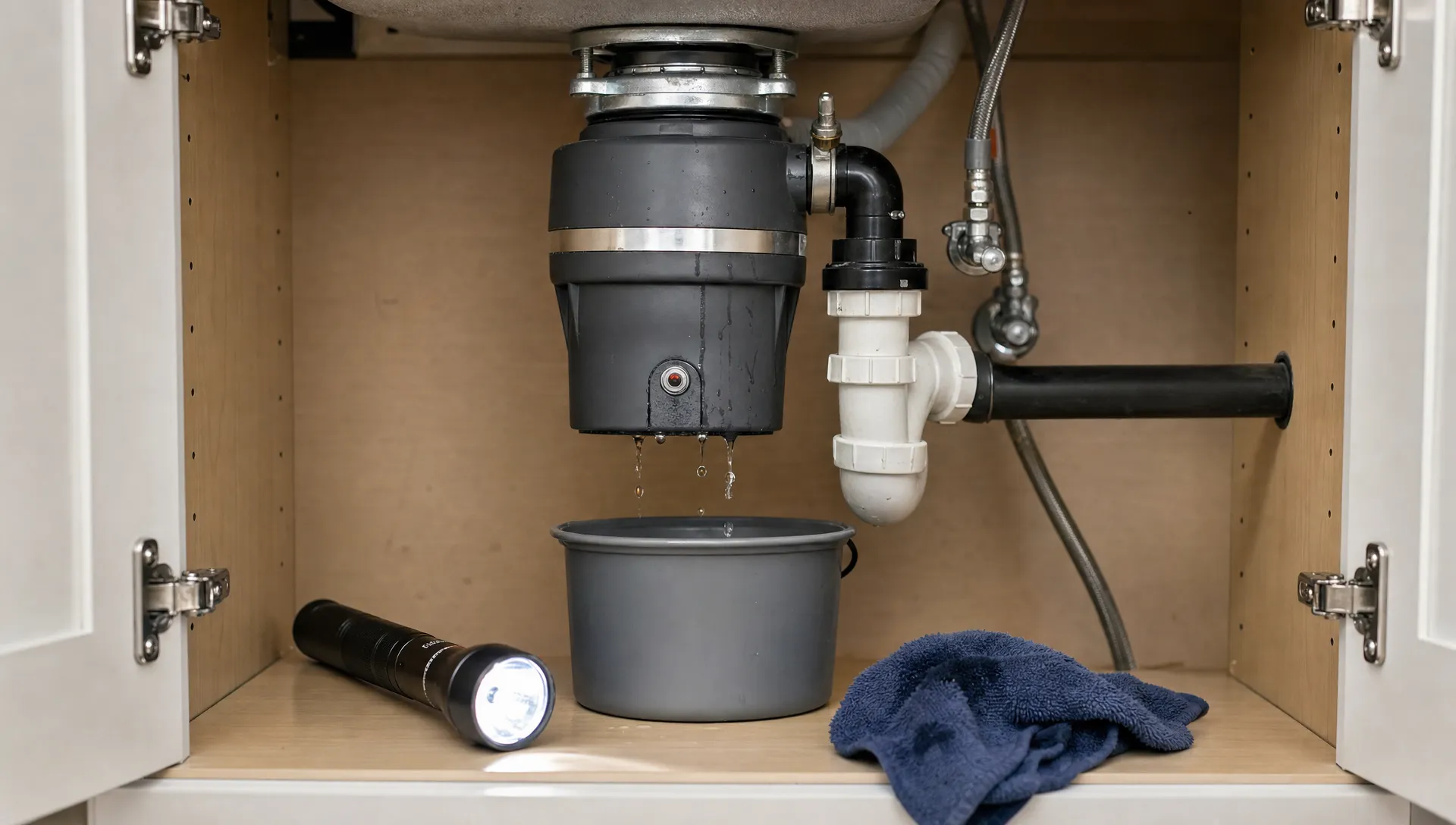
If the leak is confirmed at the bottom reset button, plan on replacing the disposal. The reset button is part of the electrical overload protection system. It is not designed to carry water, seal water or be repaired with plumber’s putty.
Most garbage disposals are sealed motor assemblies. Once water gets into the lower housing, the internal shaft seal, motor housing or lower body has usually failed. At that point, trying to patch the outside may hide the symptom without stopping water inside the unit.
Here is the practical rule:
| What you see | Likely cause | Best next step |
|---|---|---|
| Water dripping directly from the reset button area | Internal seal or lower housing failure | Replace the disposal |
| Water running down the side before dripping off the bottom | Sink flange, mounting ring or side connection leak | Repair the leaking connection |
| Leak only when the dishwasher drains | Dishwasher hose or disposal inlet issue | Inspect hose, clamp and knockout area |
| Leak only when the sink is full and then released | Sink flange or drain assembly leak | Reseal or tighten the upper assembly |
| Leak plus burning smell, tripped breaker or sparks | Electrical hazard | Stop using it and call a pro |
Why the Reset Button Area Is Different From Other Leaks
A garbage disposal has several normal plumbing connection points: the sink flange at the top, the drain outlet on the side and sometimes a dishwasher inlet. Those areas can often be resealed, tightened or repaired.
The reset button area is different. It is on the underside of the disposal, where the motor and electrical components are located. The button itself resets the unit after overload, such as a jam, overheating event or electrical trip. If water is appearing there, it has likely traveled through the disposer body.
That makes it both a plumbing problem and an electrical safety concern. Even if the disposal still turns on, water near the reset switch, wiring cavity or motor is a warning sign. Do not press the reset button while the bottom of the unit is wet.
Phoenix-area homes can also be rough on disposals because mineral-heavy water, heat and frequent use can accelerate wear on older units. That does not mean every leak is caused by hard water, but it does make age and corrosion worth checking closely.
Safety Steps Before You Inspect the Disposal
Start by making the area safe. A garbage disposal uses electricity and sits in a wet cabinet, which is a bad combination when a leak is already present.
Turn off power to the disposal before touching it. If it plugs into an outlet under the sink, unplug it. If it is hardwired, switch off the correct breaker. If you are not sure which breaker controls it, do not guess while water is dripping from the unit.
Dry the cabinet floor and place a small bucket or towel under the disposal. Use a flashlight, not your fingers, to inspect the bottom. Never put your hand inside the grinding chamber, even if the unit is unplugged.
If the outlet, cord or wiring connection is wet, stop. Let a qualified technician or electrician handle the next step. A disposal that leaks from the reset button is not worth risking a shock injury.
How to Confirm the Leak Is Really Coming From the Reset Button
Because water follows gravity, the lowest drip point can be misleading. The goal is to trace the first place water appears, not the place where it finally falls.
Use this simple test:
- Turn off power: Unplug the disposal or shut off the breaker before inspection.
- Dry everything: Wipe the disposal body, drain pipe, cabinet floor, sink flange area and side connections completely dry.
- Wrap paper towels around likely leak points: Place a dry strip under the sink flange, around the mounting ring, around the discharge elbow and near the dishwasher inlet if one is connected.
- Run cold water without turning on the disposal: Watch the paper towels and the underside of the unit with a flashlight.
- Fill the sink partway, then release it: A full-basin drain test can reveal leaks at the flange or mounting assembly.
- Inspect the bottom last: If the upper areas stay dry and water beads around the reset button or lower seams, the disposal is likely leaking internally.
Do not run the disposal motor during this test if you already see water at the reset button. Running it can pull more water into the electrical area or worsen an existing internal leak.
Leaks That Can Mimic a Bad Reset Button
Not every drip from the bottom means the disposal itself has failed. These are the common lookalikes worth checking before replacing the unit.
| Leak source | How it behaves | Typical fix |
|---|---|---|
| Sink flange | Leaks from the top where disposal meets sink | Reseal flange with plumber’s putty or replace gasket |
| Mounting ring | Drips around the upper collar | Tighten or reinstall the mounting assembly |
| Discharge elbow | Leaks from side pipe connection | Replace gasket or tighten fasteners evenly |
| Dishwasher inlet | Leaks when dishwasher drains | Tighten clamp or replace hose |
| Cracked disposal body | Water appears along casing seam | Replace disposal |
| Reset button or very bottom | Water appears under motor housing | Replace disposal |
If the leak shows up only after your dishwasher runs, the dishwasher drain hose deserves extra attention. A poor hose connection at the disposal can send water down the unit and make it appear as if the reset button is leaking. If you are dealing with drainage problems at the same time, this guide to dishwasher drain troubleshooting can help you separate a dishwasher issue from a disposal issue.
Why Garbage Disposals Start Leaking From the Bottom
A bottom leak usually develops after years of use. Inside the unit, seals keep water away from the motor area while the grinding plate spins. Those seals can wear out, dry out or corrode.
Food acids, small bones, coffee grounds, grease buildup and abrasive debris can shorten the life of the internal components. Frequent jams can also strain the unit. If the disposal recently jammed, hummed or needed repeated resets, the leak may be part of a larger failure pattern. For a separate no-grind problem, use this safe guide to a garbage disposal that hums but will not grind.
Corrosion is another common cause. Once the lower shell begins rusting or the internal seal surface is damaged, water finds a path downward. You may see brown stains, mineral crust, swelling around seams or a persistent musty smell inside the cabinet.
Installation stress can contribute too. If drain pipes are misaligned or forced into position, they can twist the disposal body and put pressure on seals. That is why a replacement should be installed with properly aligned plumbing, not pulled into place by overtightened fittings.
Can You Repair the Reset Button Leak?
In most cases, no. A leak from the reset button area is not a serviceable gasket replacement like a discharge elbow leak. The reset button is not the failed part. It is simply where water is escaping or collecting.
Avoid these quick fixes:
- Smearing silicone or epoxy around the reset button
- Pressing the reset button repeatedly while the area is wet
- Wrapping the bottom with tape
- Continuing to use the disposal because the leak is “small”
- Pouring drain cleaner into the unit to “clear” the problem
External sealants rarely solve the internal path water is taking. Worse, they can trap moisture inside the motor housing and delay the replacement until the unit fails electrically.
There is one exception: if the water is actually coming from a nearby connection and only dripping off the reset button, that connection can often be repaired. That is why the dry paper towel test matters.
When Replacement Makes More Sense Than Repair
Replacement is usually the better choice when the disposal leaks from the reset button, but the decision is even clearer if the unit is older, noisy or unreliable.
Consider replacement if any of these are true:
- The disposal is more than several years old and has visible corrosion
- The leak comes directly from the bottom housing or reset button
- The unit trips the reset button often
- It hums, stalls or jams repeatedly
- There is a burning odor or electrical buzzing
- The cabinet floor shows water damage from an ongoing leak
- Replacement parts are hard to find or close to the cost of a new unit
For broader appliance decisions, PHX Appliance Fix has a useful guide on when to repair versus replace a home appliance. The same logic applies here: weigh age, safety, reliability, part availability and total cost instead of focusing only on the immediate repair.
DIY Replacement or Call a Pro?
A handy homeowner can often replace a plug-in garbage disposal if the plumbing is straightforward, the mounting assembly matches and the cabinet has enough working room. Still, the job is heavier and messier than it looks. A disposal must be supported while the mounting ring is released, and old fittings may be corroded.
Call a professional if the disposal is hardwired, the shutoff method is unclear, the cabinet has active water damage or the drain pipes do not line up easily. You should also call for help if the dishwasher connects to the disposal and you are not sure whether the knockout plug needs to be removed on the new unit.
That small knockout detail matters. If a dishwasher drain hose is connected to a new disposal but the knockout plug is left in place, the dishwasher will not drain properly. If the plug is removed when no dishwasher is connected, you can create another leak path.
Also check the electrical setup. Many modern under-sink outlets are GFCI-protected, either at the outlet or upstream. If your disposal leak caused a trip, do not reset the circuit until the wet disposal is disconnected and the area is dry.
What to Look for in the Replacement Unit
You do not always need the most expensive disposal, but you should match the new unit to your household’s use. A small household that uses the disposal lightly has different needs than a busy kitchen that handles daily food prep.
Focus on these practical factors:
- Horsepower: Light use may be fine with a smaller motor, while frequent cooking usually benefits from more power.
- Mount compatibility: Some replacements fit the existing mounting hardware, which can reduce installation time.
- Noise insulation: Quieter units cost more but can be worth it in open kitchens.
- Stainless grinding components: These can resist corrosion better than lower-grade materials.
- Warranty length: A longer warranty can matter if the unit sees heavy use.
If your old disposal failed from the bottom, inspect the cabinet and plumbing before installing the replacement. Swollen cabinet flooring, loose drain pipes or a sagging sink flange should be addressed first. Installing a new disposal under a leaking sink assembly can lead to another wet cabinet.
How to Prevent Future Disposal Leaks
No disposal lasts forever, but better habits can reduce stress on the seals, motor and drain connections.
Run cold water before, during and after grinding food waste. Let the water continue for several seconds after the grinding sound clears so debris can move through the trap. Avoid pouring grease, oils or melted fats into the disposal because they can coat the chamber and harden in the drain.
Feed waste gradually instead of packing the chamber full. Fibrous foods like celery, corn husks, onion skins and artichoke leaves can wrap around moving parts. Hard items like fruit pits, shells and bones can jam or damage the grinding components.
Clean the splash guard and chamber regularly with mild dish soap, cold water and a disposal brush. If odors develop, grind a few small citrus peels with cold water, but do not rely on citrus to clean a greasy or clogged drain.
Most important, respond early to changes. New vibration, repeated resets, humming, slow draining or rust stains are signs the disposal needs attention before a leak spreads under the sink.
Frequently Asked Questions
Can a garbage disposal reset button leak be fixed? Usually not if water is truly coming from the reset button area. That location points to an internal seal or lower housing failure, and replacement is normally the safer choice.
Is it dangerous if water drips from the bottom of the garbage disposal? Yes, it can be. The bottom of the unit contains electrical components. Turn off power, stop using the disposal and confirm the leak source before doing anything else.
Why does my disposal leak only when I run the dishwasher? The leak may be at the dishwasher drain hose connection or disposal inlet, not the reset button. Dry the area, run a dishwasher drain cycle if safe and watch the side inlet closely.
Should I press the reset button if it is wet? No. Do not press a wet reset button. Disconnect power and dry the area first. If the button area becomes wet again, treat the disposal as failed until proven otherwise.
How long should a garbage disposal last? Lifespan varies by brand, usage, installation quality and what goes down the drain. When an older disposal leaks from the bottom, replacement is usually more sensible than trying to rebuild it.
Bottom Line
If your garbage disposal leaks from the reset button, do not treat it like a loose pipe fitting. Confirm the water is not running down from the sink flange, side outlet or dishwasher connection. If the reset button area is truly the source, replace the disposal and keep power off until the wet unit is removed.
A small drip under the sink can turn into cabinet damage, electrical trouble and a bigger repair. Safe diagnosis now is cheaper than ignoring a disposal that is already leaking into its motor housing.