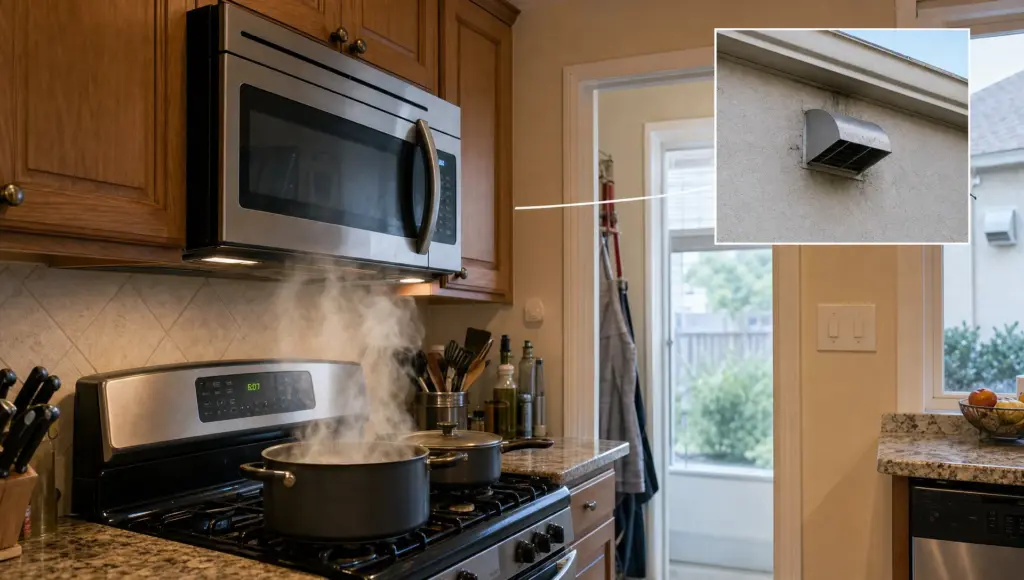
A microwave fan that sounds loud but barely moves air usually points to restricted airflow before it points to a dead motor. In many over-the-range microwaves, a clogged grease filter, saturated charcoal filter, blocked exterior vent or stuck damper can make the blower roar while the kitchen still fills with steam.
A failing motor is possible, especially if the sound is grinding, squealing or uneven. But before you assume the most expensive repair, it helps to separate safe homeowner checks from work that belongs inside the microwave cabinet.
Quick Answer: Filter First, Motor Second
If the microwave fan is loud but weak, start with the filter and vent path. Airflow restrictions are common, easy to check and often fixable without tools. A motor problem becomes more likely when the filters are clean, the vent path is open and the fan still struggles or makes mechanical noises.
| Symptom | More likely cause | What to check first |
|---|---|---|
| Loud rushing noise with weak pull | Clogged grease filter | Wash or replace the bottom mesh filter |
| Fan noise is louder after heavy cooking | Grease buildup | Filter, underside intake and vent grille |
| Weak airflow in recirculating mode | Saturated charcoal filter | Replace the charcoal filter if your model uses one |
| Fan hums but barely turns | Motor, capacitor or blower issue | Stop using the fan and call for service |
| Rattling or scraping | Loose blower wheel, debris or worn bearing | Do not open the cabinet, request diagnosis |
| Airflow weak only outside | Duct, damper or exterior vent cap issue | Check the outdoor wall or roof vent if accessible |
Safety First: What You Can Check Without Opening the Microwave
Microwaves are not like simple countertop fans. Even unplugged, a microwave can contain high-voltage components that may hold a dangerous electrical charge. Safe checks should stay outside the sealed cabinet and focus on removable filters, visible vents, settings and airflow.
You can usually remove the underside grease filter, inspect the top or front grille and check the exterior vent cover without touching internal electrical parts. You should not remove the outer case, reach behind internal panels or test the motor with the microwave opened.
The U.S. Food and Drug Administration explains that microwave ovens are regulated for radiation safety, but safe ownership still depends on keeping the appliance in good condition and not bypassing protective design features. If your unit also runs but does not heat, use our guide to microwave not heating and safe DIY checks before assuming the fan and heating problem have the same cause.
Why a Microwave Fan Can Be Loud but Weak
Restricted airflow makes the fan work harder
A vent fan is designed to move air through a specific path. On an over-the-range microwave, air enters through the underside, passes through a grease filter and then either exits through ductwork or recirculates through a charcoal filter back into the kitchen.
When grease, dust or lint narrows that path, the fan may sound louder because air is being forced through a smaller opening. The noise can seem aggressive, but the actual airflow is weaker. Phoenix kitchens can see extra dust and fine debris, so a greasy filter may clog faster than a homeowner expects, especially with frequent frying or high-heat cooking.
Mechanical wear changes the sound
A motor or blower problem sounds different from a simple restriction. Instead of a steady whoosh, you may hear grinding, squealing, buzzing, clicking or an uneven speed that rises and falls. A worn motor bearing can create noise even when the vent path is clear.
The blower wheel can also loosen, crack or rub against its housing. In that case, airflow may feel weak because the fan is no longer spinning smoothly or at full speed.
Filter Problems That Make a Microwave Fan Loud but Weak
Grease filters clog first
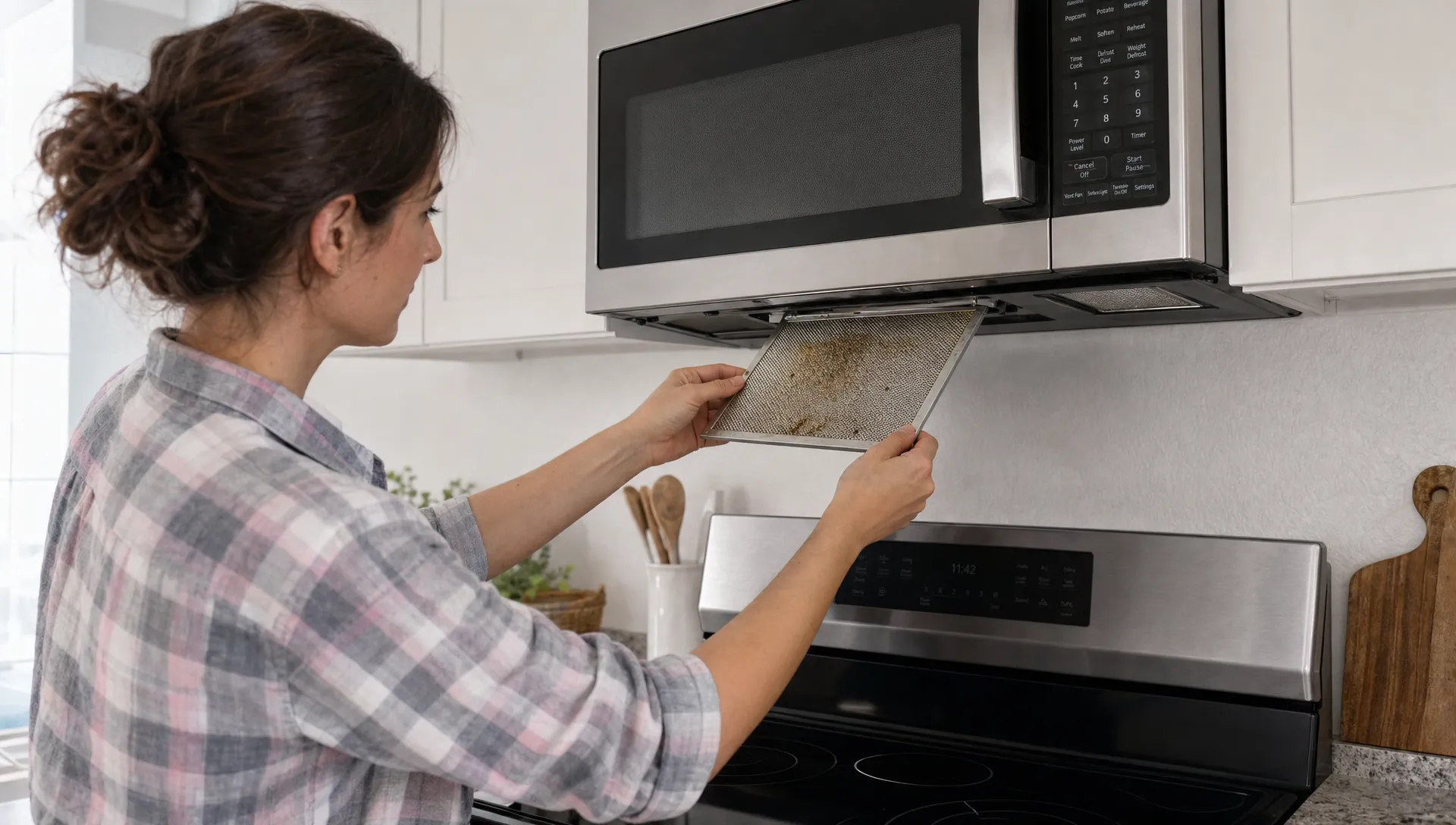
The metal mesh filter under an over-the-range microwave catches airborne grease before it reaches the blower. Over time, the mesh becomes coated and air cannot pass through easily. The fan may still turn on, but the kitchen stays smoky and the sound gets harsher.
Most metal grease filters are washable. Hot water, dish soap and a soft brush are often enough, though stubborn buildup may need soaking. Avoid bending the mesh because a warped filter may not seat properly.
Charcoal filters lose airflow and odor control
If your microwave recirculates air back into the room rather than venting outdoors, it likely uses a charcoal filter. This filter helps trap odors, but it is not designed to be washed. Once saturated, it restricts airflow and stops controlling smells well.
A ducted microwave usually does not need a charcoal filter, but some models can be configured either way. Check the owner’s manual or model label before ordering a replacement.
| Filter type | Common location | Can it be washed? | Common failure clue |
|---|---|---|---|
| Metal grease filter | Underside of microwave | Usually yes | Greasy mesh, weak intake, louder fan |
| Charcoal filter | Behind upper grille or vent area | No | Odors return, weak recirculated airflow |
| Exterior vent screen | Wall cap or roof cap | Sometimes, depending on access | Air weak outside, flap stuck or blocked |
Safe Filter and Airflow Checks
Turn the fan and cooktop off first, and let nearby surfaces cool. If you recently used the microwave or stove, wait before handling filters because grease and metal parts can stay hot.
Use these checks to narrow down the problem without opening the microwave cabinet:
- Remove the underside grease filter and hold it up to a bright light. If you cannot see through much of the mesh, it needs cleaning or replacement.
- Soak the metal filter in hot water with dish soap, then brush gently, rinse and let it dry fully before reinstalling.
- Look at the underside intake area for thick grease film, paper scraps or anything that could block airflow.
- If the unit recirculates, inspect the charcoal filter if your model gives user access through the upper grille.
- Turn the fan on after reinstalling the clean filter and compare the sound and airflow.
- If the microwave vents outside, check the wall or roof vent from a safe location to see whether the damper opens when the fan runs.
- Do not run the fan with filters removed for normal cooking, since grease can reach the blower and cabinet.
A simple tissue test can help. Hold a lightweight tissue near the underside intake while the fan is on, keeping it away from flames, hot burners and moving parts. The tissue should pull toward the intake. If it barely moves after cleaning the filter, the blockage may be deeper in the vent path or the blower may be weak.
Signs the Motor or Blower Assembly Is the Problem
A loud but weak microwave fan can still be a motor issue. The key is whether the symptoms remain after the filters and accessible vent path are clean.
A motor is more suspect when the sound is mechanical rather than airy. Grinding often points to bearing wear or a blower wheel rubbing. Squealing can mean friction. A low hum with little or no movement can suggest the motor is struggling to start or the blower is jammed.
Stop using the vent fan and schedule service if you notice a burning smell, visible sparks, smoke from the microwave body or fan speed that cuts in and out. These are not filter-cleaning problems.
| Motor or blower clue | What it may mean | Best next step |
|---|---|---|
| Grinding or scraping | Blower wheel rubbing or bearing wear | Professional inspection |
| Squeal at startup | Worn bearing or motor strain | Avoid extended use |
| Humming with no airflow | Motor not starting or blocked blower | Turn off and call for repair |
| Fan speed surges | Electrical or motor control issue | Do not open the cabinet |
| Burning odor | Overheating motor or wiring concern | Stop using the fan immediately |
Duct, Damper and Installation Issues
If the filter is clean and the fan sounds strong inside but airflow is weak at the exterior vent, the problem may be in the duct or damper. Over-the-range microwaves often connect to a short vertical or rear duct. A crushed duct, grease buildup, bird nesting near an exterior cap or a stuck backdraft damper can all reduce airflow.
A damper is a small flap that opens when the fan blows and closes when the fan is off. If it sticks shut, the fan has nowhere to push air. That can create a loud pressure noise with very little exhaust.
Installation errors can create similar symptoms. Many microwave blowers must be rotated during installation depending on whether the appliance vents upward, backward or recirculates. If a microwave was recently installed or moved and the fan has been weak since day one, the blower orientation may not match the vent configuration.
For roof vents, tall exterior locations or anything requiring ladder work, call a qualified technician or appropriate contractor. The microwave may be working fine, but the exhaust path may not be.
Repair or Replace: What Makes Sense?
The decision depends on the microwave type, age, condition and how the fan is used. A basic countertop microwave with a noisy internal cooling fan may be cheaper to replace than repair. An over-the-range microwave is different because it also serves as a light, hood and built-in kitchen appliance.
A professional diagnosis makes more sense when the microwave is newer, matches other appliances or has a built-in trim or vent setup. If the blower motor, wheel or control board is failing, ask for a written estimate before approving the repair.
For homeowners comparing appliance repair Phoenix options, describe the symptom clearly when you call: the fan is loud but weak, filters have been cleaned, and airflow is still poor. That helps a technician bring the right parts and decide whether the visit should focus on the microwave, ducting or both.
How to Prevent the Same Fan Problem
Microwave vent fans last longer when grease does not reach the blower. Filter maintenance is the easiest way to protect the motor and keep the kitchen ventilated.
A practical schedule is to check the metal grease filter monthly if you cook often and clean it whenever the mesh looks dark or sticky. Replace charcoal filters based on the owner’s manual, especially if odors linger after normal cooking. Heavy frying, wok cooking and high-heat searing may require more frequent filter care.
Good habits also help. Use the fan before steam and smoke build up, not only after the kitchen is already hazy. Let the fan run for a few minutes after cooking to clear moisture and odors. Keep the underside of the microwave clean so grease does not harden around the intake.
Frequently Asked Questions
Why is my microwave fan loud but not pulling air? The most common reason is restricted airflow from a clogged grease filter, saturated charcoal filter, blocked duct or stuck exterior damper. If those are clear and the fan still sounds rough, the motor or blower wheel may be failing.
Can I wash a microwave charcoal filter? No. Charcoal filters are usually replace-only parts. Washing them can damage the filter and will not restore odor control. Metal mesh grease filters are the ones that can usually be washed.
Is it safe to keep using a loud microwave fan? It depends on the sound. A louder whoosh from a dirty filter is usually not urgent, but grinding, squealing, humming with no airflow or a burning smell should be treated as a repair issue. Turn the fan off and avoid opening the microwave cabinet.
How often should I clean the grease filter? Many homes should check it monthly and clean it whenever it looks greasy or airflow drops. If you fry foods often or cook daily, you may need to clean it more frequently.
Do I need a technician for a weak microwave vent fan? You can clean filters and inspect visible vents yourself. Call a technician if airflow stays weak after cleaning, the fan makes mechanical noises, the damper or duct is hard to access or the microwave needs internal disassembly.
Get More Practical Appliance Repair Guidance
A loud, weak microwave fan is usually a filter or airflow problem, but the wrong repair guess can waste time and money. Start with the safe checks, stop if you notice electrical or burning symptoms and get a professional diagnosis when the issue points inside the appliance.
For more local repair guidance, maintenance tips and cost-conscious troubleshooting, visit the PHX Appliance Fix Blog.