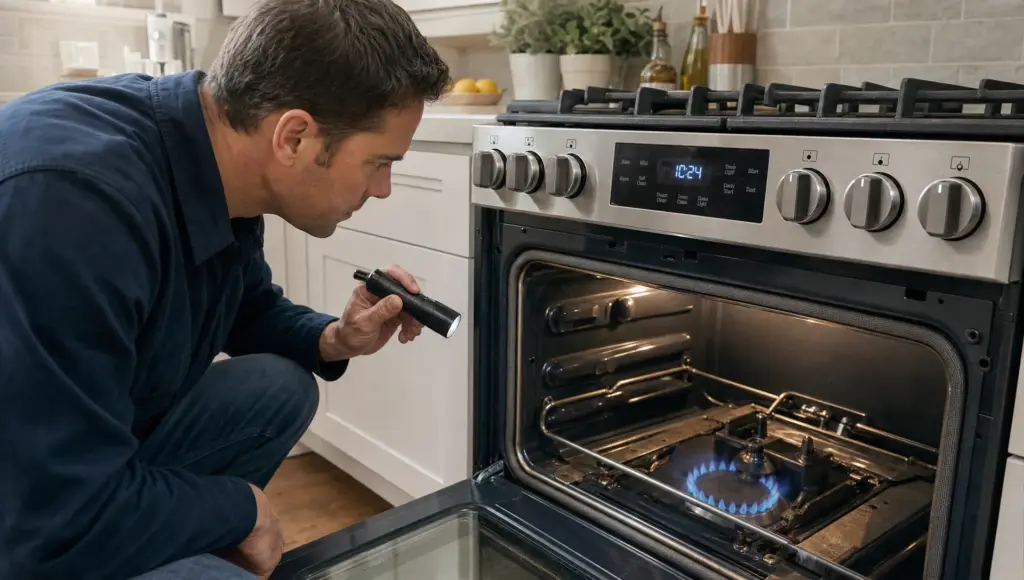
A gas oven that lights and then dies is usually not being stubborn. It is doing what its safety system was designed to do: stop gas flow when the oven cannot prove a safe flame. In older standing-pilot ovens, that often points to a thermocouple. In many newer gas ovens, the more likely suspect is a weak hot surface igniter that glows but cannot keep the gas valve open reliably.
This guide will help you tell the difference without guessing at parts, bypassing safety devices or turning a small oven problem into a gas hazard.
Gas Oven Won’t Stay Lit: The Quick Answer
If your oven has a small pilot flame that you manually light, start by looking at the thermocouple, pilot flame and pilot assembly. If your oven has an orange-glowing bar that heats up before the burner lights, the igniter is the first part to suspect.
The common confusion comes from timing. Both failures can look like a light-and-die problem, but they belong to different ignition systems.
| Part or system | Usually found on | What it does | Common clue |
|---|---|---|---|
| Thermocouple | Older standing-pilot gas ovens | Confirms the pilot flame is present | Pilot goes out when you release the knob |
| Hot surface igniter | Many modern gas ovens | Heats up and draws enough current to open the safety valve | Igniter glows but burner lights late, weakly or not consistently |
| Spark ignition with flame sensing | Some newer ranges | Sparks to ignite gas, then proves flame electronically | Repeated clicking, brief flame, then shutdown |
| Safety gas valve | Most gas ovens | Allows or stops gas flow based on the ignition system | Good ignition signal but no stable gas flow |
A thermocouple is not a universal fix for every gas oven. Many ovens made in recent decades do not use one for the bake burner at all.
How the Oven Safety System Decides to Keep Gas Flowing
A gas oven needs three things at the right time: fuel, ignition and proof that the flame is safe. If any part of that sequence fails, the oven may light briefly and then shut off.
In a standing-pilot oven, the pilot flame heats the thermocouple. A healthy thermocouple generates a tiny electrical signal that tells the safety valve the pilot is lit. If the signal is weak, missing or interrupted, the valve closes and the pilot or burner will not stay on.
In a hot surface igniter system, the igniter does more than glow. It must get hot enough and draw the correct current for the gas valve to open properly. A weak igniter can still glow orange, which is why visual checks alone can be misleading. The oven may take too long to light, light with a small flame or shut off shortly after ignition.
Because this process involves gas and combustion, safety matters. The U.S. Consumer Product Safety Commission recommends carbon monoxide alarms in homes, especially near sleeping areas. A gas oven with repeated ignition failures should not be ignored.
Symptoms That Point to a Weak Oven Igniter
A weak igniter is one of the most common reasons a modern gas oven struggles to stay lit. It is also easy to misdiagnose because the igniter may still appear to be working.
The igniter glows but the burner lights late
If the igniter glows for a long time before the burner lights, the igniter may be too weak to open the valve promptly. You might hear a delayed whoosh when gas finally ignites. That delayed ignition is a warning sign, not a normal quirk.
Turn the oven off if ignition is delayed or irregular. Repeatedly trying again can allow unburned gas to collect.
The flame starts but fades out
A weak igniter can sometimes open the gas valve just enough for ignition, then fail to maintain the current needed for stable operation. The burner may light for a few seconds, shrink, flicker or go out.
This can also happen when wiring is loose, the safety valve is failing or the control is not sending steady voltage, so the igniter should be tested rather than replaced blindly.
Bake fails but broil still works
Many gas ovens use separate igniters for bake and broil. If broil works normally but bake will not stay lit, the bake igniter or bake circuit becomes more likely. If both fail in similar ways, look more broadly at power, controls, gas supply or a shared safety component.
Symptoms That Point to a Thermocouple Problem
Thermocouple issues are most likely on older ovens with a standing pilot. If your oven has electronic ignition and no pilot flame, you may not have a thermocouple involved in the bake system.
The pilot goes out when you release the knob
This is the classic thermocouple symptom. You light the pilot, hold the knob in for the recommended time, release it and the pilot goes out. The thermocouple may be dirty, damaged, misaligned or too weak to keep the safety valve open.
A failed safety valve can mimic the same behavior, which is why replacing the thermocouple does not always solve the problem.
The pilot flame does not touch the thermocouple tip
The pilot flame should properly heat the thermocouple tip. If the flame is too small, yellow, lazy or aimed away from the tip, the thermocouple cannot generate a strong signal.
Food debris, dust, grease and a partially clogged pilot orifice can all change the flame pattern. Cleaning the area around the pilot may help, but avoid poking hard objects into a gas orifice unless the manufacturer specifically allows it.
The thermocouple looks bent, corroded or sooted
A thermocouple that is physically damaged may not sense flame correctly. Soot around the pilot area can also point to poor combustion, which is a reason to stop using the oven and have the appliance checked.
In Phoenix homes, dust can build up around lower oven panels and burner compartments, especially if the oven sits unused for long stretches during hotter months. Dust alone is not usually the root cause, but it can contribute to dirty pilot areas and poor airflow.
Safe Checks Before Replacing Parts
Before you order an igniter or thermocouple, do a few safe checks. These can help you avoid buying the wrong part and can also tell you when the problem has moved beyond DIY territory.
- Shut the oven off immediately if you smell gas, hear repeated failed ignition or see flame rollout.
- If gas odor is strong, leave the home and call your gas utility or emergency services from outside.
- Do not bypass the safety valve, tape a control knob down or keep relighting the oven.
- Confirm whether your oven uses a standing pilot, hot surface igniter or spark ignition by checking the owner’s manual or model information.
- Make sure the oven has power, since many gas ovens still need electricity for ignition and controls.
- Compare bake and broil operation, because separate failures can narrow the suspect part.
- Let the oven cool fully before removing panels, and shut off power before touching internal components.
If the oven flame stays on but the cavity will not hold temperature, you may be dealing with heat loss instead of ignition failure. In that case, a worn gasket or door issue is a different repair path, and this guide to fix your oven door seal in Phoenix is the better place to start.
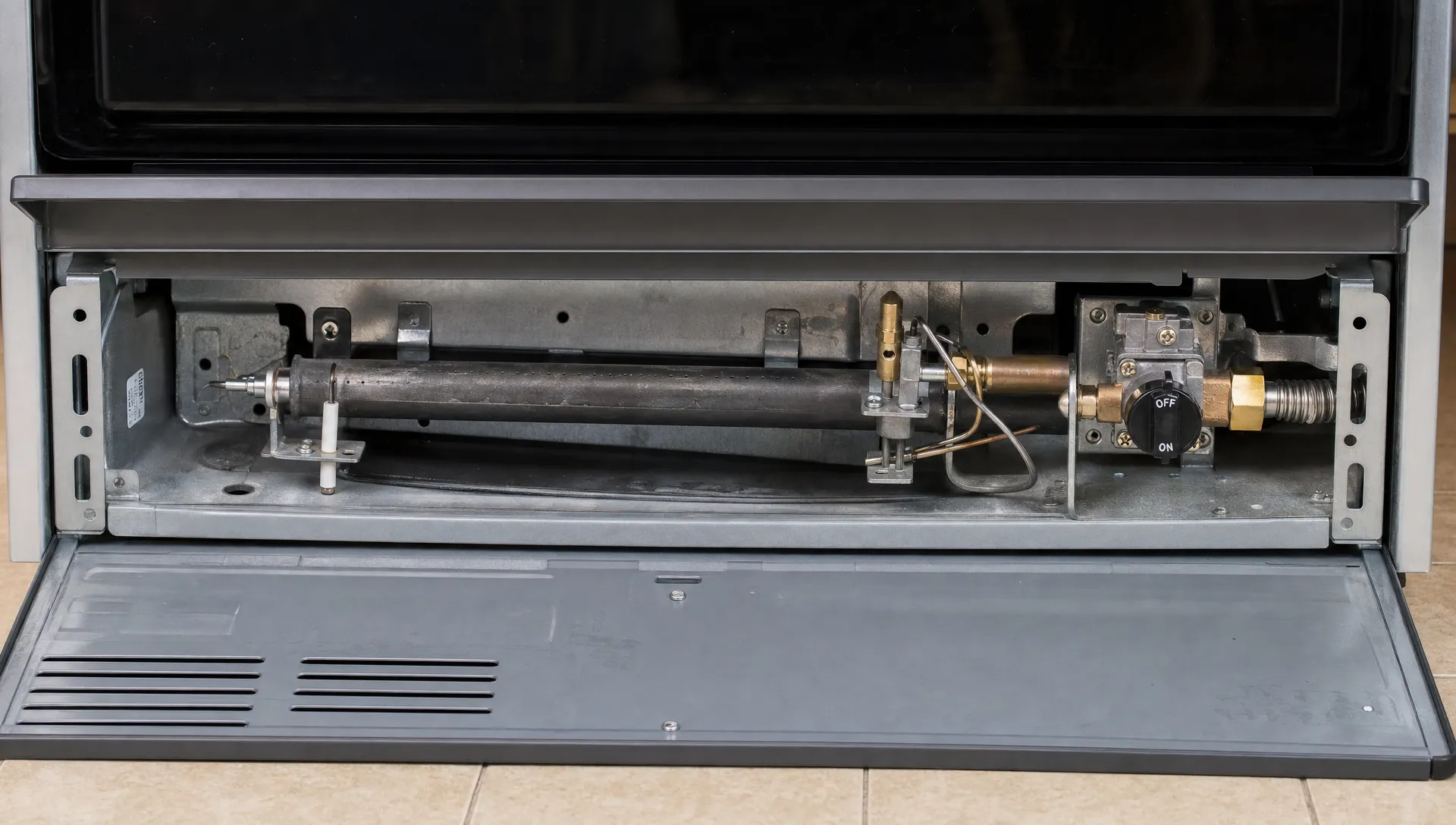
DIY Tests That Are Reasonable and Tests Best Left to a Technician
Some diagnosis can be done by observation. Other checks require live voltage, gas components or current measurement, which is where a trained technician is safer.
What you can observe safely
From a safe position, you can watch the ignition sequence if the oven design allows visibility without reaching near flame or live parts. On a hot surface igniter oven, note whether the igniter glows, how long it glows before ignition and whether the burner flame spreads evenly across the burner.
On a standing-pilot oven, observe whether the pilot flame is steady and reaches the thermocouple tip. A small blue flame is generally healthier than a lazy yellow flame, but any soot, popping, flame lift or gas odor means you should stop using the appliance.
What a technician can test
A technician can check igniter current draw, voltage to the igniter, safety valve operation, flame sensor feedback and wiring continuity. Those measurements matter because a glowing igniter can still fail electrically.
For a thermocouple system, a technician can test the millivolt output and inspect the safety valve. Universal thermocouples exist, but fit, placement and tightening matter. Over-tightening or poor alignment can create a new problem even when the part is technically new.
For gas valve, control board or wiring faults, professional appliance repair in Phoenix is usually the practical choice. These repairs involve both combustion safety and electrical diagnosis.
Other Reasons a Gas Oven Lights and Then Goes Out
Igniters and thermocouples are common suspects, but they are not the only causes. A complete diagnosis should also consider airflow, gas delivery and control signals.
A clogged burner tube can cause uneven flame spread. A failing safety valve may open inconsistently or close too soon. A damaged wire harness can break contact as the oven heats and expands. A faulty electronic control can interrupt power to the igniter or valve before the oven reaches temperature.
Gas supply problems are less common but serious. If multiple gas appliances in the home are acting strangely, stop using them and contact the gas utility or a qualified professional. Do not adjust appliance regulators or gas pressure as a guess.
Temperature sensors can also confuse the picture. A bad sensor usually causes overheating, underheating or erratic cycling rather than a burner that will not remain lit from startup. Still, if the flame lights normally at first and shuts off too early during preheat, sensor and control testing may be part of the diagnosis.
What Repair Costs Depend On
The price to fix a gas oven that will not stay lit depends on the ignition system, part access, brand, age and whether more than one component is failing. Replacing a bake igniter is usually simpler than replacing a gas safety valve or diagnosing an intermittent control board issue.
Before approving a repair, ask the technician to identify the ignition type, the failed test result, the part being replaced and whether the quote includes the service call, labor and warranty terms. If you want local context before making that decision, compare symptoms in this guide with these real-world oven repair cost ranges by problem.
A thermocouple may be an inexpensive part, but the final bill is not only the part price. Access, stuck fittings, pilot cleaning and safety testing all affect the job. The cheapest repair is the one that correctly fixes the cause the first time.
When to Call for Oven Repair in Phoenix
Call for help if the oven repeatedly lights and goes out, ignition is delayed, you smell gas, the flame is yellow or sooty, the burner makes popping sounds or you are unsure which ignition system your oven uses. Gas appliances do not reward trial and error.
A strong gas odor or suspected carbon monoxide issue is not a routine service appointment. Leave the area first, contact the gas utility or emergency services, then look for emergency appliance repair in Phoenix only after the immediate hazard is handled.
For less urgent symptoms, such as a bake burner that intermittently shuts off with no gas odor, a technician can test the igniter, valve and controls in one visit. If you are weighing repair versus replacement, this overview of Phoenix oven repair services for homeowners explains which oven problems are commonly repairable.
Frequently Asked Questions
Can an oven igniter be bad if it still glows? Yes. A hot surface igniter can glow orange and still be too weak to draw the current needed to open and hold the gas valve correctly. This is one reason visual inspection is not enough.
Do all gas ovens have a thermocouple? No. Thermocouples are common on older standing-pilot ovens, but many modern gas ovens use hot surface igniters or spark ignition with electronic flame sensing instead.
Why does my gas oven light for a few seconds and then go out? The oven may be losing flame proof, gas valve operation or ignition current. Common causes include a weak igniter, dirty pilot assembly, misaligned thermocouple, failing safety valve, loose wiring or control failure.
Is it safe to keep relighting a gas oven that will not stay lit? No. Repeated failed ignition can allow unburned gas to accumulate. Turn the oven off, stop using it if you smell gas and get the appliance checked.
Should I replace the thermocouple or igniter first? Identify the ignition system first. If the oven has a standing pilot, inspect the pilot flame and thermocouple. If it has a glow bar igniter, the igniter is more likely. Testing is better than replacing parts by guesswork.
Need Phoenix-Specific Oven Guidance?
If your gas oven won’t stay lit, start with the ignition type: standing pilot points toward the thermocouple and pilot assembly, while an electronic glow system often points toward the igniter or safety valve. When gas odor, delayed ignition or soot appears, stop using the oven and bring in a qualified pro rather than forcing another cycle.
For more Phoenix-focused troubleshooting and pricing context, use PHX Appliance Fix Blog as a practical reference before you decide whether to repair, replace or request service.