A loud bang right after your washer stops filling is usually not the machine “jumping” or a mystery noise inside the wall. It is often water hammer, a pressure shock that happens when fast-moving water stops suddenly. Washing machines are common triggers because their inlet valves open and close quickly during wash and rinse cycles.
For Phoenix homeowners, the noise can be easy to ignore at first, especially if the washer still runs normally. But repeated banging can loosen pipe straps, stress hose connections and make small plumbing weaknesses show up faster. The good news is that many washing machine water hammer problems can be narrowed down with a few safe checks before you call anyone.
What Is Washing Machine Water Hammer?
Water hammer is a hydraulic shock inside your plumbing. Water has weight and momentum. When a washing machine valve snaps shut, the moving water column slams to a stop, creating a pressure wave that travels through the pipe.
That pressure wave is what you hear as a thud, knock or sharp bang. The sound may happen at the washer box, inside the wall, near the water heater or even in another room because copper, PEX and CPVC pipes can carry vibration through framing.
The International Plumbing Code section on water hammer addresses quick-closing valves and water-hammer arrestors. Local code requirements vary, but the principle is simple: appliances with quick-closing valves often need a device that absorbs the shock.
Why Washers Cause Banging Pipes
A faucet usually closes by hand, so the water slows down gradually. A washing machine uses electric solenoid valves. When the control board tells the washer it has enough water, the valve can shut almost instantly.
Modern high-efficiency washers may also pulse water on and off during sensing and rinse cycles. That means a weak plumbing setup might bang several times in one load, not just once at the start.
First, Confirm It Is Water Hammer
Before buying parts, listen for the pattern. Water hammer tied to a washer usually happens at the exact moment the washer stops filling. It is different from spin-cycle vibration, drain pump noise or an unbalanced load.
Run a short fill cycle with the laundry room door open. Stand away from the hoses and wall box, then listen when the water shuts off. If the bang happens only when water flow stops, you are likely dealing with washing machine water hammer.
If the washer is leaking, failing to spin or showing other symptoms at the same time, do not assume every problem is water hammer. Use a broader diagnostic path, such as this washer repair checklist for leaks and no-spin issues, to avoid chasing the wrong fix.
| What you notice | Most likely cause | First safe check |
|---|---|---|
| One sharp bang when washer stops filling | Water hammer from quick-closing inlet valve | Add or inspect water hammer arrestors |
| Banging from several fixtures | High house water pressure or loose main piping | Test pressure at hose bib |
| Rattling during spin only | Washer vibration or unbalanced load | Level washer and check flooring |
| Slow fill plus banging | Restricted inlet screens, kinked hoses or valve issue | Inspect hoses and screens |
| Pipes knock after any faucet closes | Plumbing system issue | Call a plumber if pressure is high |
Safety Checks Before You Touch the Washer
Unplug the washer before moving it or disconnecting hoses. Turn both hot and cold water shutoff valves fully clockwise, then run a brief fill attempt to relieve pressure in the hoses. Keep towels and a shallow pan nearby because hoses can hold water even after the valves are closed.
Do not force old shutoff valves. In Phoenix homes with aging laundry boxes or mineral buildup, a stiff valve can crack, leak or fail to reopen. If a valve looks corroded, drips when touched or will not turn smoothly, stop and call a plumber.
Also avoid opening walls just to “find the bang.” Most washer-related banging can be addressed at the supply connection, at the shutoff valves or through house pressure correction.
How to Stop Washing Machine Water Hammer
The right fix depends on the cause. Start with the simple, reversible steps, then move to plumbing corrections if the noise remains.
Install Water Hammer Arrestors at the Washer
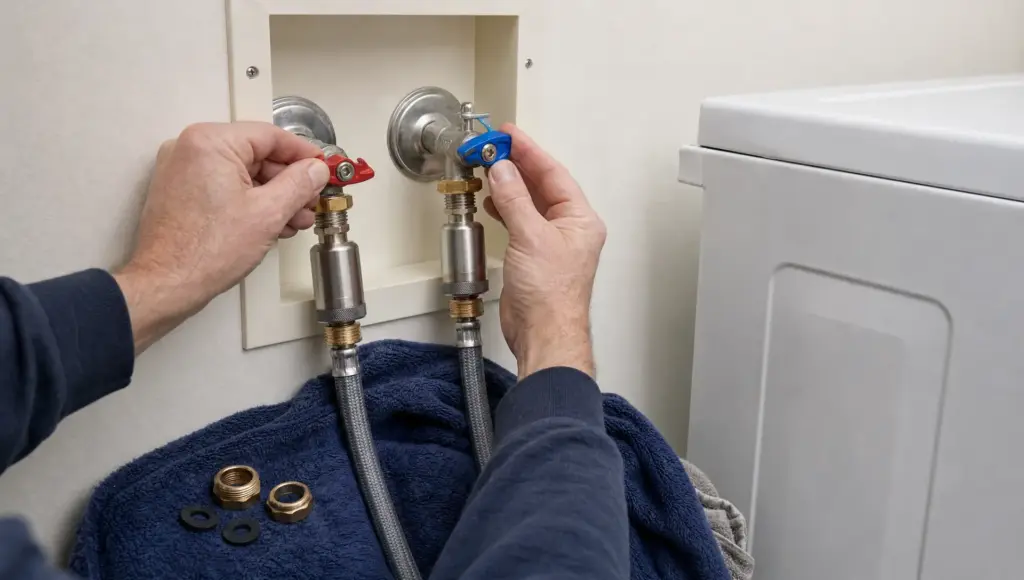
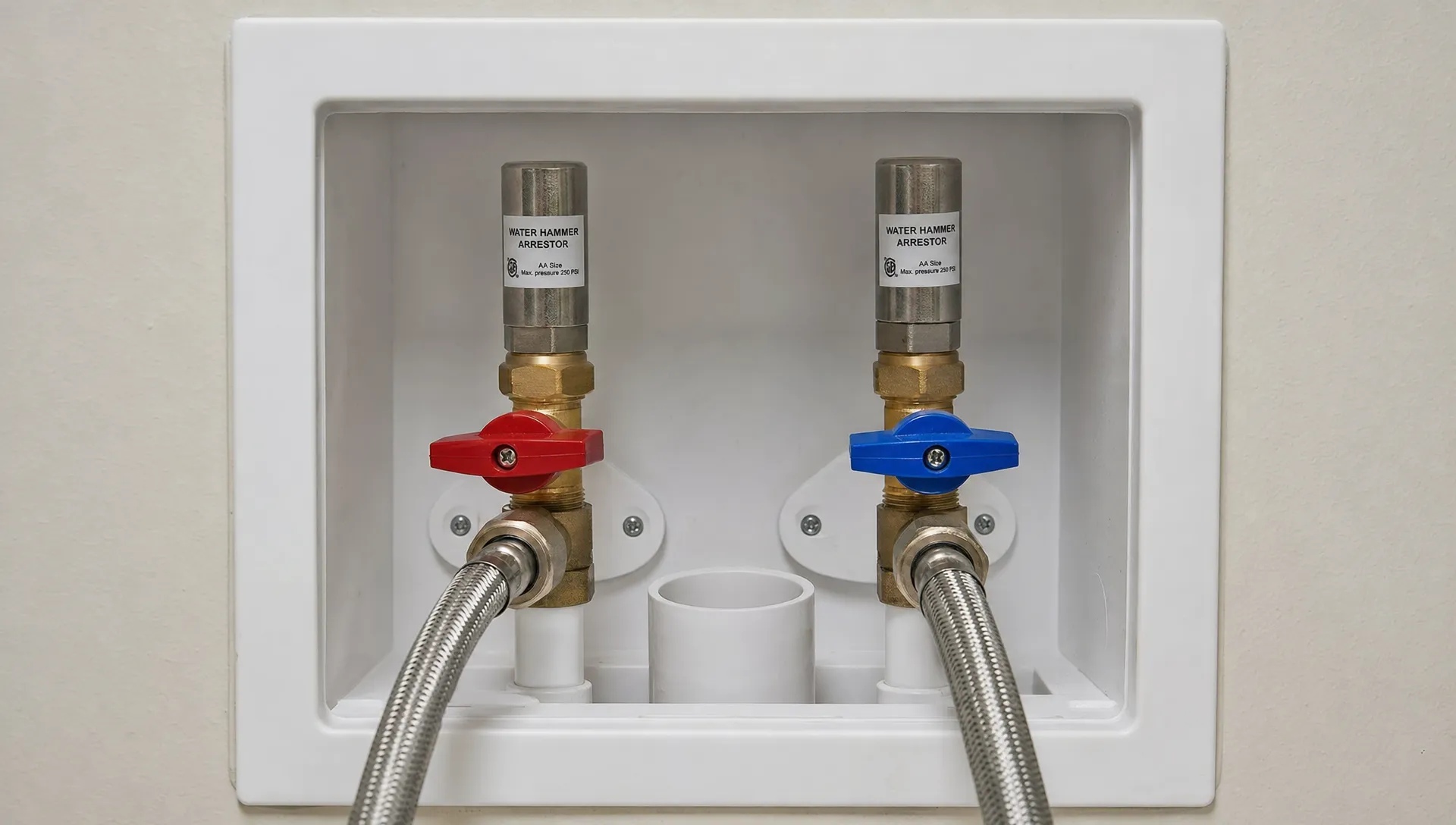
The most common fix is a pair of water hammer arrestors made for washing machines. These small devices attach between the laundry shutoff valves and the washer hoses. Inside, a sealed chamber or piston absorbs the pressure spike when the washer valve closes.
For most laundry hookups, you want arrestors with 3/4-inch hose thread connections, one for hot and one for cold. Install them directly at the washer supply valves when possible. Follow the manufacturer’s orientation instructions because some designs can be installed vertically or horizontally, while others have a preferred position.
A basic installation looks like this:
- Unplug the washer and turn off both water valves.
- Place towels under the hose connections.
- Disconnect the hot and cold washer hoses from the wall valves.
- Attach one arrestor to each valve, using the supplied hose washers.
- Reconnect the washer hoses to the arrestors.
- Turn water back on slowly and check carefully for leaks.
- Run a fill cycle and listen when the washer stops filling.
Do not use thread tape to compensate for a damaged rubber washer on hose-thread connections. Replace the washer instead. Tape can hide the real sealing problem and may not stop a leak under vibration.
Test Your Home Water Pressure
If arrestors help only a little, or if multiple fixtures bang, check the home’s water pressure. A simple pressure gauge can screw onto an outdoor hose bib or laundry faucet. Many homes work well around 40 to 60 psi, and pressure above 80 psi commonly calls for correction with a pressure reducing valve.
High pressure makes washing machine water hammer louder because more force is moving through the pipe before the valve closes. It also stresses toilet fill valves, dishwasher connections, refrigerator water lines and washer hoses.
If your reading is high, do not try to solve it by permanently choking down the washer shutoff valves. Partially closed valves can sometimes reduce noise, but they can also slow fill, cause washer error codes and create turbulence at the valve. A plumber should evaluate the pressure reducing valve, expansion tank setup and main supply conditions.
Secure Loose Pipes and Hoses
Sometimes the pressure shock is normal but the noise is amplified by movement. A pipe that is not strapped tightly can slap against a stud, drywall, cabinet or another pipe. Washer hoses can also thump against the wall during sudden valve closure.
Pull the washer forward enough to inspect the visible hoses without straining them. Make sure the hoses are not twisted, sharply bent or resting against the back of the machine. If the hoses are old, bulging or cracked, replace them with quality washing machine supply hoses.
Visible exposed pipes can be cushioned with proper pipe clamps or supports. Avoid makeshift fixes like wedging cardboard behind pipes. That may quiet the sound briefly, but it can trap moisture, compress over time or hide a developing leak.
Clean Inlet Screens if Fill Is Slow
Restricted flow can make the washer valve behave oddly and may add noise during fill cycles. Mineral deposits, sediment and debris can collect in the inlet screens where the hoses connect to the washer.
After turning off water and unplugging the washer, disconnect the hoses at the washer end and inspect the small screens inside the inlet ports. Clean them gently if they are removable according to the washer manual. Do not puncture or remove fixed screens unless the manufacturer specifically allows it.
If you own a Samsung washer and see a 4C or similar water supply error, the banging may be only one symptom of an inlet problem. This guide to Samsung washer 4C water inlet troubleshooting covers the valve, hose and flow checks that belong in that diagnosis.
Drain Old Air Chambers, but Know the Limit
Some older plumbing systems used vertical air chambers in the wall to cushion water shock. Over time, these chambers can fill with water and stop absorbing pressure. Draining the home’s water lines may temporarily restore the air pocket.
To try this, shut off the home’s main water valve, open the highest and lowest faucets in the house, let the lines drain, then close the faucets and turn water back on slowly. This may reduce banging in some older homes.
Still, air chambers often become waterlogged again. A listed water hammer arrestor at the washer is usually a more reliable solution, especially with modern quick-closing appliance valves.
When It Is an Appliance Problem Instead
A washer can contribute to banging if its inlet valve is failing, sticking or shutting harder than normal. You may also notice humming, slow filling, intermittent filling, water entering when the washer is off or error codes related to water supply.
In that case, arrestors may reduce the noise without fixing the washer. A technician can test the inlet valve, control signal and fill behavior. If the washer is under warranty, check the warranty terms before replacing parts yourself.
This distinction matters because a plumber and an appliance technician solve different parts of the problem. A plumber handles house pressure, pipe support, shutoff valves and pressure reducing valves. An appliance repair technician handles the washer inlet valve, wiring, control behavior and appliance-specific water supply faults.
Phoenix Factors That Can Make Banging Worse
Phoenix-area homes often deal with hard water, sediment and long hot-water runs. Hard water does not directly cause water hammer, but mineral buildup can affect shutoff valves, hose screens and appliance inlet valves. That can make a washer fill poorly and shut off in a way that draws attention to existing pipe movement.
Summer heat also matters around laundry spaces in garages. Hoses age faster in hot rooms, especially if they are under constant pressure. If your laundry area is in a garage or utility space, inspect washer hoses more often and replace any hose that looks swollen, stiff or cracked.
Some homes also have pressure changes tied to irrigation systems, pressure reducing valves or municipal supply conditions. If the banging appears suddenly after plumbing work, water heater replacement or irrigation changes, note the timing. That clue can help a plumber isolate the source faster.
Mistakes That Make Water Hammer Worse
Many homeowners try to silence banging pipes with quick fixes that do not address the pressure shock. Some are harmless for a day or two, but others can create leaks or washer problems.
Avoid these common mistakes:
- Ignoring a bang that gets louder over time
- Leaving old rubber hoses under constant high pressure
- Over-tightening hose connections until washers deform
- Using thread tape instead of replacing damaged hose washers
- Closing washer valves halfway as a permanent repair
- Removing inlet screens because they clog repeatedly
- Opening walls before checking arrestors and water pressure
If you are troubleshooting other appliance issues at the same time, be careful not to turn a small repair into a bigger one. This overview of DIY appliance repair mistakes to avoid explains why safe diagnosis matters before tools come out.
Simple Maintenance to Keep Pipes Quiet
Once the banging is fixed, keep the setup in good shape. Inspect washer hoses every few months, especially at the crimped ends. Replace hoses at the first sign of bulging, cracking or corrosion. Make sure the washer sits level so spin vibration does not get mistaken for pipe noise.
Turn laundry valves off if you will be away for an extended period. Open and close the valves gently a few times a year so they do not seize, but do not force them if they are stiff. A valve that will not operate smoothly should be replaced before an emergency leak makes the decision for you.
After installing arrestors, check the connections again after the first few loads. A slow drip at a laundry box can run behind the washer unnoticed, so use a flashlight and dry paper towel to confirm the fittings stay dry.
Frequently Asked Questions
Can water hammer damage a washing machine? The shock mainly affects plumbing, hoses and fittings, but severe or repeated banging can add stress to the washer’s inlet valve connections. Fixing the pressure shock protects both the plumbing and the appliance.
Do I need one water hammer arrestor or two? Most washers have hot and cold connections, so installing one arrestor on each supply line is the usual approach. Even if most cycles use cold water, the washer may still call for hot water during certain settings.
Will turning down the washer valves stop the banging? It may reduce the noise temporarily, but it is not the best permanent fix. Restricting the valves can slow fill times, trigger water supply errors and leave the pressure problem unresolved.
Why do my pipes bang only when the washer runs? Washers use quick-closing inlet valves, so they create a sharper stop in water flow than many faucets. If only the washer causes the bang, arrestors at the laundry valves are often the first repair to try.
Should I call a plumber or an appliance repair technician? Call a plumber if your whole house has high pressure, several fixtures bang or the laundry shutoff valves are corroded. Call an appliance technician if the washer fills slowly, shows water inlet errors or keeps filling when it should stop.
Need Help Deciding What to Check Next?
If the bang happens exactly when the washer stops filling, start with washer-rated water hammer arrestors and a pressure check. If the washer also leaks, fills slowly or shows an error code, treat the noise as one clue in a wider diagnosis. PHX Appliance Fix Blog has practical washer guides to help Phoenix homeowners separate simple DIY checks from problems that need a qualified pro.