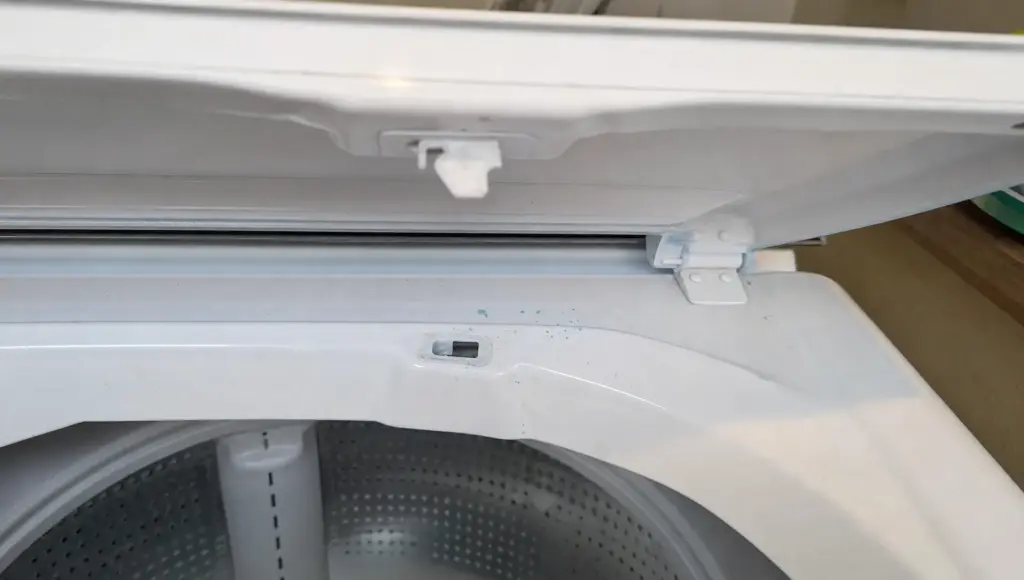
A top-load washer lid won’t lock for a handful of common reasons: a misaligned lid strike, detergent buildup around the latch, an unbalanced load, a failed lid lock assembly or a control issue. The good news is that you can safely rule out several simple causes before scheduling service, especially if the washer is otherwise powering on and responding normally.
For Phoenix homeowners, a washer that refuses to lock can quickly turn into a laundry backlog. Many top-load machines will not fill, agitate, drain or spin unless the control board receives a secure “lid closed” signal. This guide walks you through practical checks, explains what the symptoms usually mean and helps you decide when the repair is beyond a safe DIY fix.
Top-load washer lid won’t lock: what the washer is trying to prevent
Modern top-load washers use a lid lock or lid switch to keep the lid secured during parts of the cycle, especially when the basket is spinning at high speed. The system usually includes a lid strike, a latch or lock assembly and wiring that communicates with the control board.
When everything lines up correctly, the strike enters the latch, the lock engages and the washer confirms that the lid is closed. If the washer cannot confirm that signal, it may click repeatedly, flash the lid lock light, stop mid-cycle or refuse to start.
Older machines often used a simpler lid switch, but many newer high-efficiency top-load washers use a more involved lock assembly. That makes diagnosis slightly more sensitive. A lid that “looks closed” may still fail if the strike is cracked, the latch is contaminated or the lock motor is wearing out.
Safety checks before you touch the washer
Always start with safety. Unplug the washer before inspecting the latch area closely, removing any console parts or touching wiring. If you need to move the washer away from the wall, turn off the water supply valves first to reduce the chance of a hose leak.
Do not bypass the lid lock. It can be tempting to tape, jumper or force the switch just to finish a load, but the lock is there to prevent access to a moving basket. Bypassing it can also confuse the washer’s controls and create a more expensive repair.
If the washer is full of water, avoid leaning into the cabinet or tipping the machine. Water and electrical components do not mix. When the machine is locked shut and full, your safest next step may be canceling the cycle, allowing the drain routine to finish or calling a technician if the lid remains stuck.
Match the symptom to the most likely cause
The exact diagnosis depends on the brand and model, but the symptoms below can point you in the right direction.
| Symptom | Common cause | First thing to check |
|---|---|---|
| Lid lock light flashes and the washer will not start | Misaligned strike, failed latch or control not seeing the closed signal | Lid strike and latch opening |
| Washer clicks several times but never locks | Weak lock mechanism, broken strike or obstruction | Detergent buildup, lint or cracked plastic |
| Washer fills, then stops before agitating | Lid switch signal drops out during the cycle | Lid alignment and wiring connection |
| Lid stays locked after the cycle | Drain issue, control error or lock assembly stuck | Cancel cycle and confirm water has drained |
| No lights, no response and no lock activity | Power supply or control issue | Outlet, breaker and power cord |
A lid lock problem can overlap with other washer complaints. If your washer also leaks, drains poorly or refuses to spin after the lid lock issue is resolved, use this washer repair checklist for leaks and no-spin problems to narrow down the next failure point.
Step 1: confirm the washer has steady power
Before focusing on the lid lock, make sure the washer has reliable power. A loose plug, tripped breaker or overloaded GFCI outlet can mimic a control failure. Phoenix laundry rooms and garage laundry setups often share circuits with other devices, so a reset at the outlet or breaker may be worth checking.
Unplug the washer for one minute, then plug it back in. This basic reset can clear a temporary control glitch on some models. After restoring power, select a simple cycle, close the lid firmly and press start. Listen for the lock attempt.
If the washer has no lights or display after you verify the outlet works, the issue may not be the lid lock at all. It could be a failed control board, damaged power cord or internal fuse depending on the model.
Step 2: inspect the lid strike
The lid strike is the small plastic or metal piece attached to the underside of the lid. It presses into the lock assembly when you close the washer. If it is cracked, loose or slightly bent, the washer may not recognize that the lid is closed.
Open the lid and look directly at the strike. Wiggle it gently with your fingers. It should feel secure, not floppy. Also compare its position to the latch opening on the washer top. A lid that has been slammed repeatedly can shift enough to cause alignment problems.
If the strike is broken, replacement is usually straightforward on many models, but use the exact part for your machine. Universal improvisations are risky because the lid lock depends on precise positioning.
Step 3: clean the latch area
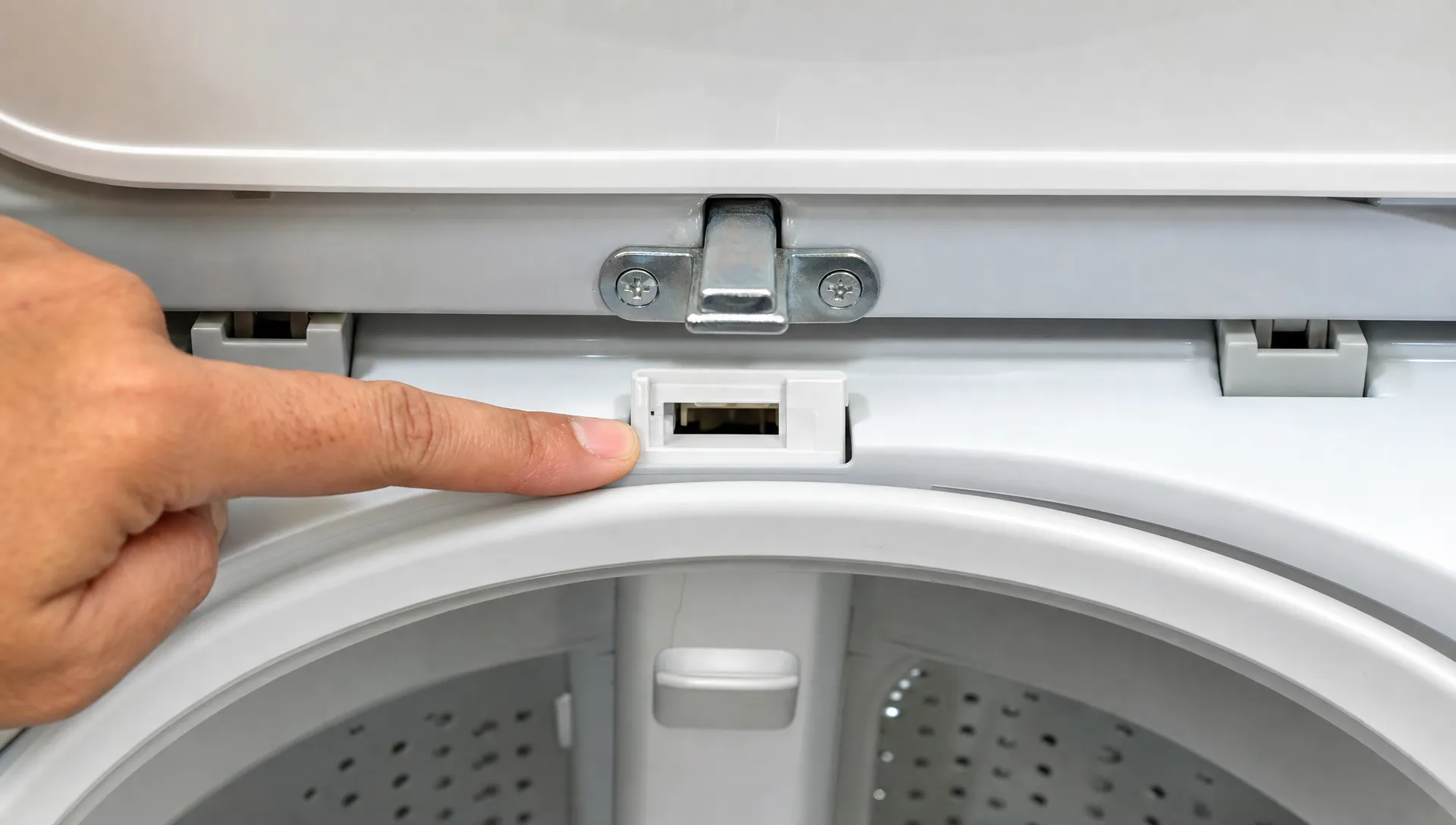
A top-load washer lid won’t lock if residue prevents the latch from sensing or grabbing the strike. Detergent film, fabric softener buildup, lint and dust can collect around the latch opening, especially on washers kept in garages or utility rooms.
With the washer unplugged, wipe the latch area using a slightly damp cloth. Avoid pouring water into the opening. A cotton swab can help remove grime from the rim, but do not push tools deep into the latch mechanism.
After cleaning, let the area dry for several minutes. Plug the washer back in and try a cycle again. If the lock now engages, the failure was likely mechanical obstruction rather than an electrical fault.
Step 4: check the load and lid position
Some washers refuse to lock or unlock if the load is pushing upward against the lid. Bulky items like comforters, towels and rugs can mound up in the center of the basket and interfere with the lid closing fully.
Remove a few items, spread the load evenly around the wash plate or agitator and close the lid again. The lid should sit flat without rocking. If the lid looks warped, tilted or loose at the hinge, the lock may not align consistently.
This is also a good time to check for small objects trapped near the lid edge. Socks, drawstrings, clips and detergent cup pieces can keep the lid from seating properly.
Step 5: listen to the lock mechanism
Sound can help separate a mechanical issue from an electrical one. Close the lid and start a cycle while standing nearby. A healthy washer often makes a short click or clunk when the lock engages.
Repeated clicking usually means the washer is trying to lock but cannot complete the action. That points to a misaligned strike, weak latch motor or obstruction. No clicking at all may mean the control is not sending power to the lock, the lock assembly is open electrically or the machine is not starting for another reason.
If the lid lock engages, then immediately unlocks and stops the cycle, the control may be receiving an inconsistent signal. That can happen when the internal switch inside the latch fails intermittently.
Step 6: look for error codes or flashing patterns
Many top-load washers display lid lock errors through a code, blinking light pattern or app notification. The wording varies by brand. Some machines show “Lid,” “dL,” “lid lock,” “door lock” or an alphanumeric code that your owner’s manual can translate.
Do not assume codes are identical across Whirlpool, Maytag, GE, Samsung, LG or Kenmore machines. The same letters can mean different things depending on the control platform. If you no longer have the paper manual, search the manufacturer’s support site using the full model number from the washer label.
The model label is often under the lid, behind the control panel area or on the rear cabinet frame. Write the model number down before buying parts. One digit can change the correct lid lock assembly.
When the lid lock assembly is probably bad
If the strike is intact, the latch is clean, the lid aligns properly and the washer still will not lock, the lid lock assembly becomes the leading suspect. This assembly can fail mechanically or electrically.
Common signs include repeated clicking, intermittent lock errors, cycles that stop at the same point and a lid lock light that flashes even when the lid is closed. On some models, the washer may drain immediately after failing to verify the lid lock.
Replacing a lid lock assembly may be manageable for experienced DIYers, but it is not a good first electrical repair. Access often requires lifting the top panel, releasing clips or removing screws near the console. If you are unsure how to do that safely, review these household appliance repair mistakes to avoid before opening the machine.
Other parts that can mimic a lid lock failure
A failed lid lock is common, but it is not the only possibility. The washer control board must send voltage to the lock and receive the correct signal back. If the board fails, the lock may never engage even if the latch itself is fine.
Damaged wiring can also interrupt the signal. Vibration, rodent damage in garage laundry areas or previous repair work can loosen a connector. Inspecting wiring is possible only after unplugging the washer, and any burnt, melted or corroded connector should be handled carefully.
A drain problem can create the opposite symptom: the lid will not unlock. Many washers keep the lid locked if they detect standing water or believe the basket is still moving. In that case, the lid lock may be doing its job while the real problem is the drain pump, pressure system or control logic.
| Possible failed part | How it affects the washer | DIY difficulty |
|---|---|---|
| Lid strike | Prevents proper latch alignment | Low on many models |
| Lid lock assembly | Fails to lock or send closed signal | Moderate |
| Wiring harness | Interrupts power or signal to lock | Moderate to high |
| Main control board | Does not command or read lock correctly | High |
| Drain pump or water level system | May keep lid locked after cycle stops | Moderate to high |
Should you repair it yourself or call a technician?
A broken lid strike or dirty latch area is usually worth checking yourself. These are low-risk steps when the washer is unplugged and you are not disassembling electrical components.
Call a technician if the washer has repeated lock errors after basic checks, the lid is stuck shut with water inside, you smell burning plastic or you see damaged wiring. You should also get help if the machine is under warranty, since unauthorized disassembly may affect coverage.
Local conditions matter too. In Phoenix, many washers sit in hot garages where plastic parts, wiring insulation and rubber components deal with higher temperature swings than they would indoors. Heat does not automatically mean the lock has failed, but brittle plastic strikes and latch housings are not unusual on older machines.
If you need help beyond DIY checks, a local appliance repair Phoenix resource can help you decide whether the washer is worth repairing based on age, symptoms and part availability.
How to prevent repeat lid lock problems
Gentle use goes a long way. Avoid dropping or slamming the lid, even if you are in a hurry. The strike is small, and repeated impact can crack plastic or shift alignment over time.
Keep the lid and latch area clean. Wipe detergent spills before they dry, and avoid overfilling the detergent dispenser or pouring detergent directly where it can run toward the lock opening. Use the detergent amount recommended for your washer and water conditions.
Do not overload the basket. Overloading can cause out-of-balance movement, lid movement and repeated interruptions during spin. If the washer frequently bangs, pauses or redistributes loads, the lid lock may take extra stress even if it is not the original problem.
Frequently asked questions
Why does my top-load washer click but not lock? Repeated clicking usually means the washer is trying to lock but cannot confirm the lid is secured. The most common causes are a cracked lid strike, latch obstruction, failed lid lock assembly or poor alignment between the lid and latch.
Can I bypass a washer lid lock to finish a load? No. Bypassing the lid lock is unsafe because it can allow access to a moving basket. It can also damage the washer’s control system or create misleading symptoms that make the final repair harder to diagnose.
Why is my washer lid locked and full of water? The washer may be keeping the lid locked because it has not drained or because the control still thinks the basket is moving. Try canceling the cycle and allowing the machine time to drain. If it remains locked, do not force the lid open.
Is a lid lock expensive to repair? The cost depends on the washer brand, model, part availability and whether the issue is only the lock or involves wiring or the control board. A simple strike replacement is usually less involved than diagnosing an intermittent electrical fault.
Will a washer run without the lid locking? Most newer top-load washers will not complete wash or spin cycles without a valid lid lock signal. Some may fill briefly, then stop when the control fails to confirm that the lid is closed.
Need help with a washer lid lock in Phoenix?
If your top-load washer still will not lock after cleaning the latch, checking the strike and resetting the machine, the next step is proper diagnosis. A technician can test the lid lock assembly, wiring and control board instead of guessing at parts.
For Phoenix homeowners, that can save time, prevent water damage and help you avoid replacing a washer that may only need a targeted repair.