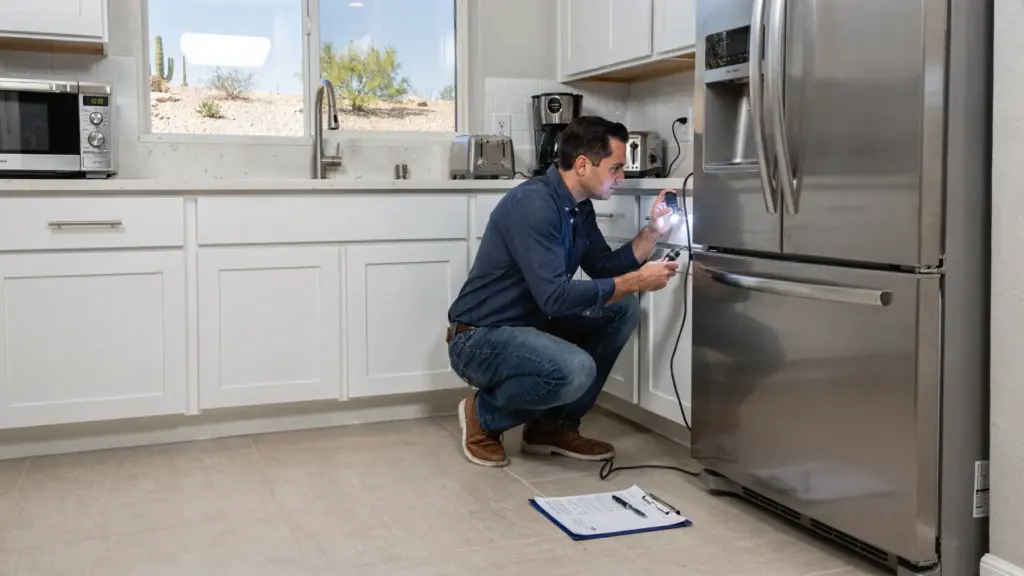
Most appliance breakdowns do not start with a dramatic failure. They start with small warning signs like a plug that runs hot, a frayed cord, a burning smell you notice “only sometimes,” or a refrigerator that is slowly struggling in Phoenix heat. A simple monthly safety routine helps you catch those signs early, lowering the risk of electrical shock, appliance fires, and expensive last-minute repair calls.
Below is a practical, homeowner-friendly set of monthly safety checks for common electrical appliances at home, plus clear “stop using it” red flags and Phoenix-specific tips (heat, dust, garage installs, and monsoon season power events).
A quick safety note before you inspect anything
A monthly check is meant to be visual and non-invasive. You should not remove sealed covers, open control housings, or test live voltage unless you are qualified.
- Unplug the appliance (or switch it off at the breaker) before cleaning or inspecting cords and plugs.
- Keep hands dry and stand on a dry surface.
- If you smell burning plastic or see smoke, turn the appliance off immediately, unplug it if safe, and shut off the breaker if needed.
- If an appliance is leaking water and you suspect electrical involvement, do not step into standing water. Cut power first.
For broader electrical safety guidance, the U.S. Consumer Product Safety Commission (CPSC) and the National Fire Protection Association (NFPA) both emphasize routine prevention (especially around cords, outlets, and cooking equipment).
Your monthly “whole-home” electrical appliance safety checks
These checks take 10 to 20 minutes and prevent many of the most common issues that lead to emergency appliance repair situations.
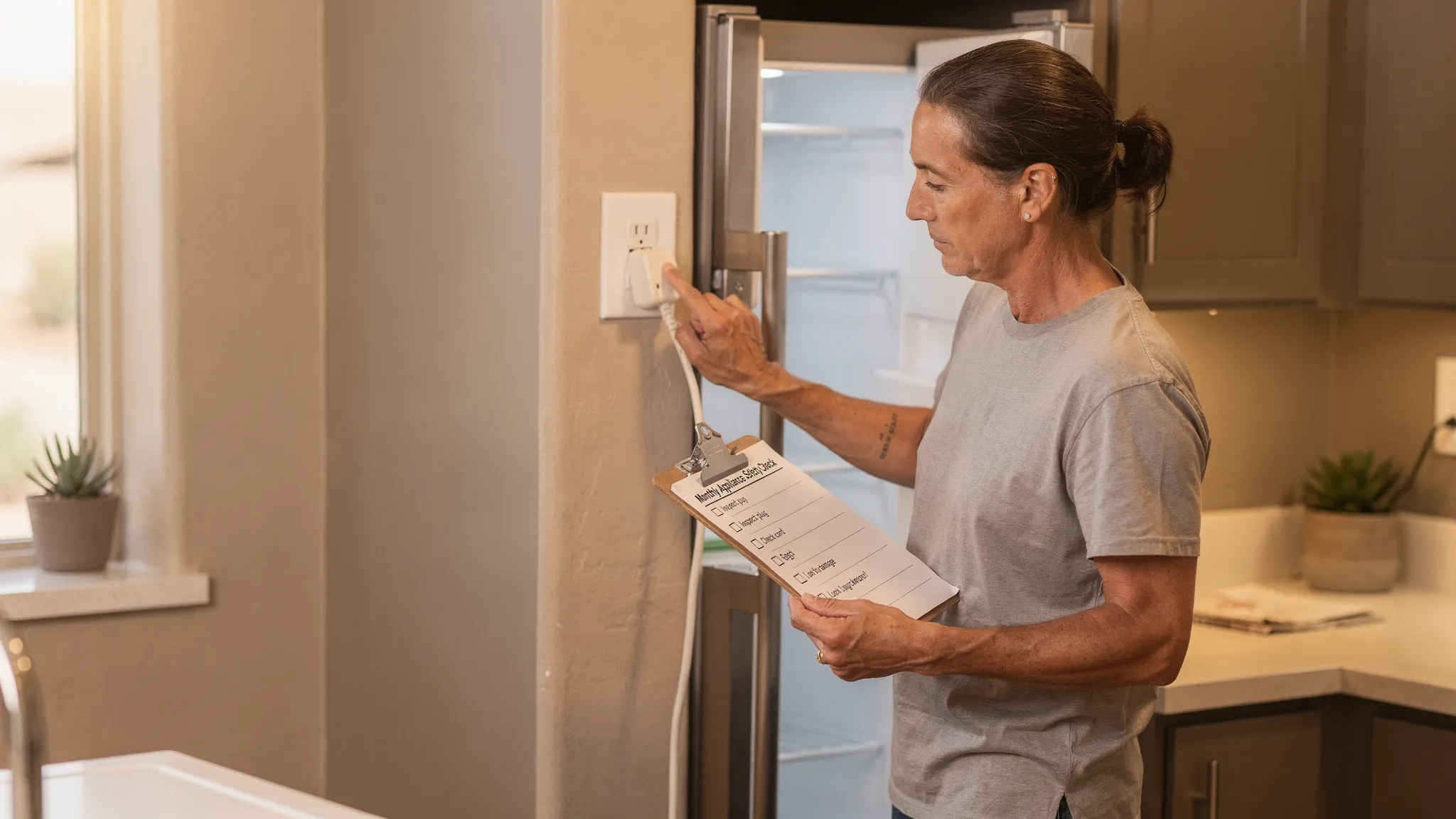
1) Cords, plugs, and power strips (all appliances)
Walk through your kitchen, laundry, and garage and inspect what you can see.
Look for:
- Cracked insulation, flattened sections, chew marks (pets), or stiff/brittle cords
- Loose plugs that do not “seat” firmly in the outlet
- Discoloration or melting around plug blades
- Power strips that feel warm, are overloaded, or are daisy-chained
Phoenix tip: heat accelerates plastic aging. Cords behind fridges and freezers in a hot garage can become brittle faster.
2) Outlets and wall plates near appliances
Without removing anything:
- Check for discoloration, soot, warping, or a fishy/burning odor near the outlet
- Lightly touch the outlet cover after the appliance has been running (it should not feel hot)
If an outlet is warm/hot, the plug is scorched, or the outlet looks damaged, stop using the appliance and contact an electrician.
3) Test your GFCI outlets (kitchen, laundry, garage)
Many refrigerators in garages, countertop appliances near sinks, washers, and dishwashers are on circuits protected by GFCI outlets.
Use the built-in TEST and RESET buttons. If the outlet will not reset, or it trips repeatedly, that is a safety issue.
4) Check your breaker panel behavior (quick observation)
You are not servicing the panel, just noticing patterns:
- A breaker that trips repeatedly with the same appliance
- Buzzing sounds from the panel
- Burning smells in the utility area
Repeated trips can point to an appliance fault (heater, motor, short), a circuit overload, or a wiring issue. Either way, it is not something to ignore.
Monthly checks by appliance (what to do and what it means)
The goal here is to catch heat, friction, arcing, airflow restriction, and water exposure, which are the most common “upstream” causes of expensive failures.
Refrigerator and freezer (kitchen or garage)
Refrigerators run long hours, and in Phoenix they often run even harder.
Monthly checks:
- Temperature sanity check: fridge about 37 to 40°F, freezer about 0°F (USDA food safety guidance) (USDA cold food storage charts). If you do not have a fridge thermometer, it is a low-cost, high-value tool.
- Condenser area: look for heavy dust buildup at the front grille or rear access area (unplug first if you plan to clean).
- Door seal/gasket: look for gaps, tears, or sticky residue that prevents a tight seal.
- Listen for changes: new clicking, buzzing, grinding, or loud humming can be early warning.
If you want step-by-step help beyond monthly safety checks, these guides are useful:
- Refrigerator door seal repair
- Warm fridge, cold freezer troubleshooting
- What to do if your fridge stops cooling (food safety timeline)
Red flags (stop using and call for service):
- Burning smell, visible scorching at the outlet/plug, or repeated breaker trips
- Rapid warming, thawing, or nonstop running in high heat (may indicate airflow, fan, defrost, or sealed-system issues)
- Water pooling near electrical components
In Phoenix summers, a warming refrigerator can become urgent quickly. If you need same day refrigerator repair in Phoenix, document temperatures, error codes, and when the problem started to speed up diagnosis.
Electric oven, range, or cooktop
Cooking equipment is a high-heat environment by design, which makes electrical warning signs especially important.
Monthly checks:
- Power cord and plug (where accessible): look for discoloration, cracking, or looseness at the receptacle.
- Door closure and seal: a leaking seal can cause longer heat cycles and overheated components around the door.
- Control behavior: flickering display, random beeping, or unresponsive buttons can indicate heat stress or a failing control.
- Evidence of arcing: any popping, snapping, or visible sparks is not normal.
Helpful Phoenix-focused reads:
- How to repair an oven door seal in Phoenix
- Oven door repair if it won’t close
- Oven repair price in Phoenix (2026)
Red flags:
- Burning odor (especially electrical), smoke, sparks, or a breaker that trips during preheat
- A door that will not close (heat can damage surrounding surfaces and controls)
If you are searching for oven repair Phoenix options, prioritize providers who give an itemized estimate and clear warranty terms.
Washer (and laundry area electrical safety)
Washers combine water, vibration, and electronics. Monthly checks are mostly about preventing leaks and preventing electrical exposure.
Monthly checks:
- Look for leaks at the hoses, valves, and under the machine. Even small drips can travel toward outlets.
- Listen during spin: new grinding, banging, or a burning rubber smell can indicate friction or overload.
- Inspect the cord and outlet: no loose plugs, no warm outlet cover.
Deep troubleshooting (if you see leaks or no-spin symptoms):
Red flags:
- Water near the outlet or power cord
- Burning smell, smoke, or repeated tripping when the motor ramps up
Dryer (especially electric dryers)
Dryers are one of the biggest “hidden risk” appliances because airflow restrictions cause heat buildup.
Monthly checks:
- Lint screen and lint chute: clean thoroughly.
- Vent airflow: verify strong airflow at the exterior vent while running.
- Cord and outlet: electric dryers often use 240V outlets. Any discoloration, buzzing, or warmth at the plug is a serious warning.
If dry times are increasing, address it before it becomes a no-heat situation:
Red flags:
- Burning smell, scorching near the plug, or the dryer shutting off unexpectedly
- Very hot cabinet surfaces combined with weak airflow
Dishwasher
Dishwashers are another water-and-electric combination.
Monthly checks:
- Under-sink inspection: look for drips at supply lines and the dishwasher’s inlet connection.
- Door seal area: look for residue buildup that prevents sealing.
- GFCI behavior: if the dishwasher trips the GFCI repeatedly, do not keep resetting and retrying.
Red flags:
- Water leaking toward the outlet or junction box area
- A burning smell during the dry cycle
Microwave (countertop or built-in)
Monthly checks:
- Door and latch: door should close smoothly and evenly.
- Interior condition: no burned waveguide cover, no persistent arcing/sparking.
- Power cord: no kinks, no crushed sections behind the unit.
Red flags:
- Sparks inside the cavity that are not explained by metal contact
- A door that will not latch securely
Small appliances you forget about (air fryer, toaster, coffee maker, mixers)
These are often plugged into power strips and used near sinks.
Monthly checks:
- Crumb and grease cleanup (unplugged): buildup can ignite in high-heat appliances.
- Cord strain relief: cords that bend sharply at the appliance body wear out fast.
- Storage habits: avoid wrapping cords tightly around a hot or recently used appliance.
Red flags:
- Intermittent power (device turns off when you wiggle the cord)
- Scorching at the plug blades
The “stop using it” warning signs (cheat sheet)
Use this table as your monthly decision tool. If you hit any item in the right column, it is time to stop and get help.
| What you notice | What it often indicates | What to do next |
|---|---|---|
| Burning plastic smell, smoke, or visible scorching | Overheating connection, internal short, arcing | Turn off power, unplug if safe, do not reuse until inspected |
| Outlet cover warm/hot near an appliance | Loose connection, overloaded circuit, failing receptacle | Stop using, call an electrician |
| Breaker or GFCI trips repeatedly with one appliance | Appliance fault or circuit problem | Stop “reset and retry,” schedule diagnosis |
| Water leak near cords/outlets | Shock risk, corrosion, hidden damage | Cut power first, then address leak and repair |
| Fridge temps rising in Phoenix heat | Airflow/defrost/fan issue, failing components | Protect food, then schedule service |
| Dryer takes longer and cabinet runs very hot | Vent restriction, overheating | Clean airflow path, service if it persists |
Phoenix-specific monthly checks that pay off
Phoenix conditions create predictable stress points. Add these quick checks to your monthly routine:
- Dust control: if you can see dust on fridge vents or around laundry areas, assume it is also collecting where you cannot easily see it. Dust acts like insulation and raises temperatures on motors and electronics.
- Garage appliances: garage fridges and freezers often face extreme ambient temperatures. Watch for longer run times and temperature drift.
- After monsoon storms: if you had flickering lights or outages, keep an eye out for new error codes, tripped GFCIs, or controls behaving oddly.
For a broader view of how local heat drives failures, see Appliance repair in Phoenix: what breaks most in heat.
When to call a pro (and how to do it efficiently)
Monthly checks are about prevention, not hero repairs. Call a professional if:
- There is any sign of electrical burning, arcing, or repeated trips.
- The refrigerator is warming and food safety is at risk.
- An appliance is leaking and you cannot isolate it quickly.
If you need emergency appliance repair in Phoenix, a fast way to reduce back-and-forth is to share:
- Brand and model number
- A clear symptom description (what it does, when it started, what changed)
- Photos of any error code, leak location, or visible damage
If you are comparing Phoenix appliance repair services, this vetting guide helps you avoid common pitfalls: Home appliance repair near me: how to vet a tech.
Frequently Asked Questions
Do I need to unplug appliances every month to check them? No. Most monthly checks are visual and behavioral (heat, smell, noise, leaks). Unplug only when cleaning or inspecting cords/plugs closely.
Why does my GFCI keep tripping when the dishwasher or washer runs? Repeated GFCI trips can indicate moisture intrusion, a failing component (like a heater or motor), or a wiring issue. Do not keep resetting and retrying, schedule a diagnosis.
What refrigerator temperature is considered safe for food? USDA guidance is generally 40°F or below for the refrigerator and 0°F for the freezer. In Phoenix heat, a cheap fridge thermometer can prevent guesswork.
Is it safe to use an extension cord with a refrigerator or microwave? It is usually not recommended. Large appliances and microwaves draw significant current, and extension cords can overheat. Use a proper dedicated outlet where possible.
What’s the fastest way to get same-day service in Phoenix during summer? Be ready with the model number, clear symptom description, and any error codes. For kitchen issues, this guide can help you triage before calling: Kitchen appliance repair near me: same-day options.
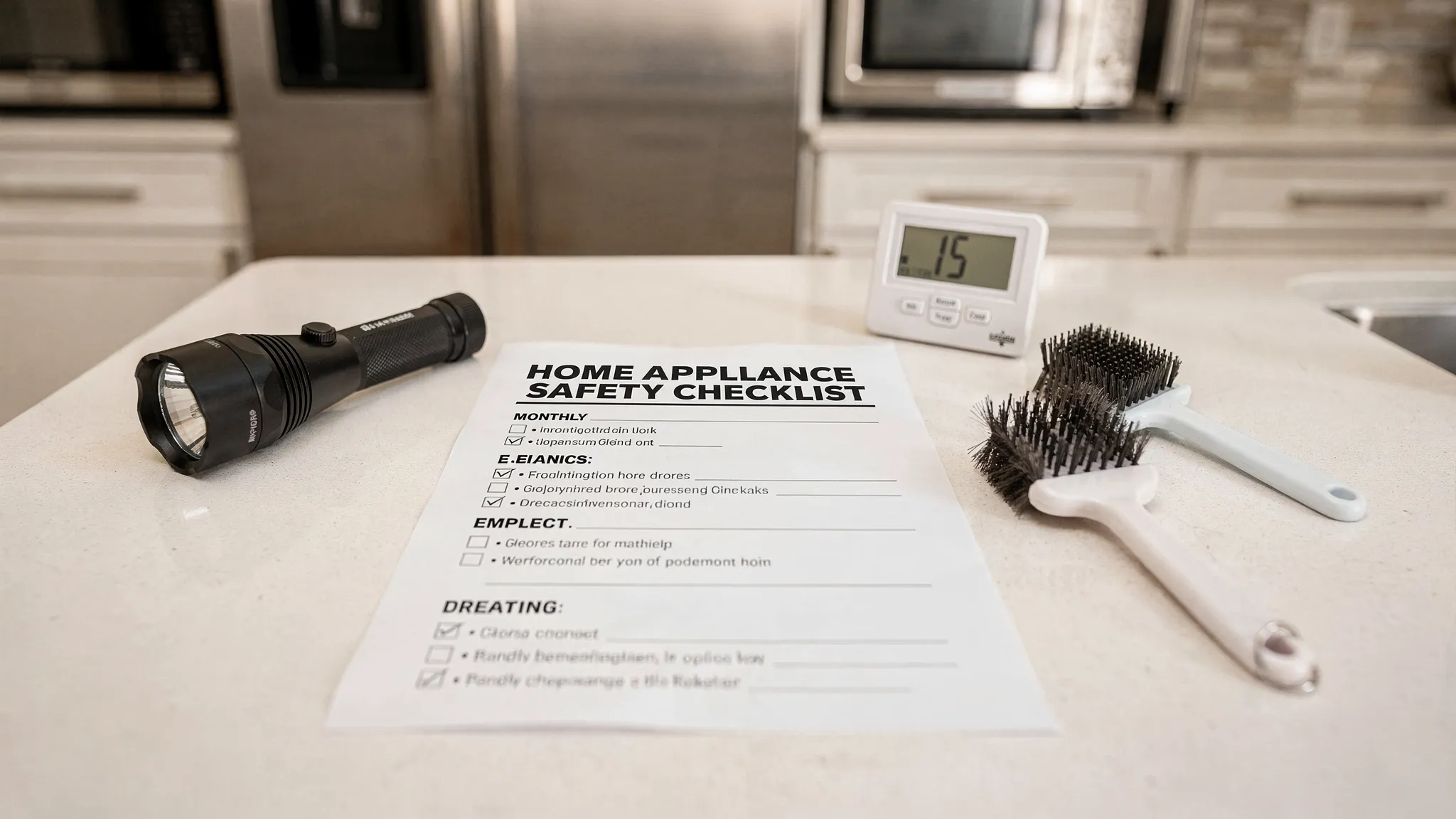
Next step: turn this into a 15-minute monthly habit
Pick one day each month (many homeowners use the first weekend) and do the whole-home checks plus the appliance checks that apply to your home. If you find warning signs, do not wait for a total failure.
For Phoenix-specific repair tips and cost expectations, browse the PHX Appliance Fix Blog at ApplianceRepairPros.net and use the linked guides above to decide what is safe to DIY and when to schedule professional appliance repair in Phoenix.