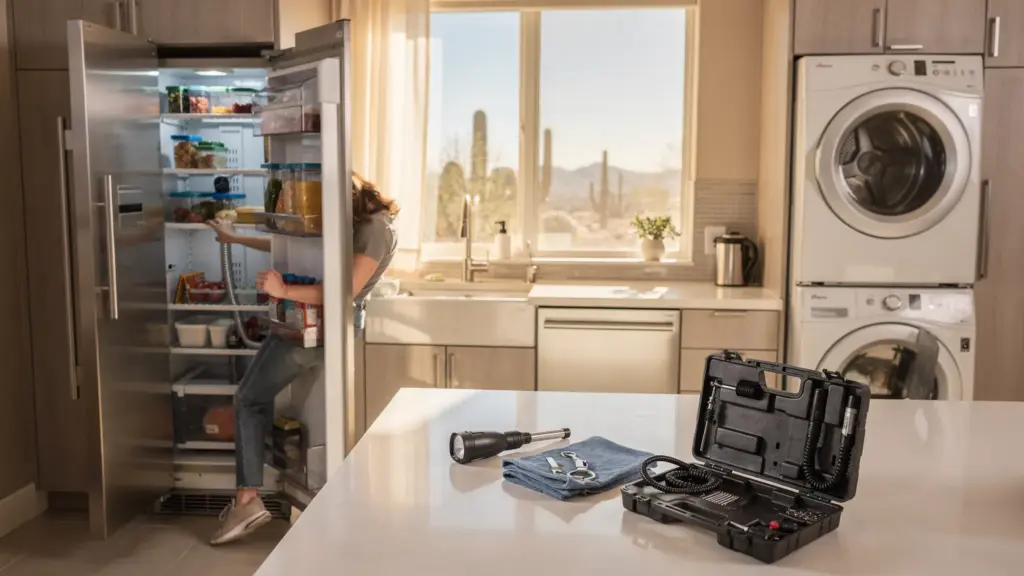
Phoenix homes put appliances through a different kind of stress test. Long, extreme summers push refrigerators and freezers harder, monsoon season brings dust and humidity swings, and hard water can quietly shorten the life of dishwashers, washers, and ice makers.
A seasonal home appliance servicing plan helps you catch the small issues (airflow, seals, scaling, clogged filters) before they turn into the big ones (compressor failures, leaks, electrical faults). Below is a practical, Phoenix-friendly checklist you can repeat every year.
Before you start: safety and a basic “maintenance kit”
Most routine upkeep is simple, but safety comes first.
- Cut power: Unplug the appliance, or switch off the breaker before cleaning or opening panels.
- Shut off water: Close the supply valve before working on washers, dishwashers, refrigerators with ice makers, or water dispensers.
- Gas awareness: If you smell gas near a range or dryer, stop and contact your gas provider or a qualified technician.
A small kit makes servicing faster:
- Vacuum with a crevice tool (or a shop vac)
- Soft coil brush (for refrigerator condenser coils)
- Microfiber cloths, mild dish soap
- Flashlight
- Zip ties (to secure hoses/cords away from moving parts)
- Replacement water hoses (braided stainless is a common upgrade)
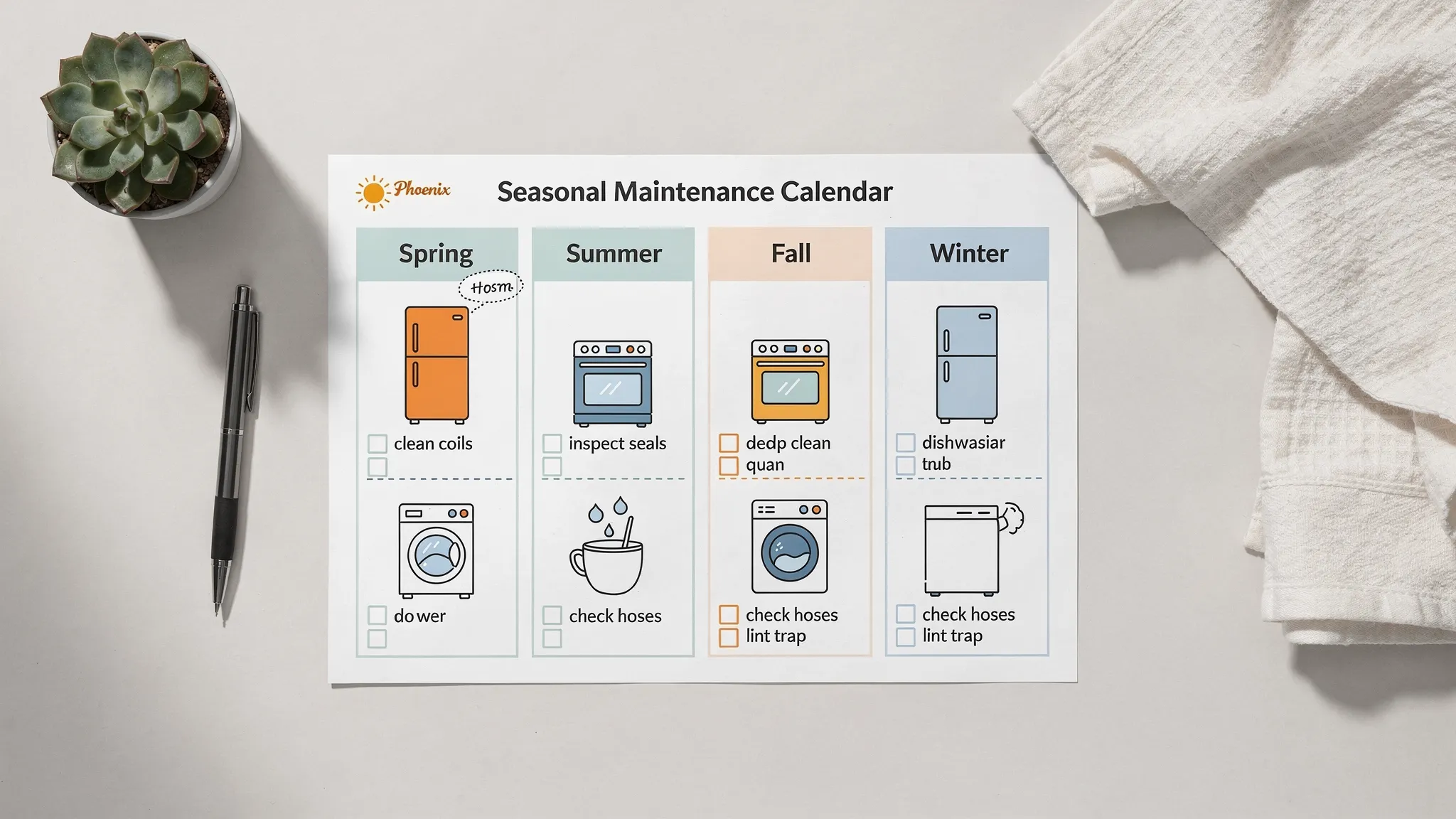
The Phoenix seasonal plan at a glance
Use this as your “what to do when” overview, then follow the appliance-specific sections.
| Season (Phoenix) | Goal | Focus appliances | What you’re preventing |
|---|---|---|---|
| Spring (Mar to May) | Prep for heat | Refrigerator/freezer, kitchen ventilation, dishwasher | Overheating, poor cooling, high energy use |
| Summer (Jun to Sep) | Reduce strain and catch failures early | Refrigerator/freezer, washer/dryer, disposal, ice maker | Food spoilage, leaks, clogs, burnout |
| Fall (Oct to Nov) | Post-monsoon cleanup | Oven/range, dishwasher, refrigerator, laundry | Odors, pests, dust buildup, worn seals |
| Winter (Dec to Feb) | Light tune-up and safety | Oven/range, dryer, dishwasher, refrigerator | Fire risk, uneven cooking, waterline issues |
Spring (Mar to May): pre-summer appliance servicing (most important in Phoenix)
Spring is when Phoenix temperatures ramp up, and it’s the best time to prepare appliances for months of heavy use.
Refrigerator and freezer: airflow, coils, and door sealing
When outdoor temps rise, your refrigerator runs longer and sheds more heat. Poor airflow or dirty coils can push components harder than necessary.
Do these spring checks:
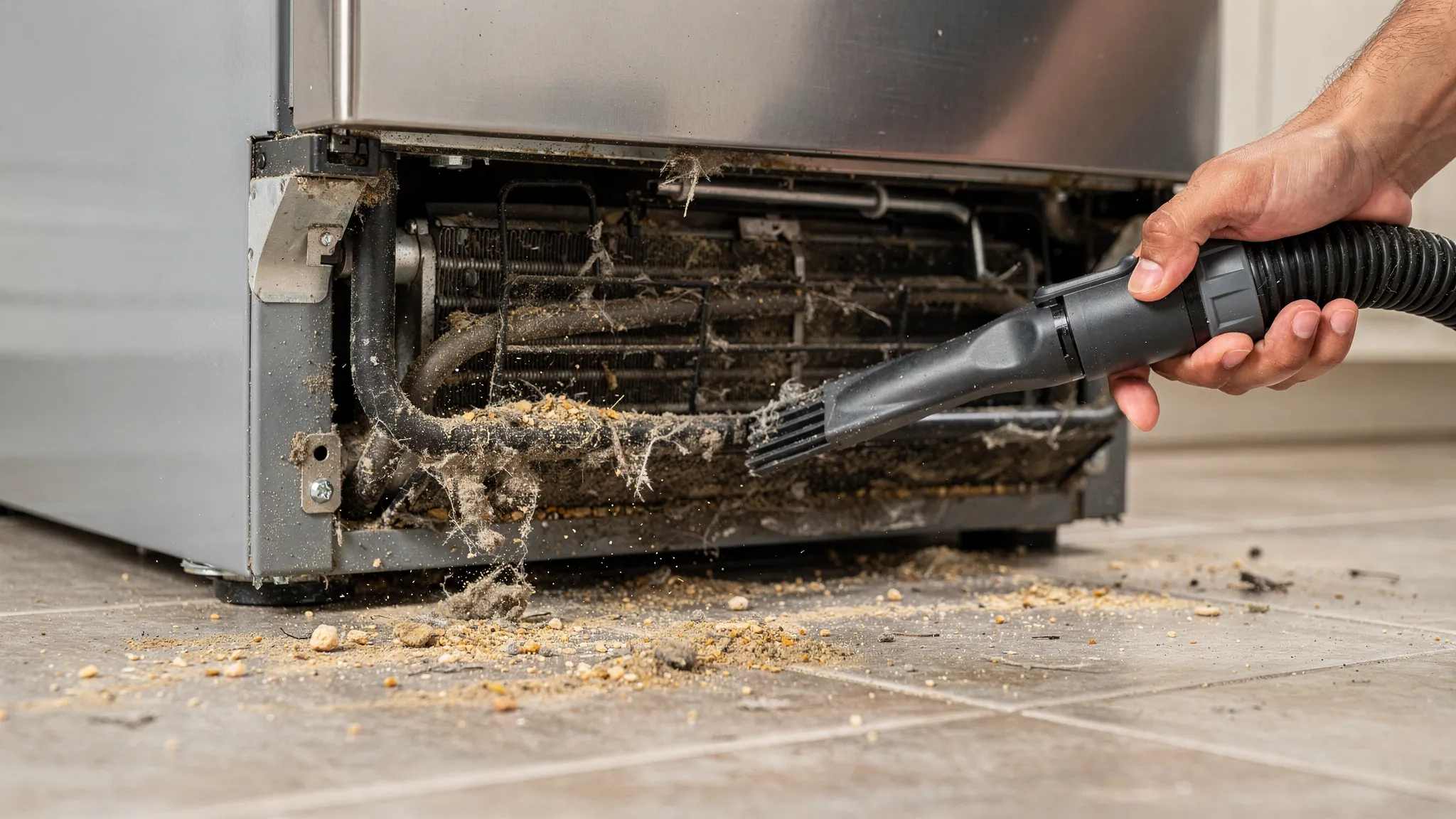
- Clean condenser coils (if accessible): Dust buildup can reduce heat transfer. For many models, coils are behind a front grille or rear panel.
- Confirm ventilation clearance: Make sure the fridge has space around it per the manual, especially if it’s in a tight alcove.
- Check door gaskets: Look for cracks, gaps, or sections that don’t sit flat.
- Set safe temperatures: The FDA recommends 40°F (4°C) or below for refrigerators, 0°F (-18°C) for freezers.
If your unit struggles during the first heat wave (warm fridge, constant running, or spoiled food), it may be time to weigh repair vs replacement. This local guide can help you think it through: Is it worth repairing a refrigerator in Phoenix’s heat?
Dishwasher: filter and spray arm performance (hard-water friendly)
Phoenix-area hard water can contribute to mineral buildup that reduces cleaning performance and can increase wear.
Spring dishwasher maintenance:
- Clean the filter (most modern dishwashers have a removable filter)
- Inspect spray arms for clogged holes
- Run a descaling cycle using a product designed for dishwashers (follow the manufacturer’s instructions)
- Check the door seal for tears or flattening
Washer: hoses, drain, and inlet screens
Washers fail in frustrating ways, and many are preventable.
- Inspect hot and cold hoses for bulges, cracks, or corrosion at the fittings
- Confirm the drain hose is secured and not kinked
- Listen for slow fill symptoms (which can hint at clogged inlet screens)
If you’re seeing a Samsung 4C error or slow fill issues, this detailed walkthrough is a good reference: Samsung Washer 4C Error: Water Inlet Troubleshooting
Summer (Jun to Sep): keep appliances stable during peak heat
Summer is when minor issues become emergencies, especially for refrigeration.
Refrigerator: quick weekly habits that prevent panic calls
In extreme heat, small changes matter.
- Keep vents inside the fridge unblocked (avoid packing items tightly against the back wall)
- Let hot food cool before loading (reduces compressor workload)
- Clean spills fast to protect gasket sealing surfaces
- Watch for early warning signs: louder humming, warm spots, frosting patterns that look new, or condensation
If food safety is at risk, same day refrigerator repair in Phoenix may be worth requesting, especially when the fridge is warm and the freezer is thawing. Until help arrives, keep doors closed and move essentials to a cooler with ice.
For cost expectations in the area, use this reference: Refrigerator repair cost in Phoenix (real prices)
Dryer: airflow and lint control (a real safety issue)
Dryers work harder in summer because laundry piles up fast, and airflow restrictions raise temperatures.
- Clean the lint screen every load
- Check outdoor vent airflow (weak airflow suggests a clog, crushed duct, or excessive duct length)
- Look behind the dryer to confirm the duct isn’t kinked
If you notice burning smells, repeated thermal shutoffs, or scorching, stop using the dryer and get it inspected.
Garbage disposal and kitchen drains: odor and jam prevention
Summer odors show up faster.
- Flush with cold water during and after use
- Avoid grease, fibrous peels, and starchy foods (common clog causes)
- If it hums but won’t spin, turn off power and use the correct hex key method per your model manual
Fall (Oct to Nov): post-monsoon cleanup and holiday readiness
Fall is your reset after monsoon dust and humidity swings, and it’s the best time to prep ovens and dishwashers for heavy holiday use.
Oven and range: performance check before the cooking season
Ovens can often be repaired cost-effectively, but you want to catch problems early.
- Confirm the door seals well: gaps waste energy and cause uneven baking
- Check for temperature inconsistency: baking that suddenly takes longer can signal calibration or component issues
- Clean carefully: avoid harsh scraping that can damage finishes or seals
If you suspect a gasket problem, this local how-to is a helpful guide: How to repair an oven door seal in Phoenix
And if you’re wondering what problems are typically fixable, see: Can ovens be repaired? Phoenix technicians explain common fixes
Refrigerator: dust, level, and ice maker checks
Fall is a good time to repeat a lighter version of spring refrigerator servicing.
- Vacuum the front grille and toe-kick area
- Verify the refrigerator is level (doors should swing closed gently, not drift open)
- Inspect the water line (kinks, leaks, mineral buildup at fittings)
Washer and dishwasher: prevent slow leaks (the expensive kind)
Leaks don’t always show up as puddles. Slow seepage can damage cabinets and flooring.
- Look for crusty mineral traces around hose connections and under the dishwasher
- Check clamps and fittings for corrosion
- Listen for unusual pump noises (grinding can indicate debris)
Winter (Dec to Feb): lighter servicing plus safety checks
Phoenix winters are mild, but winter is still a great time to handle maintenance when you’re less likely to need emergency service.
Refrigerator: temperature stability and gasket conditioning
- Confirm temperatures stay steady (use a fridge thermometer if you don’t trust the display)
- Clean gasket folds with mild soap and water, then dry thoroughly
Oven: safe operation and predictable heat
- Verify burners ignite cleanly (gas ranges) and flames look steady (blue is typical; persistent yellow can indicate a combustion issue)
- Watch for electrical symptoms like flickering displays or unresponsive buttons
Dishwasher: avoid odor buildup
- Run a hot cycle occasionally to reduce biofilm
- Clean the filter if you haven’t done it since fall
A practical servicing schedule you can actually follow
If you want the plan to stick, assign a realistic frequency to each task.
| Task | Suggested frequency | Why it matters in Phoenix |
|---|---|---|
| Vacuum refrigerator grille/toe-kick area | Monthly (summer), otherwise every 2 to 3 months | Dust restricts airflow and raises operating temps |
| Clean condenser coils (if accessible) | 1 to 2 times per year (spring, optional fall) | Helps cooling efficiency during extreme heat |
| Clean dishwasher filter | Monthly to quarterly | Hard water and food debris reduce wash performance |
| Inspect washer hoses and connections | Twice per year | Heat and vibration accelerate hose wear |
| Confirm dryer vent airflow | Quarterly | Lint restriction increases drying time and fire risk |
| Inspect oven door seal and hinge closure | Twice per year (fall, mid-winter) | Prevents heat loss and uneven cooking |
When DIY stops being smart: signs you should call a pro
Seasonal maintenance prevents breakdowns, but some symptoms mean you should stop troubleshooting and get professional appliance repair in Phoenix.
Call a technician if you notice:
- Electrical burning smell, sparking, tripping breakers, or scorch marks
- Refrigerator not cooling (especially if the freezer is warming), repeated clicking, or loud grinding
- Water under appliances that returns after drying, or signs of active leaking at fittings
- Gas odor, delayed ignition, or repeated burner ignition failures
If the problem threatens food safety or could cause water damage, it can qualify as emergency appliance repair in Phoenix. In those cases, the goal is less about saving money and more about limiting losses.
How this plan helps you spend less on repairs
Seasonal home appliance servicing is not about making every repair DIY. It’s about reducing the most common “avoidable” failures:
- Refrigerators overheating from dust and poor airflow
- Washers leaking due to aging hoses or loose fittings
- Dishwashers cleaning poorly due to clogged filters and mineral scale
- Ovens losing heat due to worn door seals
And when you do need service, you’ll be in a better position to describe symptoms, share what you’ve already checked, and decide whether repair is worth it. If you’re comparing options, start with local context like refrigerator repair cost in Phoenix and then get a diagnosis before committing to a major repair.