Phoenix hard water can leave chalky deposits inside kettles, coffee makers and other water-using appliances. But there is no single descaling schedule that works for every home. The right interval depends on your water’s hardness, how often you use the appliance, whether its supply is softened and what the manufacturer allows.
For frequently used appliances supplied with unsoftened hard water, check for buildup monthly. Coffee makers and dishwashers may need descaling every one to three months, while a daily-use kettle may need attention every two to four weeks. Washing machines and refrigerator water systems require a different approach, not a routine vinegar flush.
Phoenix Hard Water: A Practical Descaling Schedule
Use the following schedule as a starting point for a household with confirmed hard water and regular appliance use. These are planning ranges, not manufacturer requirements or measured averages for Phoenix homes. Your model’s instructions take priority, especially when it has a descale indicator or water-hardness setting.
| Appliance | Starting inspection or cleaning interval | What should determine descaling? |
|---|---|---|
| Electric kettle | Inspect every two weeks; daily-use kettles may need descaling every two to four weeks | Visible mineral deposits and the approved cleaning method |
| Coffee maker or espresso machine | Check monthly; descaling may be needed every one to three months with daily use | Manufacturer schedule, hardness setting or descale alert |
| Dishwasher | Inspect monthly; consider descaling every one to three months if deposits recur | Chalky buildup inside the machine and model-specific instructions |
| Washing machine | Follow the tub-clean schedule, often monthly | Use a separate descaling treatment only if the manufacturer recommends it |
| Refrigerator dispenser and ice maker | Follow filter replacement and cleaning instructions | Do not routinely flush internal lines with descaler unless the manual specifically directs it |
If your water is softened, those intervals may be longer. Conversely, heavy use can justify more frequent attention. A kettle that boils several times a day encounters more mineral-bearing water than one used only on weekends.
Inspecting is not the same as treating. A monthly check does not mean every appliance needs a monthly dose of acid cleaner.
Check Your Actual Water Hardness First
Why Phoenix households can need different schedules
Water hardness comes mainly from dissolved calcium and magnesium. Heating water can encourage mineral deposits to form on hot surfaces, which is why kettles and coffee equipment often show scale before other appliances do.
Phoenix uses multiple water sources, so do not assume one citywide number describes the water reaching your kitchen throughout the year. Homes in nearby communities may also have different providers. Start with your utility’s information, such as the City of Phoenix water quality resources, and ask for hardness data if the report does not list it.
For a household maintenance schedule, a hardness test taken at the appliance’s actual supply is especially useful. If you have a softener, test water after it passes through that system. A kitchen faucet or refrigerator connection may be on an unsoftened line even when other fixtures receive softened water.
How to read the test result
Hardness is commonly reported in milligrams per liter, or mg/L, as calcium carbonate. Some test kits use grains per gallon, abbreviated gpg. One gpg is approximately 17.1 mg/L.
The U.S. Geological Survey’s hardness classifications describe 0 to 60 mg/L as soft, 61 to 120 mg/L as moderately hard, 121 to 180 mg/L as hard and more than 180 mg/L as very hard.
Use the result to choose an initial inspection interval and configure appliances that have a hardness setting. If deposits return quickly, shorten the interval. If the appliance stays clean and the manual permits a longer schedule, extend it gradually.
What Each Appliance Actually Needs
Kettles: Clean when visible scale develops
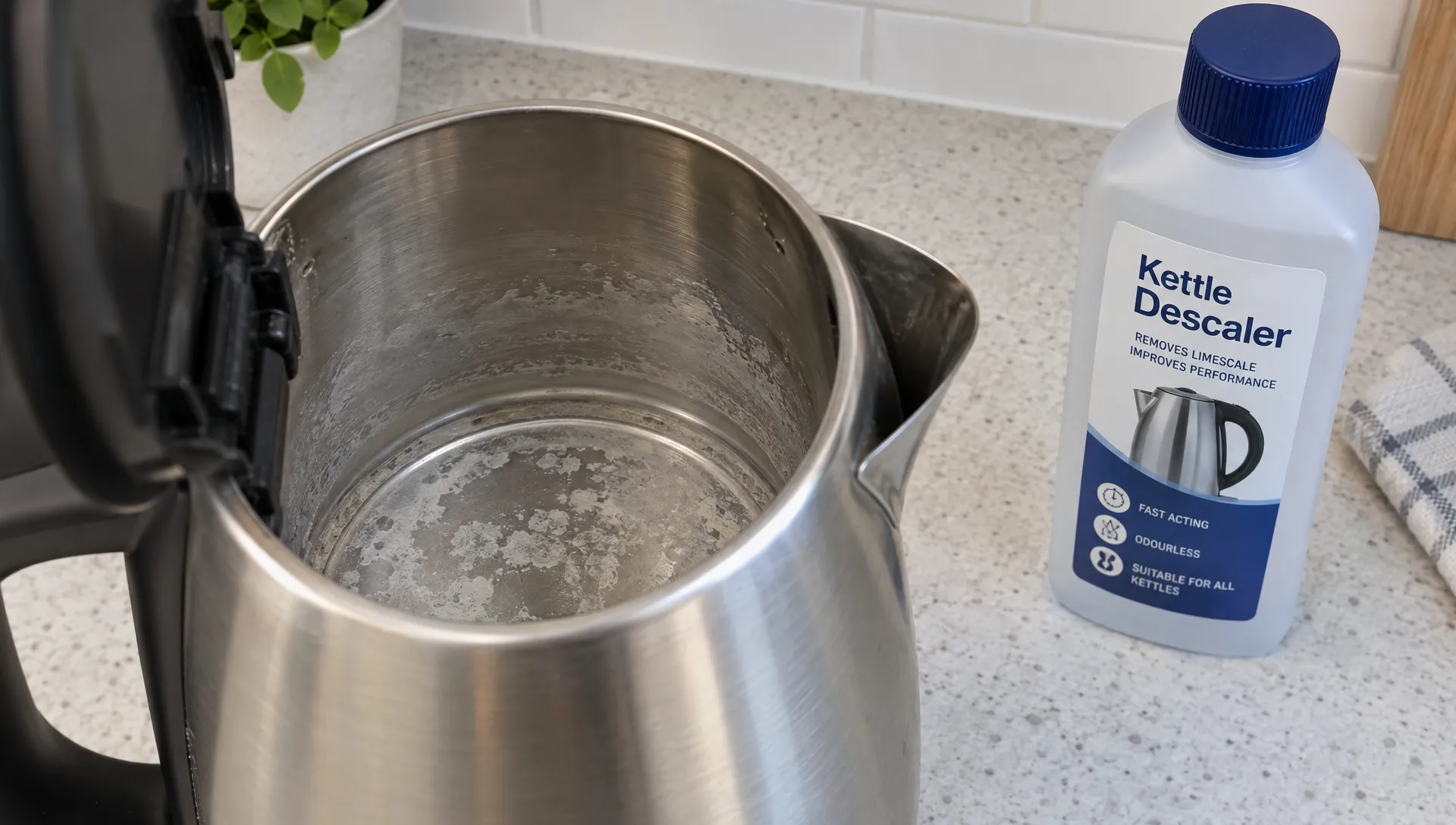
Kettles make mineral buildup easy to spot. Look for a rough white coating on the bottom, deposits around the heating surface or flakes in the water. Start checking every two weeks if you boil unsoftened hard water daily.
Use the descaling product or household solution allowed by the manufacturer, following its concentration and contact time. Some kettles permit vinegar or citric acid, but that permission should not be assumed for every finish or component. Rinse as directed before making drinks.
Do not scrape deposits with a knife or abrasive tool. That can damage the interior or heating surface. Clean while buildup is still manageable rather than waiting for a thick crust.
Coffee makers: Follow the alert and hardness setting
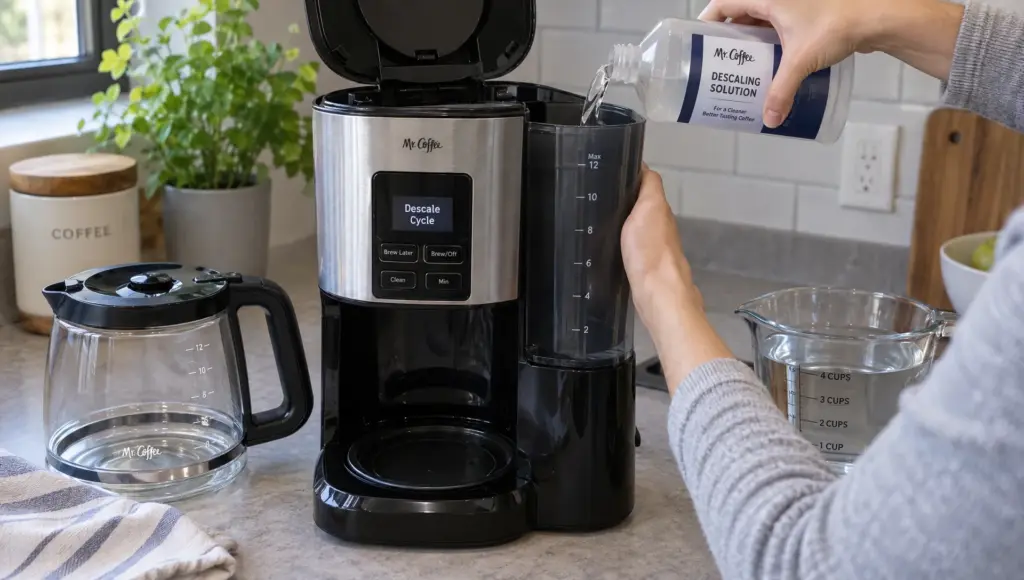
A coffee maker can develop scale in places you cannot see, including its heating system and internal passages. Set the machine’s water hardness correctly if that option is available, then follow its maintenance prompts.
For daily use with hard water and no maintenance indicator, one to three months is a reasonable planning range to compare with the manual. High drink volume or very hard water may require the shorter interval.
Use the specified descaler and complete every required rinse cycle. Espresso-machine backflushing and removal of coffee oils are separate tasks: a coffee-cleaning tablet is not automatically a descaling product.
Slow brewing or reduced flow can indicate scale, but clogged filters and other faults can cause similar symptoms. If a correctly completed descale cycle does not restore performance, avoid repeatedly adding cleaner without diagnosing the problem.
Dishwashers: Separate scale from food and detergent residue
Inspect the tub, accessible spray-arm openings and the area around the filter monthly. Chalky deposits can justify a manufacturer-approved descaling cycle, particularly when they return within a few months.
However, greasy film, trapped food and detergent residue require different cleaning steps. Persistent cloudy glasses may also be etched rather than coated with removable minerals. More descaler will not reverse etching.
If cleaning performance is the main complaint, work through these checks for a dishwasher leaving dishes dirty before assuming scale is the cause. Follow the manual when adjusting detergent or rinse aid for your water conditions.
Washing machines: Tub cleaning is not automatically descaling
A washer’s cleaning cycle primarily addresses residue, odors and buildup associated with laundry use. Many manufacturers recommend regular tub cleaning, often monthly, but the required product varies by model.
Do not substitute a kettle descaler for a washing-machine cleaner. If mineral buildup is suspected, check whether the manufacturer permits a descaling treatment and which product it specifies.
Hard water can also affect detergent performance. Follow the detergent label and washer instructions rather than continually increasing the dose. Excess detergent can create additional residue, making a mineral problem harder to identify.
Refrigerators: Avoid improvised internal flushing
Most refrigerators do not have a routine homeowner descaling cycle for their water dispenser or ice maker. Maintain the filter according to the model’s instructions and clean accessible dispensing surfaces using approved methods.
A typical refrigerator carbon filter is not a water softener. Replacing it may improve filtration or restore flow when the cartridge is restricted, but it generally does not remove the dissolved calcium and magnesium responsible for hardness.
Never pour vinegar or descaler into a filter housing, supply connection or ice-maker mechanism unless the manufacturer explicitly instructs you to do so. Low water flow, poor ice production and leaks can involve filters, valves, supply pressure or mechanical faults. Those symptoms deserve diagnosis, not an improvised chemical flush.
How to Descale Without Damaging the Appliance
Choose the cleaner for the model, not just the deposit
A product that removes limescale from bathroom fixtures is not necessarily suitable for a coffee maker, dishwasher or food-contact surface. Check the appliance manual for the cleaner type, dose, cycle and rinse instructions.
Vinegar is not a universal solution. Its acidity can be unsuitable for certain materials, and some manufacturers require a formulated descaler. Citric acid also needs the correct concentration and procedure; stronger is not automatically better.
For older appliances whose manuals are missing, use the model number to find the manufacturer’s instructions before treating internal components. Avoid the trial-and-error approach described in these common DIY appliance repair mistakes.
Keep the process controlled
Run maintenance cycles without dishes, laundry or beverages unless the instructions specifically say otherwise. Remove user-serviceable parts only as directed, allowing hot equipment to cool first. Do not open electrical panels or disconnect internal plumbing to reach suspected scale.
Never mix acidic descalers or vinegar with chlorine bleach. That combination can release dangerous chlorine gas. Keep descaling separate from other chemical cleaning, following the required rinsing steps between treatments.
Use the prescribed amount and contact time, then finish all fresh-water rinses. An interrupted cycle can leave cleaner inside the system. If the manual calls for removing a filter before descaling, follow that step and reinstall or replace it as directed afterward.
Recognize when cleaning is no longer the right response
Stop treating the issue as routine mineral buildup if you notice:
- Water leaking from underneath the appliance or near electrical components.
- A burning smell, repeated breaker trips or abnormal overheating.
- Persistent error codes or flow problems after the approved cleaning procedure.
- Damaged seals, cracked parts or corrosion rather than a removable surface deposit.
These signs call for troubleshooting or professional service. Another round of acid cleaner will not repair a failed valve, damaged heater or leaking connection.
Adjust the Schedule After Two or Three Checks
Keep a short record of the date, hardness reading, visible buildup and treatment used. After two or three inspections, you should have a better household-specific schedule than any generic calendar can provide.
If substantial deposits return before the next planned cleaning, shorten the interval within the manufacturer’s guidance. If buildup is minimal, avoid unnecessary chemical treatments and continue inspecting.
A properly functioning water softener reduces calcium and magnesium and can reduce scale in appliances it actually supplies. Check its maintenance requirements and confirm that the relevant water line passes through it. Ordinary sediment and carbon filters do not provide the same hardness reduction.
Reverse osmosis can reduce dissolved minerals too, but using that water in coffee equipment should follow the manufacturer’s water specifications. Some machines require a particular mineral range rather than extremely low-mineral water.
Frequently Asked Questions
Should I descale every appliance monthly in Phoenix? No. Monthly inspection is a useful starting habit, but treatment frequency varies. Kettles may need frequent descaling, while washers need model-specific tub cleaning and refrigerator water systems generally should not receive a DIY chemical flush.
Can I use white vinegar instead of commercial descaler? Only when the appliance manufacturer allows it. Follow the specified dilution, contact time and rinsing procedure. Do not assume permission for one appliance applies to another, and never combine vinegar with chlorine bleach.
Does a refrigerator filter remove hard-water minerals? Most standard refrigerator carbon filters do not soften water. Check the cartridge’s stated capabilities, but do not expect routine filter replacement to eliminate calcium and magnesium.
Does a water softener mean I can stop descaling? It can substantially reduce scale, but you should still follow the appliance’s maintenance instructions. Confirm that the appliance receives softened water and periodically check that the softener is working.
Is water-heater flushing the same as descaling? No. Flushing a storage water heater removes accumulated sediment, while descaling addresses mineral deposits. Tankless water heaters may require a separate descaling procedure. Follow the unit’s instructions and use qualified service when the procedure involves isolation valves or unfamiliar plumbing.
Build a Schedule Around Your Home’s Water
Start with a hardness test, the appliance manual and a monthly inspection reminder. Descale where needed rather than treating every machine on the same date. For the rest of your household upkeep, use this seasonal appliance maintenance plan to keep water-related cleaning alongside your other maintenance tasks.