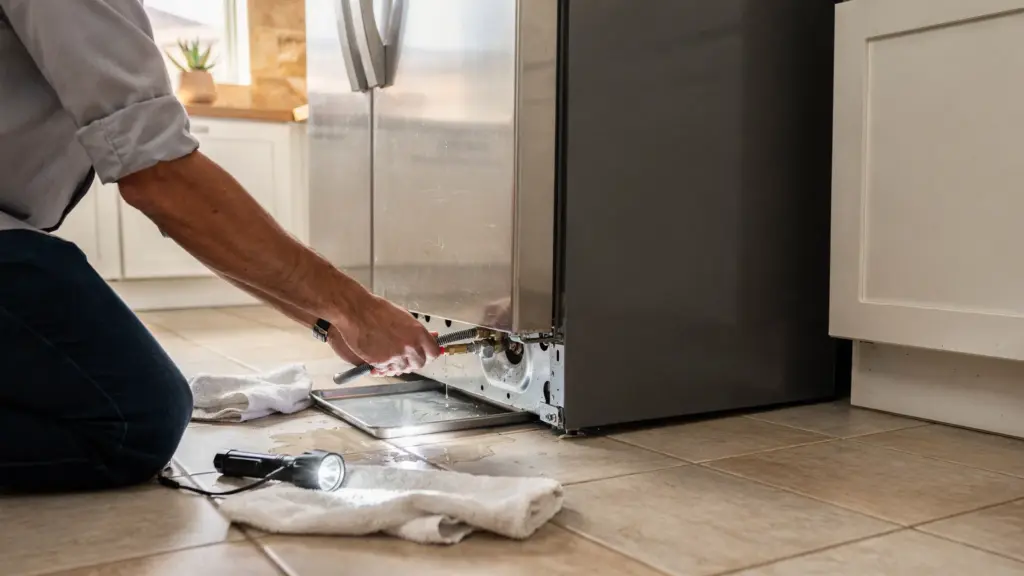
Water pooling under a refrigerator is one of those problems that feels urgent (and it is). Leaks can damage flooring, feed mold, and even create an electrical hazard if water reaches a power cord, outlet, or extension strip. The good news is that many “refrigerator leaking water” calls come down to a few common causes you can check in under an hour, with basic tools.
Phoenix homeowners also see a few leak patterns more often: garages that run hot, dusty condenser areas that increase run time, and hard water that can clog small tubes and fittings over time.
Safety first (before you troubleshoot)
A leaking fridge is usually safe to inspect, but take these precautions:
- Unplug the refrigerator before removing interior panels, working near fans, or dealing with standing water.
- Protect the outlet area. If water is near the outlet or power strip, shut off power at the breaker first.
- Use towels and a shallow pan to control water as you pull the unit forward.
- Avoid sharp tools around plastic drain tubes and refrigerator liners, punctures are hard to repair.
If you discover active dripping onto wiring, burned smells, or the fridge is also not cooling, skip DIY and move to the “When to call a pro” section.
Quick diagnosis: where is the water coming from?
Start by identifying where the water shows up and whether your fridge has an ice maker or water dispenser. That one detail narrows the cause dramatically.
| Where you see water | Most likely causes | What to check first | Common DIY fix |
|---|---|---|---|
| Inside the fridge (bottom shelf/crisper area) | Clogged defrost drain, warm air leak at door gasket, blocked airflow causing frosting | Look for water droplets or a sheet of ice under drawers | Clear the defrost drain; clean/adjust gasket |
| Inside the freezer (ice buildup, then water) | Defrost drain frozen, door not sealing, defrost issue | Frost/ice on freezer floor or back panel | Thaw and clear drain; check door seal |
| Under the front of the fridge | Water line leak, filter housing leak, loose fittings | Inspect tubing behind/below, check filter seating | Reseat/replace filter; tighten or replace line |
| Under the middle/back | Drain pan overflow/crack, drain tube misaligned | Look at drain pan above compressor area | Clean pan; reposition tube; replace pan |
| Only when dispensing water/ice | Filter, dispenser line, inlet valve, fittings | Observe while someone dispenses | Replace filter; tighten fittings; pro for valve |
Top causes of a refrigerator leaking water (and easy fixes)
1) A clogged defrost drain (the most common “mystery puddle”)
Most frost-free refrigerators periodically melt frost off the evaporator coil. That water is supposed to run into a defrost drain, down a tube, and into the drain pan where it evaporates.
When that drain clogs with food particles, sludge, or ice, water backs up and ends up:
- Under the crisper drawers
- On the freezer floor
- Dripping out the front door area
What you’ll notice
- A thin sheet of ice under drawers (especially in the freezer)
- Water returning even after you mop it up
Easy fix: clear the drain
- Unplug the fridge.
- Remove food and pull drawers/shelves near the drain area.
- Find the drain hole (often at the back of the freezer floor or behind a rear interior panel).
- If it’s iced over, let it thaw naturally with the door open and towels down. You can use warm (not boiling) water to speed it up.
- Flush the drain with warm water using a turkey baster or squeeze bottle.
- If you can access the drain tube from the back, gently clean it with a flexible plastic tube brush.
If you want a broader safe workflow (power, airflow, coils, temps), see: Refrigerator Repair How To: Safe DIY Steps to Try First.
2) A frozen drain tube or drain trap (common after door-left-open events)
Even if the drain hole looks clear, the tube can freeze lower down, especially after:
- A freezer door was left slightly ajar
- A big grocery load warmed the freezer and then refroze moisture
- A gasket leak let humid air in
Easy fix
- Thaw the unit long enough to melt the blockage (often 12 to 24 hours with towels down).
- After thawing, flush the drain again to confirm flow to the pan.
If this happens repeatedly, jump to the gasket and leveling checks below.
3) Water filter not seated correctly (or the wrong filter)
If your fridge has a dispenser, the filter connection is a very common leak point after a filter change.
What you’ll notice
- Drips right after replacing the filter
- Water under the front-right area (varies by model)
Easy fix
- Remove the filter and reinstall it firmly according to the arrows/lock marks.
- Inspect for cracks on the filter body.
- Confirm you’re using the correct model filter. Similar-looking filters can still mismatch.
If the filter housing itself is cracked or the internal O-rings are damaged, that often becomes a professional repair.
4) Leaking water supply line or loose fitting (especially with older plastic tubing)
Behind the fridge, you typically have a 1/4-inch water line feeding the inlet valve. Over time, lines can:
- Crack
- Get pinched when the fridge is pushed back
- Leak at compression fittings
Easy fix: check and replace the line
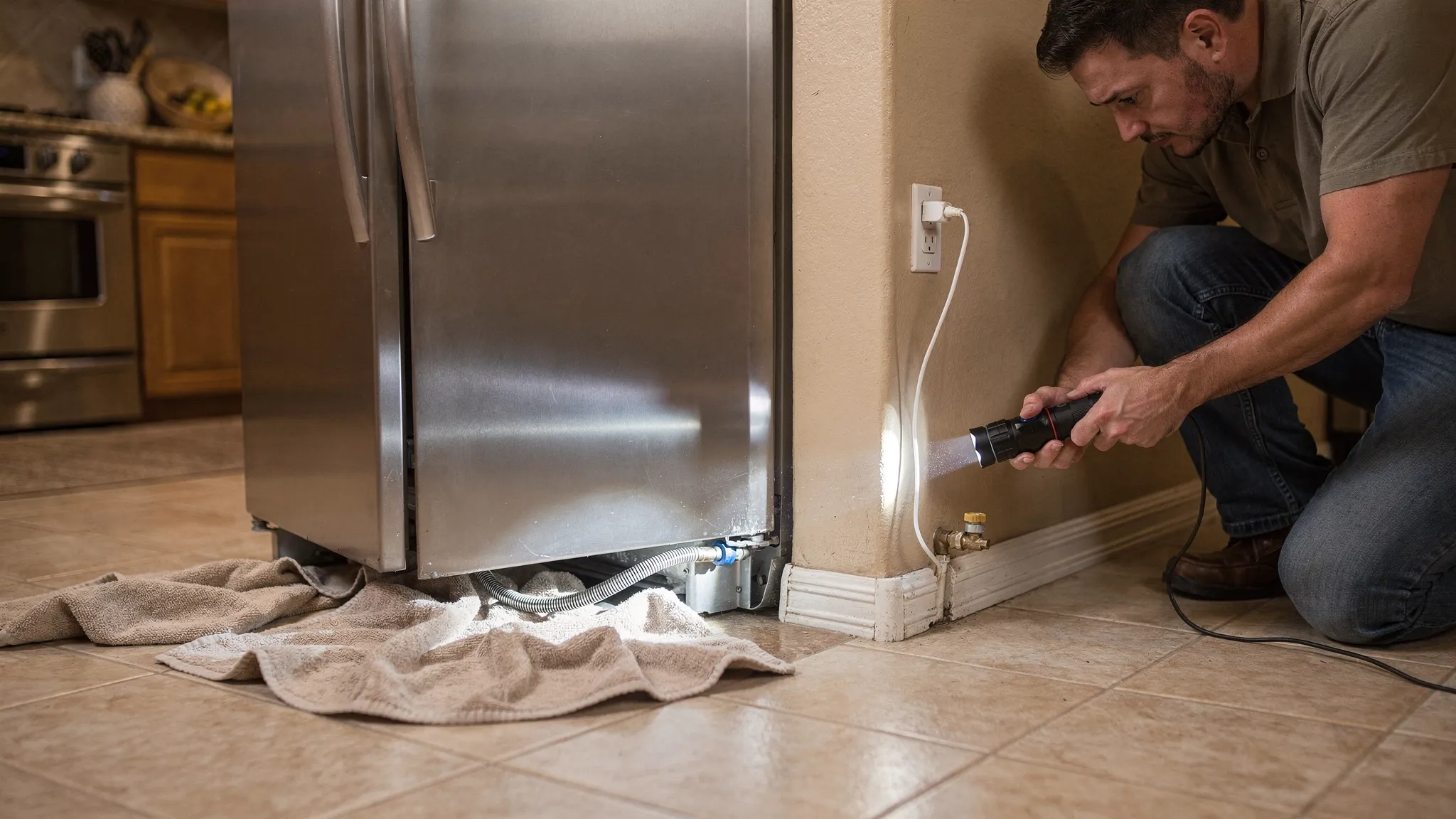
- Pull the fridge out carefully.
- Look for wetness at the wall shutoff valve, behind the fridge, and at the inlet valve connection.
- If you see brittle plastic tubing, consider replacing it with braided stainless steel to reduce future leaks.
- After any adjustment, dry the area completely and recheck for seepage over 15 to 30 minutes.
If you need to understand what a service visit might cost in Phoenix if this turns into a valve or line repair, bookmark: Refrigerator Repair Cost in Phoenix – Real Prices from Local Experts.
5) Cracked, dirty, or mispositioned drain pan
The drain pan sits under the fridge and is supposed to hold defrost water until it evaporates. Problems include:
- The pan is cracked
- The pan is out of position after cleaning/moving
- Heavy dust and grime reduce evaporation and cause overflow
Easy fix
- Unplug the fridge.
- Remove the lower back access panel (if present) and locate the pan.
- Clean it with mild soap and water, then dry.
- Ensure the drain tube terminates over the pan.
In Phoenix, dust buildup can be significant, especially if the refrigerator is in a garage or near an exterior door. A regular cleaning routine helps, see: Home Appliance Servicing: A Seasonal Maintenance Plan.
6) Door gasket leak causing condensation that turns into water
A poor seal doesn’t just waste energy, it can create a steady cycle of humidity in, frost forms, defrost melts, water appears.
What you’ll notice
- Condensation around door edges
- Frost in unusual places
- The fridge runs a lot (common in Phoenix heat)
Easy fixes
- Clean the gasket with warm water and a little dish soap, then dry thoroughly.
- Check for food packages blocking the door.
- If the door looks slightly tilted, level the fridge (next section).
For detailed gasket tests and repair steps, use: Refrigerator Door Seal Repair: Stop Leaks and Frost.
7) Refrigerator not level (water flows the wrong way)
A refrigerator that’s pitched forward or sideways can:
- Cause doors to not close consistently
- Prevent proper draining toward the drain hole
Easy fix
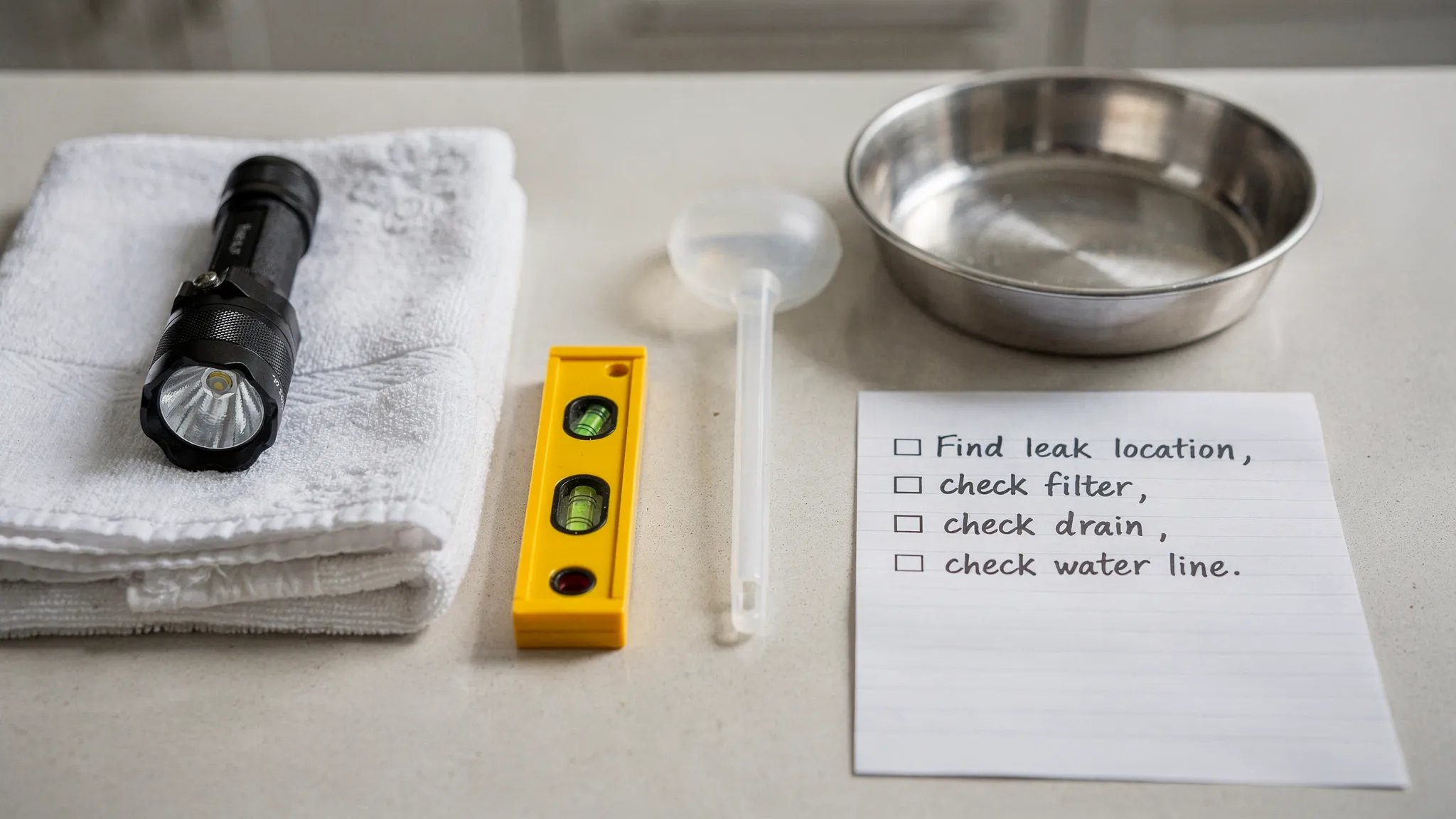
- Place a small level on a shelf.
- Adjust the front feet so the fridge is level side-to-side and very slightly higher in front (many manufacturers recommend a slight back tilt so doors self-close, but don’t overdo it).
Recheck for leaks over the next 24 hours.
8) Ice maker overfilling or inlet valve not closing fully
If the ice maker is overfilling, water can spill into the freezer, freeze, then melt during defrost. Causes include:
- Fill tube misalignment
- Water pressure issues
- A worn inlet valve that doesn’t close fully
What you can do safely
- Inspect the ice maker area for stray ice buildup near the fill tube.
- Confirm the fill tube is seated correctly (no obvious gaps).
- If you suspect the valve, this is often a technician job.
Phoenix-specific leak accelerators (why it happens “more here”)
A few local conditions can increase the odds of leaks:
- Garage installations: high ambient temperatures increase run time and defrost water volume.
- Dust: dirty condenser and surrounding areas can keep the unit running longer, producing more meltwater.
- Hard water: mineral scale can reduce flow through small lines and contribute to clogging at fittings.
If your fridge is in a garage, make sure it has adequate airflow clearance and is rated for the temperature range it’s operating in.
When a leaking refrigerator becomes an emergency
Consider same-day or emergency appliance repair in Phoenix if any of the following are true:
- Water is reaching an outlet, power strip, or you see moisture on wiring.
- The refrigerator temperature is rising toward unsafe levels (40°F and above).
- You cannot stop the leak by shutting off the water supply line.
For food safety, the common guideline is to discard perishables after 2 hours above 40°F, or 1 hour if ambient temperature is above 90°F. You can verify the latest guidance at FoodSafety.gov.
If you need help navigating quick turnaround options, see: Kitchen Appliance Repair Near Me: Same-Day Options.
What to document before you call a technician
Good documentation can reduce diagnostic time and keep estimates tighter.
Capture:
- Your fridge model number and serial
- A photo of where the water appears
- Whether it leaks constantly or only during dispensing/ice making
- Any recent changes (filter change, moved fridge, power outage)
If you’re hiring someone new, use this vetting checklist: Home Appliance Repair Near Me: How to Vet a Tech.
Frequently Asked Questions
Why is my refrigerator leaking water inside under the crisper drawers? The most common cause is a clogged defrost drain. Defrost water can’t reach the drain pan, so it collects under drawers and spills forward.
My fridge only leaks when I change the filter. What did I do wrong? Usually the filter isn’t fully seated, the wrong filter model is installed, or the filter housing O-ring is damaged. Reseat the filter and check for cracks.
Why is there a sheet of ice on the freezer floor and water later? That often indicates a frozen or clogged defrost drain. Water freezes on the floor, then melts during defrost cycles and becomes a leak.
Can I keep using the refrigerator if it’s leaking water? If the leak is minor and not near electrical components, you can temporarily use it while you diagnose. If water approaches outlets, cords, or wiring, shut off power and address it immediately.
Should I turn off the water to the fridge? If you suspect the water line, filter housing, inlet valve, or ice maker, yes. Turning off the supply is the fastest way to stop active leaking while you troubleshoot.
Next steps (if you want to fix it fast and avoid repeat leaks)
If you’ve cleared the drain, confirmed the filter and water line are tight, and the leak still returns, it’s time to compare repair options and decide how far to go.
- For Phoenix pricing context, start here: Refrigerator Repair Cost in Phoenix – Real Prices from Local Experts.
- If the leak is paired with warm temps, follow this workflow: What Happens When Your Fridge Stops Cooling? Food Safety Timeline.
- If you’re booking service, use: Home Appliance Repair Near Me: How to Vet a Tech.