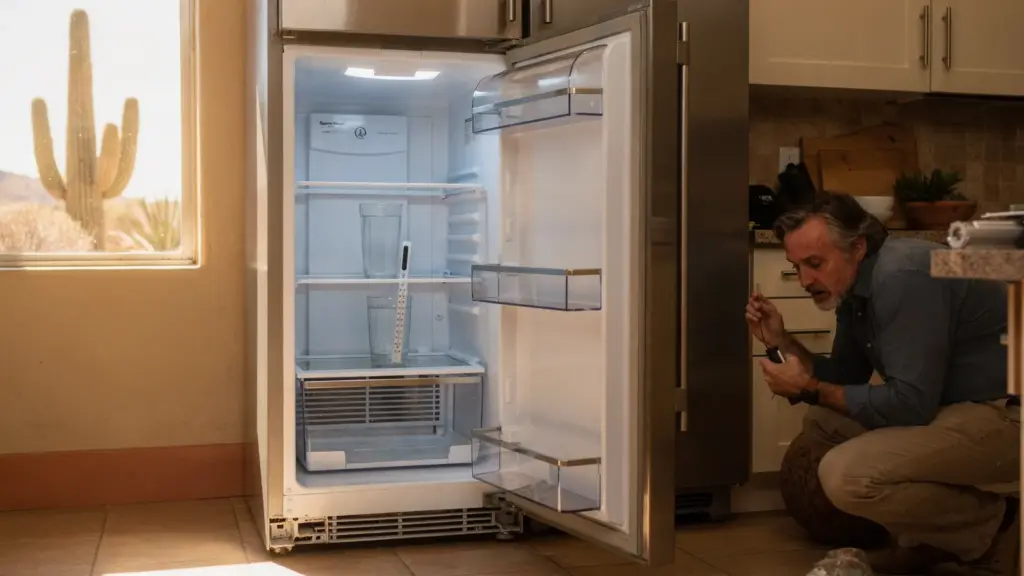
A refrigerator that “runs but won’t cool” is one of the most frustrating home problems, and in Phoenix it can turn into a food-safety issue fast. The good news is that many no-cool and not-cold-enough complaints come from a handful of common culprits you can diagnose with a few simple checks.
Below are the top causes of a refrigerator stopping cooling, what they look like in real life, and when it’s time to stop troubleshooting and call a pro.
First, confirm it’s actually a cooling failure (not a false alarm)
Before you assume something major failed, verify the temperature.
- Safe food temps: The USDA recommends keeping your refrigerator at 40°F (4°C) or below to slow bacterial growth. If your fridge is hovering at 45 to 55°F, it may still “feel cool” but it’s not safe for many foods. See USDA Cold Food Storage.
- Use a fridge thermometer: The built-in dial or display can be misleading. Put a thermometer in a cup of water on the middle shelf and check it after 6 to 8 hours.
If the fridge is above 40°F and climbing, use the checks below to narrow down the cause.
How cooling works (quick refresher)
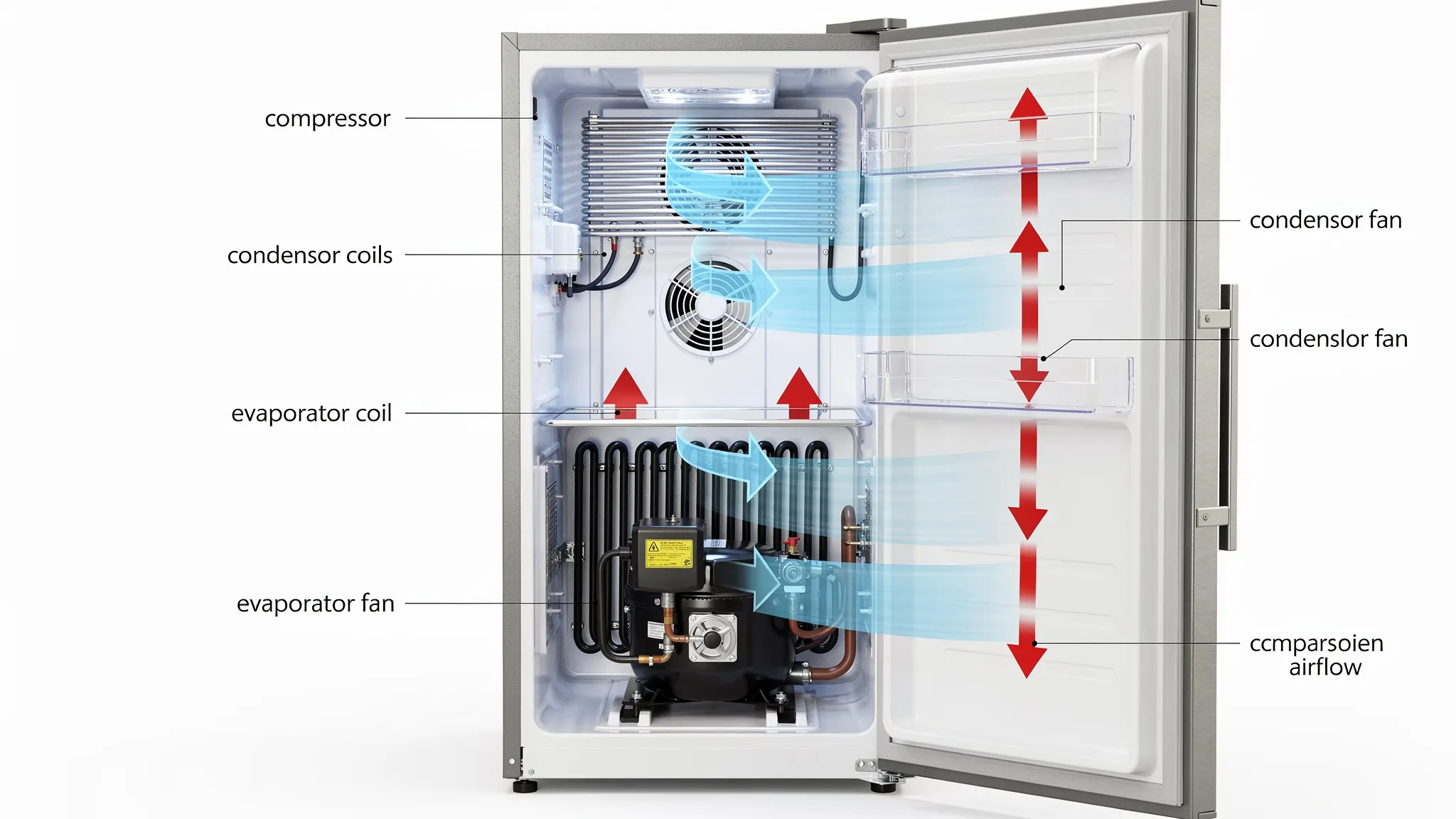
Most refrigerators move heat out of the cabinet using a sealed refrigerant loop.
- The compressor pumps refrigerant.
- The condenser (often under or behind the unit) dumps heat into the room.
- The evaporator coil (inside the freezer compartment) absorbs heat from inside the fridge.
- Fans move air across coils and circulate cold air into the fresh-food section.
- A defrost system prevents the evaporator coil from turning into a solid block of ice.
When any part of that chain is blocked, iced over, dirty, or not running, cooling drops sharply.
Top culprits when a refrigerator stops cooling
1) Dirty condenser coils (especially common in Phoenix)
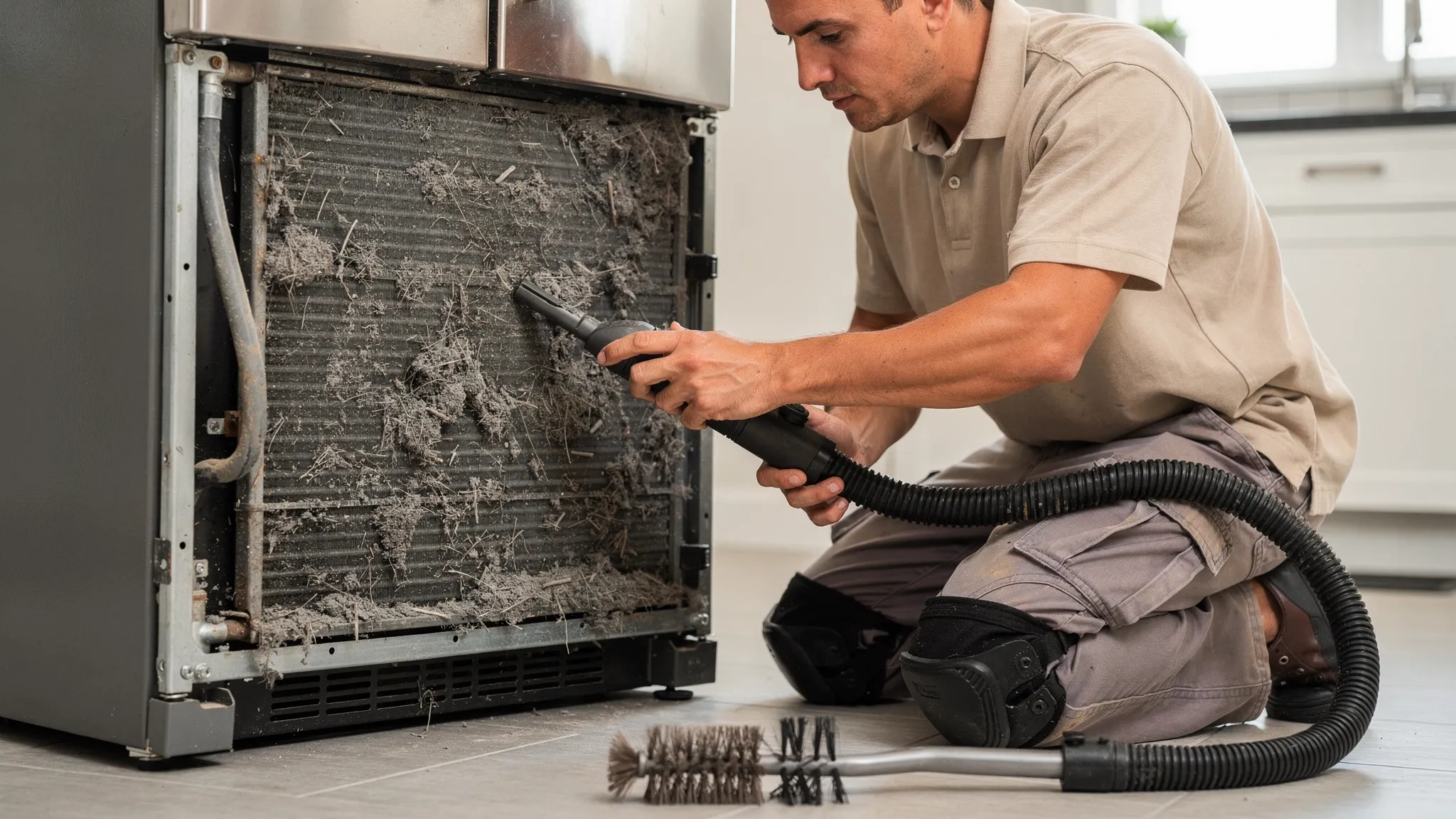
What happens: Dust, pet hair, and kitchen grime insulate the condenser coils so the fridge cannot dump heat efficiently. In a hot Phoenix kitchen or garage, that extra heat load can push the system over the edge.
Signs you’ll notice:
- Fridge is warm but you still hear it running
- Sides of the cabinet feel hot
- Compressor seems to run constantly
DIY check/fix:
Unplug the fridge, locate the coils (behind a rear panel or under the front kick plate), and gently vacuum/brush them clean. If you have pets, this is worth doing every 3 to 6 months.
2) Airflow blocked inside the fridge or freezer
What happens: Even if the freezer is making cold air, the refrigerator section may not get enough of it because vents are blocked.
Signs you’ll notice:
- Freezer is cold but fridge is warm
- Frost or condensation near vents
- Food in front of vents freezes while the rest is warm
DIY check/fix:
Make sure food packages are not pressed against air vents (typically at the back of the fridge and near the top of the fresh-food section). Leave a little space around the back wall for circulation.
3) Door gasket leaks (warm air sneaks in)
What happens: A torn, warped, or dirty door seal lets hot, humid air enter. The fridge runs harder, temperatures rise, and you can also get excessive frost.
Signs you’ll notice:
- Moisture beads around the door frame
- Frost build-up in freezer
- Door doesn’t “grab” when you close it
DIY check:
Try the “paper test.” Close the door on a strip of paper. If it slides out easily, the seal may not be sealing.
DIY fix (basic):
Clean the gasket with mild soap and warm water, then dry it. Sometimes grime is the issue. If the gasket is cracked or permanently deformed, replacement is usually the correct fix.
4) Evaporator fan not running (cold air isn’t moving)
What happens: The evaporator fan pulls air across the evaporator coil and circulates cold air into the refrigerator compartment. If it fails, the freezer may still get cold near the coil, but the fridge warms.
Signs you’ll notice:
- Fridge warm, freezer “kind of cold”
- Little to no airflow from vents
- You do not hear the normal fan sound when the door switch is pressed
DIY check:
Open the freezer and press the door switch (the fridge “thinks” the door is closed). If the fan should be running and you hear nothing, suspect the fan motor or an ice blockage.
When to call a pro:
If the fan is iced in, the underlying issue may be the defrost system. If the motor is dead, it’s a straightforward replacement for many models, but you’ll want the correct part and safe disassembly.
5) Condenser fan not working (heat can’t escape)
What happens: On many fridges, a condenser fan near the compressor moves air across the condenser coil. Without it, the compressor overheats and cooling drops.
Signs you’ll notice:
- Fridge runs, but cooling is weak
- Compressor area is extremely hot
- You never hear a fan near the bottom/rear (model-dependent)
DIY check:
With the fridge unplugged, inspect for dust buildup, a stuck blade, or debris. If the blade spins freely but the fan never runs when powered, it may need replacement.
6) Defrost system failure (evaporator coil turns into an ice block)
What happens: Frost naturally forms on the evaporator coil. The defrost heater and control system periodically melt it. If defrost fails, airflow gets choked off by ice.
Signs you’ll notice:
- Freezer gradually warms over days
- Thick frost on the back wall of freezer
- Fridge warm, freezer not as cold as normal
DIY clue:
If you remove the freezer’s inside rear panel (on some models) and see a coil encased in solid white frost, you likely have a defrost issue.
Important:
A full manual defrost (unplugging for 24 to 48 hours with towels) may temporarily restore cooling, but it does not fix the failed part (heater, defrost sensor/thermostat, or control board).
7) Temperature control or thermistor problems (bad readings, bad decisions)
What happens: Modern fridges use thermistors (temperature sensors) and control boards to decide when to run the compressor and fans. If a sensor is out of range, the fridge may run too little or behave erratically.
Signs you’ll notice:
- Temperatures swing up and down
- Display temp doesn’t match actual temp
- Cooling comes and goes without explanation
Best next step:
This is typically a diagnostic job with a multimeter and service manual specs. If you are not comfortable doing electrical diagnostics, it’s a good time to call a technician.
8) Start relay/capacitor failure (compressor can’t start)
What happens: The compressor needs a start device to kick on. If the relay or capacitor fails, the compressor may click, hum briefly, then shut off.
Signs you’ll notice:
- Repeating clicking every few minutes
- Lights work, fans may run, but it never gets cold
- Compressor is warm but not running steadily
Why this matters:
A failed start relay is far cheaper than a compressor, but the symptoms can look similar. Correct diagnosis prevents unnecessary replacement.
9) Sealed-system issues (refrigerant leak, restriction, or compressor failure)
What happens: If refrigerant is low (leak) or the compressor is failing, the system cannot move enough heat.
Signs you’ll notice:
- Fridge and freezer both warm
- Unit runs constantly with little improvement
- You may hear the compressor running, but cooling is minimal
Reality check:
Sealed-system repairs require specialized tools and EPA-compliant handling of refrigerant. This is not a DIY repair. In Phoenix, high ambient temperatures can make marginal sealed systems fail faster, especially for garage fridges.
For a local perspective on what these repairs typically run, see our guide: Refrigerator repair cost in Phoenix.
Quick diagnosis table: symptom to likely cause
Use this as a practical shortcut before you start taking panels off.
| What you observe | Most likely culprits | What to check first |
|---|---|---|
| Freezer cold, fridge warm | Blocked vents, evaporator fan, damper issue, frost/defrost problem | Clear vents, listen for evaporator fan, look for frost on freezer back wall |
| Both sections warm, unit running | Dirty condenser coils, condenser fan, sealed-system problem | Clean coils, verify condenser fan operation (if present) |
| Clicking every few minutes, no cooling | Start relay/capacitor, compressor issue | Listen for click-hum-click cycle, stop and call a pro if unsure |
| Cooling was fine, then gradually got worse over a week | Defrost failure, condenser coils, airflow blockage | Check for frost buildup, clean coils, verify door seals |
| Water/condensation near doors, frost in freezer | Door gasket leak, frequent opening, high humidity infiltration | Paper test on gasket, clean gasket, confirm doors align |
Phoenix-specific factors that make cooling problems worse
Garage refrigerators struggle in extreme heat
Many standard refrigerators are not designed to run efficiently in very hot spaces. A Phoenix garage can exceed 100°F for long stretches, and that can lead to longer run times, poor cooling, and earlier component wear.
If your fridge is in the garage and stops cooling on the hottest days, it may not be “broken” so much as operating outside ideal conditions. Improving ventilation around the unit and keeping coils clean can help, but repeated overheating can still shorten compressor life.
Dust is a constant enemy
Desert dust builds up fast on condenser coils and fan blades. If you only clean coils once a year, consider moving to a quarterly schedule during heavy-use seasons.
Power and outlet issues (don’t overlook them)
A loose outlet, failing surge protector, or damaged cord can cause intermittent cooling. If the fridge shares a circuit with a freezer, microwave, or garage tools, voltage dips can stress the compressor start components.
If you suspect power issues, use a dedicated outlet and avoid extension cords.
What you should not do (common DIY mistakes)
Some troubleshooting steps can create expensive damage.
- Do not chip ice with a knife or screwdriver inside the freezer. It is easy to puncture an evaporator coil, which can turn a repair into a replacement decision.
- Do not “top off refrigerant.” Refrigerators are sealed systems. Low refrigerant usually means a leak that must be found and fixed.
- Do not block airflow around the fridge. Pushing the unit tight against the wall can trap heat, especially in summer.
When to call a professional (and when to stop guessing)
Call for service sooner rather than later if:
- The compressor is not running and you hear repeated clicking
- You suspect a sealed-system issue (leak, restriction, compressor failure)
- The evaporator coil is solidly iced over and the problem returns after a manual defrost
- You smell burning insulation or see melted wiring
If you’re weighing whether a major repair makes sense in Phoenix’s climate, this related read can help: Is it worth repairing a refrigerator in Phoenix’s heat?
Frequently Asked Questions
What causes a refrigerator to stop cooling suddenly? Sudden no-cool is often a failed start relay/capacitor, a fan failure, or a control issue. If you hear repeated clicking or the compressor never stays on, stop troubleshooting and consider professional diagnosis.
Why is my freezer cold but the refrigerator warm? This is commonly airflow related: blocked vents, a failed evaporator fan, a stuck damper, or an evaporator coil iced over from a defrost failure.
Can dirty condenser coils really stop a refrigerator from cooling? Yes. If coils cannot release heat, the system’s pressure and temperature rise and cooling performance drops, especially in hot Phoenix conditions.
How long does it take a fridge to get cold after adjusting the thermostat? Typically 12 to 24 hours to stabilize. If temps do not improve after a full day (confirmed with a thermometer), you likely have a mechanical or airflow problem.
Is it safe to eat food if the fridge was warm overnight? It depends on how warm and for how long. USDA guidance emphasizes keeping cold foods at 40°F or below. When in doubt, follow USDA food safety recommendations and discard high-risk items that spent too long above safe temps.
Next step: decide whether to troubleshoot, repair, or replace
If your checks point to coils, vents, or door seals, you may be able to restore cooling quickly with basic maintenance. If symptoms point to a start device, control problem, or sealed-system issue, the most cost-effective move is often a precise diagnosis first.
To plan your budget and avoid surprise charges, read: Refrigerator repair cost in Phoenix (real prices from local experts). And if you’re on the fence about fixing an older unit in extreme heat, start here: Is it worth repairing a refrigerator in Phoenix’s heat?.