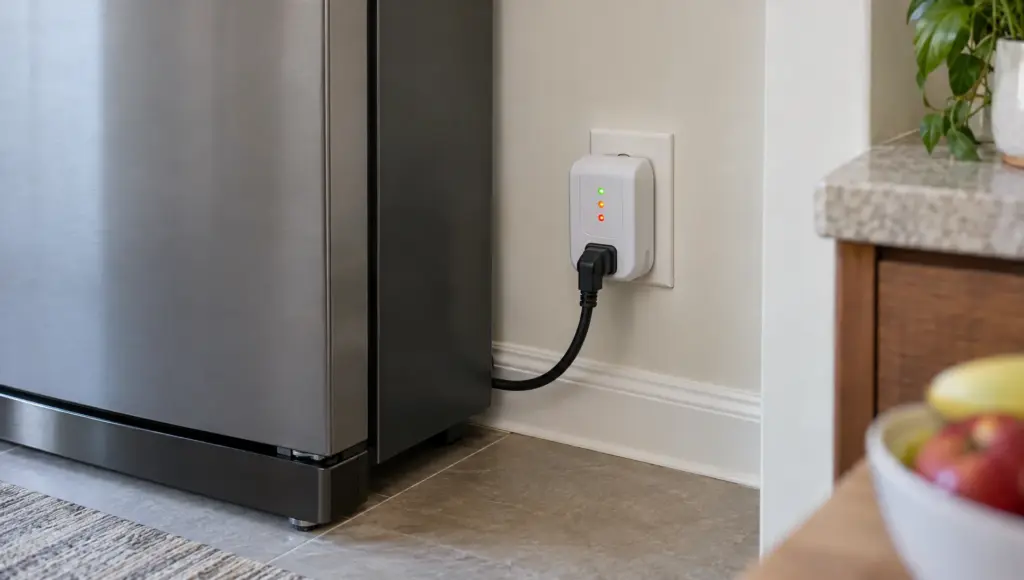
To protect appliances during Phoenix brownouts, focus on two things: keeping motor-driven equipment from struggling through low voltage and preventing repeated restarts when power fluctuates. A standard surge protector does not provide complete brownout protection. It limits brief voltage spikes, but it generally does not disconnect an appliance when voltage stays too low.
Phoenix homeowners already ask a lot of refrigerators and cooling equipment during hot weather. When lights dim or appliances behave strangely, the safest response is to stop affected equipment, check your utility’s outage information and wait for stable power before restarting. First, make sure the symptoms do not point to an electrical hazard inside your home.
What a brownout means for your appliances
A brownout is a reduction in supply voltage, unlike a blackout, which is a complete loss of power. Reduced voltage can be intentional or caused by a problem in the electrical system. A brief flicker alone does not establish that a brownout occurred.
Motor-driven appliances deserve particular attention. A refrigerator compressor or washer motor may struggle to start, stall or run hotter under unfavorable voltage conditions. Electronic controls can reset, display errors or stop a cycle. Protective circuits may shut equipment down, but their capabilities vary by model.
An electric oven’s heating elements may produce less heat at lower voltage, while its electronic controls may behave unpredictably. A gas appliance can also lose normal operation if its controls or ignition system depend on electricity.
Do not assume dimming lights are always a utility problem. Loose connections, overloaded circuits and other wiring faults can produce similar symptoms. If lights become unusually bright in some rooms while dimming in others, stop using affected appliances and contact your utility and a licensed electrician promptly. This pattern can indicate a dangerous supply or wiring problem.
How to protect appliances during Phoenix brownouts
If several lights dim and appliances begin acting abnormally, take these steps without opening equipment or testing live wiring:
- Stop active cycles. Use normal controls to stop the washer, dryer, dishwasher or oven. Avoid starting another cycle while power remains unstable.
- Disconnect accessible appliances safely. Turn the appliance off first, then unplug it by holding the plug, not pulling the cord. Do not move a heavy refrigerator just to reach its outlet during a disturbance.
- Leave unsafe connections alone. Do not touch a hot, sparking, damaged or wet outlet. Move away from smoke or active arcing and call 911 if there is a fire or immediate danger.
- Keep refrigerator and freezer doors closed. Preserving cold air buys time while you assess the power problem.
- Check and report the disturbance. Use the APS outage center or the official SRP website to find outage information and reporting options for your address. Your electric bill identifies your provider.
For an inaccessible or hardwired appliance, use only its normal shutdown controls or a clearly labeled breaker if the electrical panel is safe to approach and you know which circuit it serves. Never remove the panel cover or disconnect wiring yourself.
Unplugging one refrigerator will not correct a neighborhood voltage problem. It can, however, keep that appliance from repeatedly attempting to operate through unstable power. If the problem appears limited to one circuit or outlet, have the electrical supply checked rather than assuming the appliance failed.
Choose protection that addresses low voltage
Surge protection and brownout protection do different jobs
A surge is a brief voltage increase. A brownout is reduced voltage. Protection designed for one does not necessarily address the other.
| Protection option | What it can do | Important limitation |
|---|---|---|
| Whole-home surge protective device | Limit certain transient voltage spikes at the electrical service | Does not normally disconnect appliances during sustained low voltage |
| Plug-in surge protector | Limit certain spikes reaching connected equipment | A typical surge strip does not correct or shut off low voltage |
| Appliance voltage protector | Disconnect power outside its specified voltage limits and reconnect according to its design | Must match the appliance, circuit and manufacturer’s requirements |
| Uninterruptible power supply (UPS) | Provide temporary power; some models also regulate voltage | Ordinary computer UPS units are generally unsuitable for major appliances |
Whole-home surge protection can be useful for spikes associated with electrical disturbances, including restoration of power. A licensed electrician should select and install equipment appropriate for your service. Treat it as one layer of protection, not a substitute for low-voltage monitoring.
Check compatibility before buying a voltage protector
For a refrigerator, an appropriate voltage-protection device may include low-voltage cutoff and a delayed restart. That delay helps avoid immediate compressor restarts after power interruptions. Not every product marketed as an “appliance protector” includes both features.
Check the device’s voltage, current rating, grounding requirements and suitability for compressor starting loads. Look for a product listed by a recognized testing laboratory for its intended use, and confirm that the appliance manufacturer permits it. There is no single cutoff setting or restart delay that suits every refrigerator.
Do not use travel adapters, extension cords or improvised power strips to connect refrigerators, electric ranges or dryers to protection equipment. Hardwired and high-current appliances need appropriately designed solutions installed by an electrician.
Preventive checks also matter. The site’s guide to monthly electrical appliance safety checks can help you identify damaged cords, troublesome outlets and recurring breaker problems before the next disturbance.
Restart appliances gradually after power stabilizes
Avoid reconnecting everything the moment a light comes back on. Repeated interruptions can be harder on equipment than one clean shutdown.
Check utility updates where available. If lights continue flickering, appliances hum unusually or a voltage-protection device still indicates a fault, leave affected equipment off. Normal-looking lights alone cannot confirm that a suspected wiring fault has been resolved.
Once the supply appears stable and any electrical concerns have been addressed, follow each appliance’s manual. Use the manufacturer’s restart interval rather than a universal waiting time. Some refrigerators provide an internal compressor delay, while external protection devices may impose their own delay.
Bring essential equipment back first, then restart other appliances individually rather than adding several large loads at once. Confirm normal operation before moving on. A washer or dishwasher may need a canceled cycle, a reset or a fresh cycle selection after losing power.
If a refrigerator clicks repeatedly, hums without starting or trips its breaker, stop trying to restart it. Repeated resets are not a repair. Record the symptoms and arrange a supply check or appliance diagnosis as appropriate.
Protect refrigerated food while you wait
Appliance protection and food safety need separate decisions. A refrigerator can restart successfully while food inside has already spent too long at an unsafe temperature.
According to FoodSafety.gov’s power-outage guidance, an unopened refrigerator generally keeps food safe for about four hours without power. A full freezer holds its temperature for approximately 48 hours, or 24 hours if half full, provided its door stays closed.
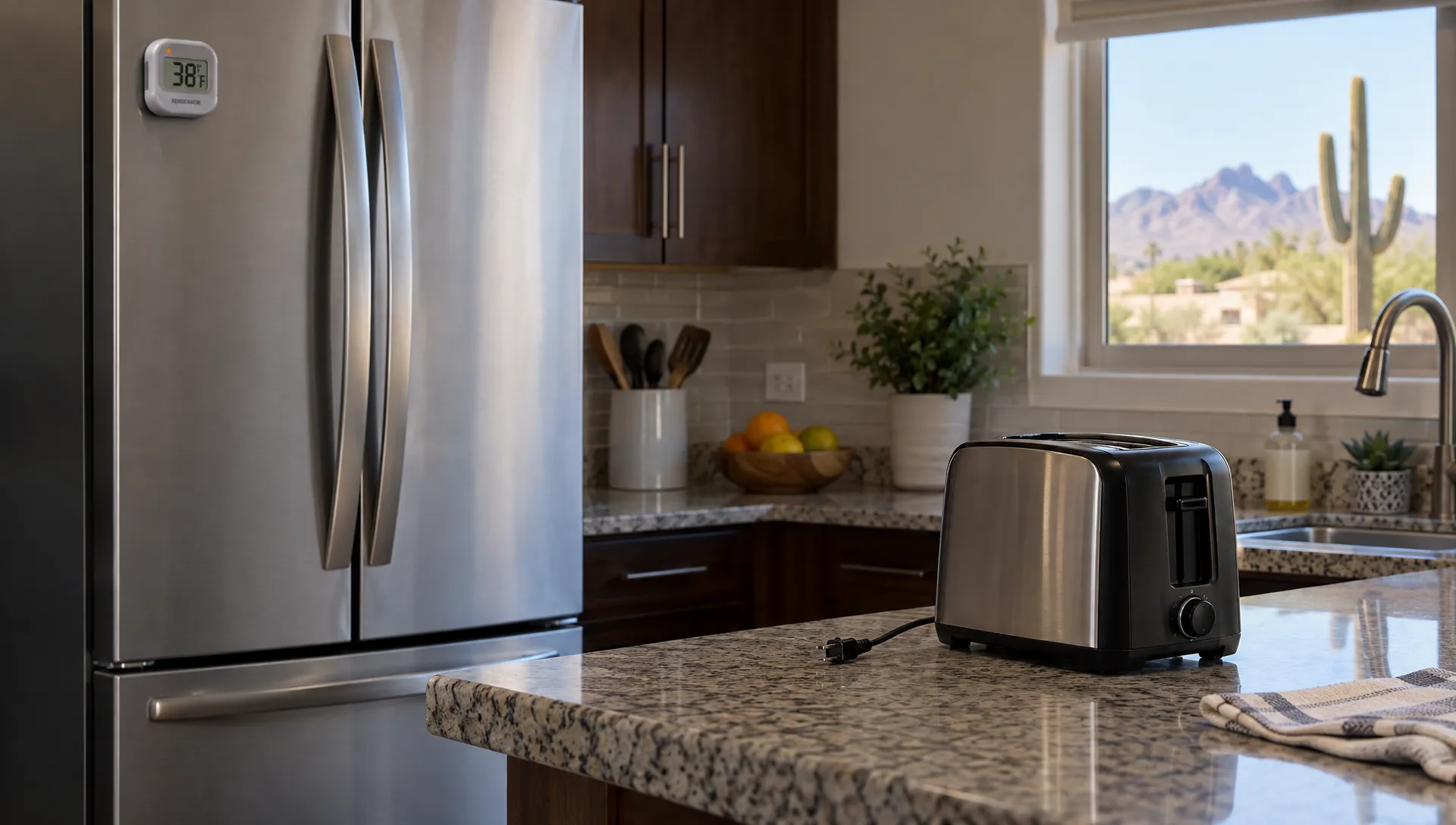
Those are outage guidelines, not a guarantee during a brownout. A refrigerator receiving inadequate power may stop cooling even though its display remains lit. Use an appliance thermometer and track how long cooling has been interrupted.
Keep the refrigerator at 40°F or below and the freezer at 0°F during normal operation. Discard refrigerated perishable food that has been above 40°F for more than two hours. FoodSafety.gov also advises discarding refrigerated perishables after four hours without power or another cold source. Never taste food to determine whether it is safe.
If the interruption continues, move perishables to a cooler with enough ice to maintain 40°F or below. Avoid repeatedly opening the refrigerator to check it. If power stabilizes but cooling does not resume normally, follow these safe first checks for a refrigerator that is not getting cold.
Know when to call an electrician or appliance technician
The right professional depends on whether the trouble follows the electrical supply or stays with one appliance.
| What you notice | Best first action |
|---|---|
| Several rooms have dimming lights or multiple appliances behave abnormally | Contact the utility; involve an electrician if the cause is unclear or appears inside the home |
| Some lights become unusually bright while others dim | Stop using affected equipment and contact the utility and an electrician promptly |
| An outlet is discolored, buzzing or unusually warm | Stop using it and arrange an electrical inspection |
| One appliance still fails after stable power is confirmed | Arrange appliance diagnosis |
| A breaker trips repeatedly when an appliance starts | Leave the appliance off and have the circuit and appliance evaluated; do not keep resetting it |
A dark control panel, lost settings or an error code does not automatically mean the control board needs replacement. The technician may need to distinguish an incoming-power problem from a failed internal component.
Save the time of the disturbance, any utility notice, displayed error codes and a description of the sounds or behavior. These details can help narrow the diagnosis. Avoid removing appliance panels or attempting live voltage measurements yourself.
Frequently asked questions
Will a surge protector protect my refrigerator during a brownout? A standard surge protector generally will not disconnect the refrigerator during sustained low voltage. A compatible voltage-protection device with low-voltage cutoff and restart delay addresses a different risk.
Should I unplug my refrigerator when the lights dim? If sustained voltage trouble is suspected and the plug is safely accessible, turning it off and unplugging it can prevent operation through unstable power. Do not move a heavy appliance or touch a suspect outlet to do so. Keep the doors closed.
Can I use a computer UPS for a refrigerator? Usually not. Compressor startup demands and runtime requirements often exceed ordinary computer UPS capabilities. Any backup system must be explicitly suitable for the appliance’s load and starting requirements.
Does every brownout damage appliances? No. The outcome depends on voltage, duration, appliance design and protective features. Some appliances shut down safely, but repeated abnormal operation still warrants attention.
Make a plan before the next power disturbance
Identify your utility, keep an appliance thermometer in the refrigerator and check the shutdown instructions for major appliances. Ask an electrician about compatible low-voltage protection if disturbances recur.
If an appliance still malfunctions after the electrical supply is stable, use this guide to vetting a home appliance repair technician before booking. Confirm the diagnostic process and fees rather than assuming a brownout means an expensive replacement.