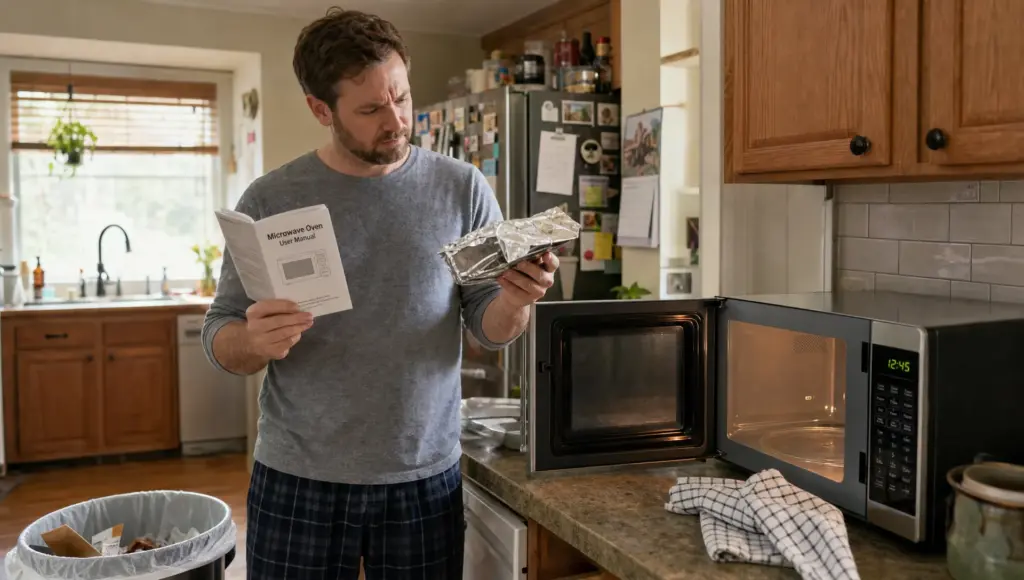
Can you put metal in a microwave? The safest everyday answer is no, unless your microwave manual or the food packaging specifically says that item is microwave-safe. Some metal can be used in very limited situations, but forks, foil scraps, takeout containers with metal trim and travel mugs can create sparks, fire risk or damage inside the appliance.
This guide gives Phoenix homeowners a practical rulebook: what to keep out, what may be allowed, what to do if your microwave sparks and when the issue is no longer a DIY safety check.
So, can you put metal in a microwave?
Most household metal should not go in a microwave. Metal reflects microwave energy instead of absorbing it the way water, fats and sugars in food do. That reflection can concentrate electrical energy at sharp points, thin edges or crumpled areas, which is why a fork tine or twisted foil edge can spark quickly.
There are exceptions. Some microwaves come with a metal rack designed for that exact model, and some foods use engineered crisping sleeves with a thin metallic layer. These are not the same as tossing in a random pan or spoon. If the manufacturer provides instructions, follow them exactly. If you cannot confirm the item is approved, keep it out.
Why metal can spark inside a microwave
A microwave oven uses electromagnetic energy generated by a magnetron. That energy bounces around the cavity and heats food by interacting mainly with polar molecules, especially water. Metal does not behave like food. Instead, it reflects energy and can create strong electric fields around points, ridges and gaps.
Sparks, also called arcing, are more likely when metal is thin, crumpled or pointed. A smooth, flat piece of foil used under strict instructions is less risky than a wadded foil ball, but “less risky” does not mean universally safe. The size of the metal, its distance from the oven walls, the load of food in the cavity and the microwave design all matter.
According to the U.S. Food and Drug Administration, users should follow the manufacturer’s instructions and use microwave-safe containers. That simple rule prevents most problems.
Metal items you should usually keep out
Many microwave accidents start with small pieces of metal people forget about: a twist tie on a bread bag, a foil-lined wrapper, a cup with metallic paint or a takeout box with a hidden wire handle. Even if the item does not spark immediately, it may block heating, overheat surrounding material or damage the interior coating.
| Item | Microwave safety | Why it is risky |
|---|---|---|
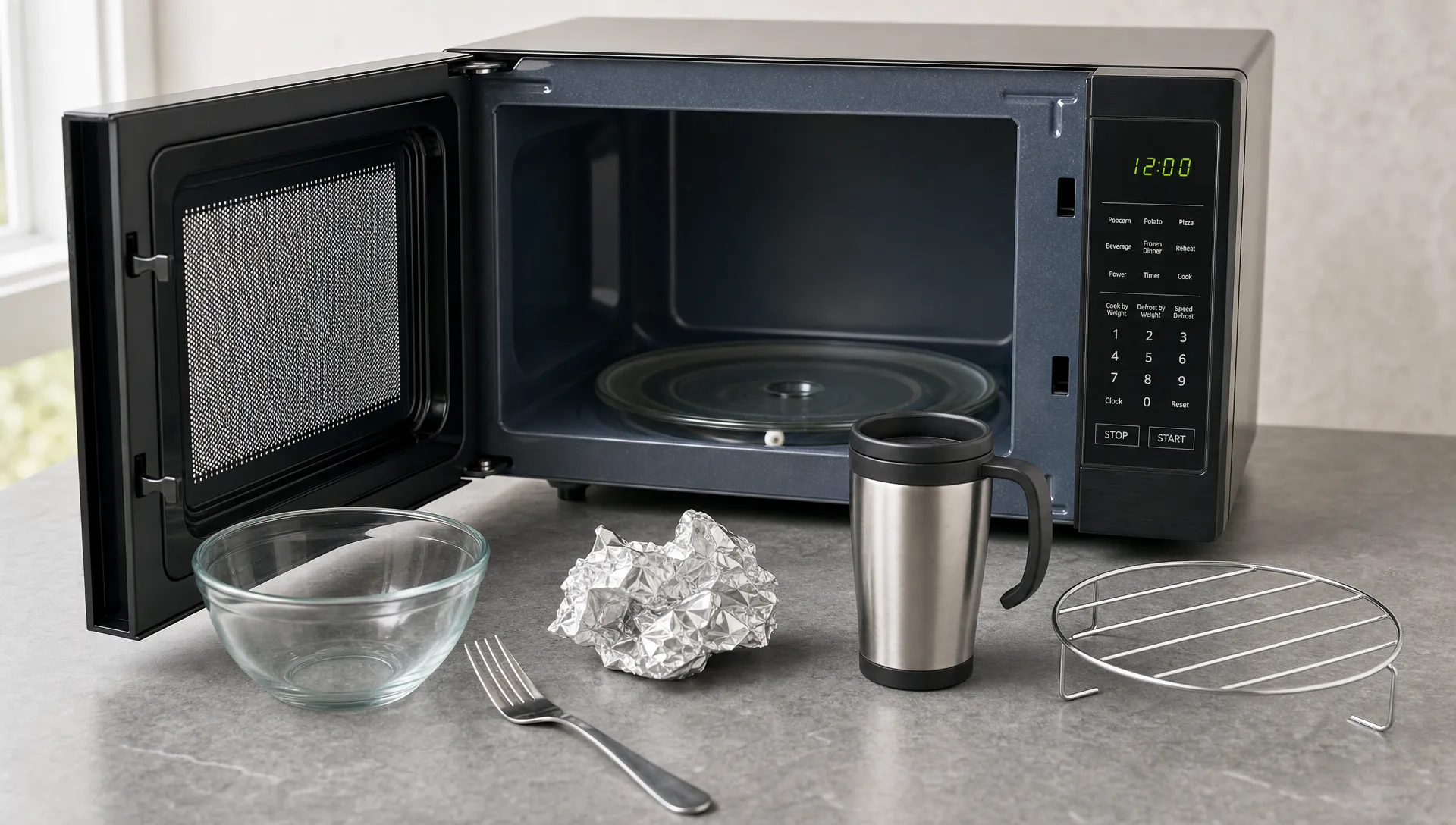
| Forks, knives and spoons | Avoid | Points and edges can arc, especially fork tines |
| Aluminum foil scraps | Avoid unless instructions allow it | Crumpled or thin edges can spark |
| Metal travel mugs | Avoid | They block heating and may overheat or arc |
| Takeout containers with metal handles | Avoid | Wire handles and foil liners can spark |
| Plates with gold or silver rims | Avoid unless labeled microwave-safe | Metallic decoration can arc or flake |
| Wire twist ties | Never use | Thin wire is a common spark source |
| Microwave rack supplied with the oven | Use only as directed | It is designed for certain positions and foods |
| Crisping sleeve or tray from food packaging | Use only as directed | It is engineered for that product, not general use |
If you see metal decoration on a plate or bowl, treat it as unsafe unless the dish clearly says microwave-safe. Older dishes and imported ceramics may not have consistent labeling, so use plain glass or ceramic when in doubt.
When metal may be allowed
Metal is not automatically forbidden in every possible microwave situation. The key is control. Approved metal accessories are shaped, placed and used in ways that reduce arcing risk. Random kitchen metal is not.
Aluminum foil has strict limits
The USDA Food Safety and Inspection Service explains that small amounts of aluminum foil may be used in some microwave cooking situations if the oven manufacturer allows it. The foil must be smooth, should not touch the oven walls and should not cover too much of the food.
In real kitchen terms, foil is not something to improvise with. Do not line the turntable with foil. Do not cover an entire plate. Do not leave foil near the cavity wall. Do not use crumpled foil. If a recipe, package or manual does not tell you to use foil, skip it.
Metal racks and crisping trays are model-specific
A metal rack that came with your microwave is not a normal cooling rack. It is designed for a specific oven cavity, a specific height and specific use cases. Using it incorrectly, or swapping in a rack from another appliance, can create sparking.
The same idea applies to microwave crisping trays and sleeves. Frozen foods such as sandwiches or pizzas sometimes include packaging that uses a metallic susceptor to brown or crisp the food. Use that packaging only for the food it came with and only for the listed time.
What to do if metal sparks in your microwave
If you accidentally put metal in the microwave and see sparks, act calmly but quickly. Most brief arcing incidents do not mean the appliance is ruined, but you should stop the cycle and inspect the cavity before using it again.
- Press stop or cancel immediately: Do not wait to see whether the sparking stops on its own.
- Keep the door closed for a moment if there is smoke: Cutting off extra oxygen can help if a small flame started inside.
- Unplug the microwave if it is safe to reach the cord: Do not touch the appliance if you see flames, melted wiring or active electrical damage.
- Let the interior cool: Hot foil, food packaging or a scorched plate can burn your hand.
- Remove the metal item carefully: Check for hidden foil, twist ties or metallic trim.
- Inspect the cavity: Look for burn marks, peeling paint, a cracked waveguide cover or a damaged turntable support.
If there is an active fire, follow your home fire safety plan and call emergency services. Do not pour water into an energized appliance.
When the microwave needs attention
Stop using the microwave if sparks continue after the metal is removed, if you smell burning plastic, if the interior coating is damaged or if the appliance trips a breaker. Also stop if it runs but no longer heats food properly. That can point to a separate electrical or component problem.
For safe troubleshooting that does not involve opening the cabinet, see this guide to a microwave that runs but does not heat. Do not remove the outer cover of a microwave. Internal components can retain dangerous voltage even after the appliance is unplugged.
How to choose microwave-safe containers
The easiest way to avoid metal problems is to standardize what you use. Plain glass, plain ceramic and containers clearly labeled microwave-safe are the best everyday choices. Lids should be vented so steam does not build pressure, and plastic should be used only if the container is labeled for microwave use.
Avoid containers that are unknown, damaged or heat-warped. Also avoid foam takeout boxes unless the container specifically says it is microwave-safe. Some paper products are fine, but recycled paper bags, printed wrappers and food packaging with foil layers can contain materials that spark or release odors when heated.
A quick preheat check
Before microwaving, scan the item in your hand. Look for metallic shine, foil lining, staples, wire, decorative rims or handles. If the food came in a package, read the heating directions instead of assuming the container is safe.
A simple habit helps: transfer leftovers to a known microwave-safe plate before heating. It adds one dish to wash, but it removes the guesswork that causes many microwave sparks.
Phoenix kitchen safety considerations
Phoenix homes often put heavy demand on kitchen appliances, especially during long hot months when indoor heat management matters. A microwave with blocked vents, a hot plug, a loose outlet or repeated breaker trips should not be ignored. These are not “metal in the microwave” issues, but they can turn a small appliance problem into a larger electrical safety concern.
Build microwave checks into your regular home routine. Look for scorch marks around the outlet, listen for unusual buzzing, make sure the door closes cleanly and keep the vent areas clear. The PHX Appliance Fix Blog also has a helpful monthly electrical appliance safety routine for spotting early warning signs around the home.
If a microwave is old, rusting inside or repeatedly sparking with normal microwave-safe dishes, replacement may be safer than continued use. For built-in or over-the-range models, also consider installation, ventilation and electrical load before deciding.
Common mistakes that lead to sparks
Many sparking incidents happen because the metal is hidden. Butter wrappers may have foil layers. Some takeout boxes have metal clasps. Coffee cups may have metallic lettering. Plates with a thin silver line can look harmless until the line heats and arcs.
Another common mistake is heating very little food in a large microwave. A nearly empty cavity gives microwave energy fewer places to go, which can increase stress on the appliance. Always heat an appropriate food load, use a microwave-safe cover when needed and follow time instructions carefully.
The turntable matters too. If it is off track or blocked by a container that is too large, food may heat unevenly and packaging may sit too close to a wall. Keep the turntable clean and seated correctly before cooking.
Frequently Asked Questions
Can one spark ruin a microwave? One brief spark does not always ruin a microwave. Stop the appliance, remove the metal and inspect the interior. If sparking continues, the cavity is scorched or the microwave no longer heats correctly, stop using it.
Is aluminum foil safe in a microwave? Aluminum foil is safe only in limited situations approved by the microwave manufacturer or food instructions. It should be smooth, small, kept away from the walls and never used to cover an entire dish.
Can I microwave a spoon in a mug? Do not microwave a spoon in a mug. Even if a spoon sometimes does not spark, it can reflect energy, heat unpredictably and damage the mug or microwave.
Why do some microwaves come with metal racks? Some racks are engineered for a specific microwave model and sit at a safe distance from the cavity walls. Use only the rack supplied with that microwave and follow the manual.
What should I do if my microwave smells burnt after sparking? Unplug it if safe, let it cool and clean out any burned food or packaging. If the smell persists, if you see interior damage or if it sparks again, stop using the appliance.
Keep the rule simple
For everyday cooking, treat metal as unsafe in the microwave unless the manufacturer or packaging clearly says otherwise. A few approved exceptions exist, but forks, foil scraps, metal travel mugs, wire ties and metallic dish rims do not belong in the cavity.
When in doubt, transfer food to plain glass or ceramic. If the microwave sparks again after the metal is gone, makes unusual sounds or stops heating, do not open the cabinet to investigate. Use safe exterior checks only and get qualified help when the symptom points beyond normal cleaning or container choice.