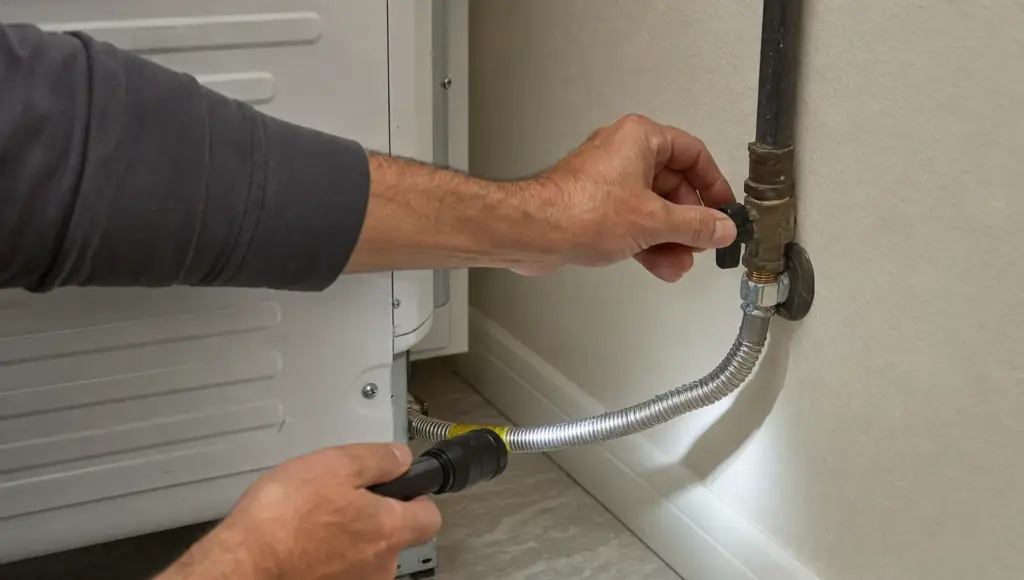
A dryer smells like gas situation should be treated as a safety issue first and a repair issue second. Gas dryers are designed to burn natural gas or propane in a controlled burner assembly, so a persistent rotten egg odor, hissing sound or gas smell when the dryer is off is not something to “test one more time.” Stop using the dryer, keep it off and move to a safe place if the odor is strong or spreading.
Natural gas is odorless on its own, but utilities add a sulfur-like odorant called mercaptan so leaks are easier to detect. That smell is meant to get your attention early. In a Phoenix home, where laundry rooms may sit in garages, tight utility closets or poorly ventilated interior spaces, a small leak can become dangerous faster than homeowners expect.
Dryer Smells Like Gas: Shut It Off Immediately If You Notice These Signs
Shut the dryer down and do not restart it if the gas smell is strong, persistent or returns every time the dryer runs. If the odor fills the laundry room, reaches nearby rooms or seems stronger near the back of the appliance, treat it as a possible gas leak.
If your dryer is running and you can stop it safely without delay, turn it off. If the odor is strong, do not flip light switches, unplug cords, use a phone inside the home or operate anything that could create a spark. Leave the area instead.
According to Southwest Gas safety guidance, people who smell gas should leave the area, avoid using electrical devices or open flames and call 911 plus the gas utility from a safe location. That advice applies even if you suspect the dryer is the source.
Other urgent warning signs include a hissing sound near the gas line, a damaged flexible connector, dizziness, headache, nausea, soot around the dryer burner area or a flame that appears yellow instead of mostly blue when visible through the burner inspection area on some models.
What to Do Right Now If the Odor Is Active
Your first goal is to reduce ignition risk and get people away from the potential leak. Do not spend time troubleshooting while you can still smell gas.
Use this safety sequence when a dryer smells like gas and the odor is active:
- Leave the dryer off and do not restart the cycle.
- Do not use matches, lighters, candles or cigarettes near the laundry area.
- Do not plug in, unplug or switch electrical devices on or off in the affected area.
- Open doors only if you can do so on your way out without delaying evacuation.
- Leave the home and call 911 and your gas utility from outside or a neighbor’s house.
- Keep people and pets away until the gas company or fire department says it is safe.
If the gas shutoff valve is directly beside the dryer, easy to reach and you can turn it without passing through a strong odor cloud, you may close it. The valve is usually off when the handle is perpendicular to the pipe. Do not crawl behind the dryer, move the appliance or disturb the gas line if the odor is strong.
When a Brief Gas Smell May Be Less Urgent
Some gas dryers may produce a faint odor for a few seconds at the start of a cycle, especially after a long period without use. That does not automatically mean there is a dangerous leak, but it still deserves attention if it is new, stronger than usual or happening repeatedly.
A momentary smell should disappear quickly and should not linger in the laundry room. If a dryer smells like gas for more than a few seconds after ignition, or if you smell gas when the dryer is off, stop using it until the cause is found.
Do not try to normalize the odor because the dryer “still works.” A gas dryer can tumble, heat and appear functional while a valve, connector, igniter or burner problem is developing.
Common Causes of Gas Smells Around a Dryer
Gas odor near a dryer can come from the appliance, the gas supply connection or a separate nearby line. The smell alone cannot confirm the source, so the safest approach is to separate emergency response from repair diagnosis.
| Symptom | Possible cause | How urgent it is |
|---|---|---|
| Rotten egg odor when dryer is off | Loose shutoff valve, leaking connector or supply line issue | Emergency, leave and call the gas utility |
| Odor appears only during ignition | Delayed ignition, weak igniter, burner problem or gas valve issue | Stop using dryer and schedule service |
| Hissing near the dryer connection | Active gas leak at valve, fitting or connector | Emergency, evacuate immediately |
| Gas smell plus burning lint odor | Lint near burner area or airflow restriction | Stop using dryer and inspect only after area is safe |
| Yellow flame, soot or headaches | Combustion problem and possible carbon monoxide risk | Stop using dryer and get professional help |
| Smell after dryer was moved | Stressed, kinked or loosened gas connector | Stop using dryer and have the connection checked |
A faulty igniter or flame sensor can allow gas to enter the burner area without reliable ignition. Bad gas valve coils may also cause erratic burner operation. These parts are not safe DIY replacements for most homeowners because diagnosis requires working around gas, live voltage and combustion components.
Why Venting and Lint Can Make the Problem Worse
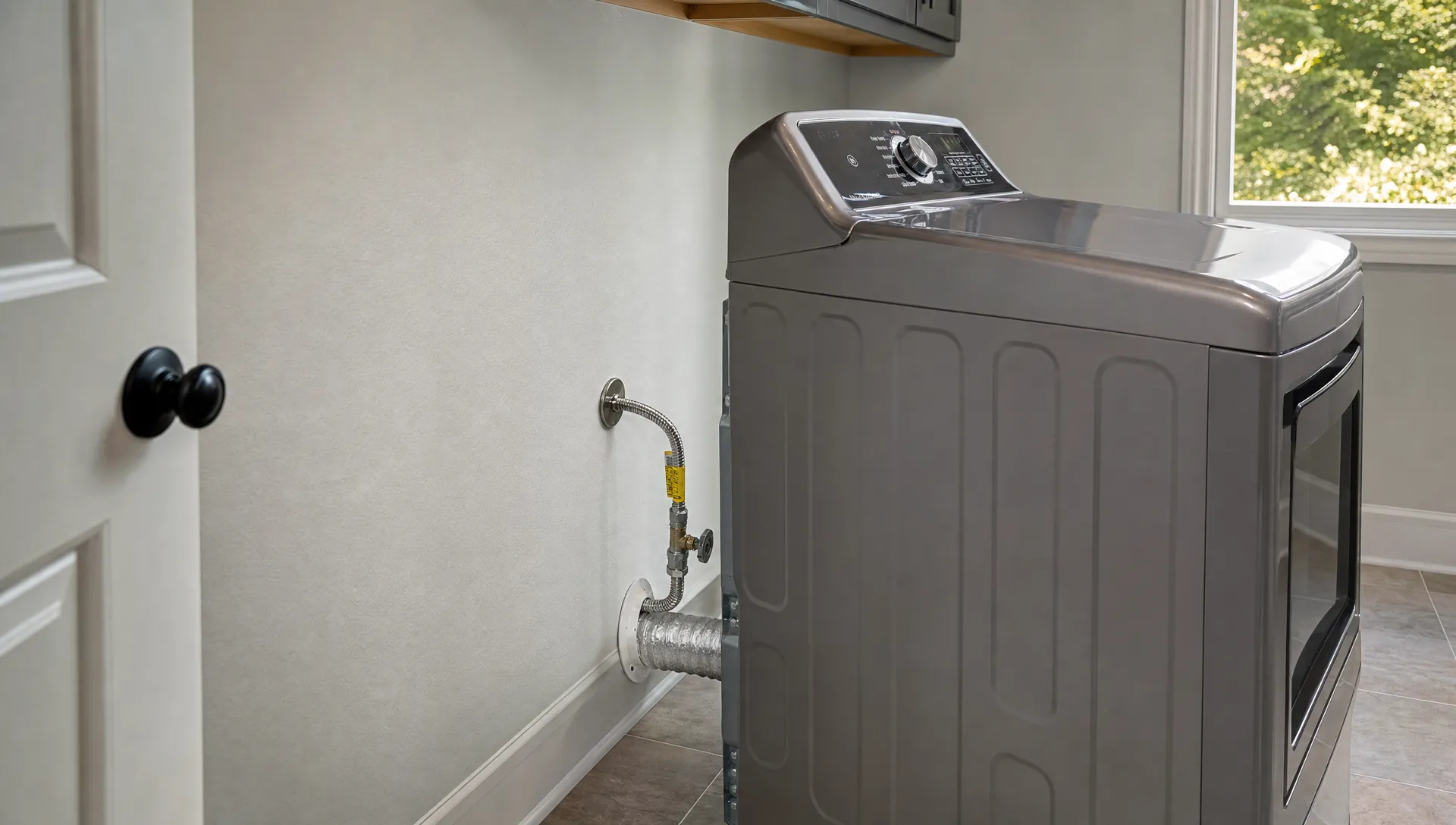
A clogged dryer vent usually causes long dry times, overheating or repeated burner cycling, but it can also contribute to combustion problems in a gas dryer. Poor airflow changes how heat moves through the appliance and can cause safety controls to trip. In severe cases, lint buildup near hot components creates a fire hazard.
If the gas odor has been resolved and the utility has cleared the home, check the basics before running the dryer again. Make sure the lint screen is clean, the exterior vent flap opens freely and the transition duct behind the dryer is not crushed. For non-emergency heating and airflow symptoms, our guide to clothes dryer repair for no heat and long dry times explains safe checks that fit Phoenix homes.
Do not confuse vent maintenance with gas leak repair. Cleaning lint will not fix a leaking valve, loose fitting or defective burner assembly. If the dryer smells like gas again after basic airflow issues are addressed, stop using it and call a qualified technician.
What Not to Do Around a Suspected Gas Dryer Leak
The most dangerous mistakes happen when homeowners try to confirm a leak the wrong way. Never use a flame to test for gas. Do not spray random cleaners around gas fittings, tape over a suspected leak or tighten fittings while gas is actively present in the room.
Avoid pulling the dryer out aggressively. Flexible gas connectors can kink, crack or loosen if the dryer is dragged across the floor, especially in tight laundry closets. If you recently moved the dryer for cleaning, floor replacement or painting, the connection should be treated as suspect until checked.
You should also avoid opening the dryer cabinet to inspect the burner if you are not trained to work on gas appliances. Gas dryers combine fuel, ignition and electricity in one appliance. Our article on DIY appliance repair mistakes to avoid covers why guessing at parts can create more risk than the original failure.
When to Call the Gas Utility, a Plumber or an Appliance Technician
Call the gas utility or 911 first when the odor is active, strong, spreading or present while the dryer is off. They can determine whether the home has an active gas leak and may shut off service if needed.
Call a licensed plumber or gas fitter when the issue appears to involve the shutoff valve, rigid pipe, gas branch line or installation connection. In many cases, appliance technicians service the dryer itself, but gas piping work may fall under plumbing or gas fitting rules.
Call an appliance technician after the area is safe if the smell happens only during dryer operation, if the burner fails to ignite properly or if the dryer also has heat, cycling or airflow problems. When searching for appliance repair Phoenix homeowners should ask whether the company works on gas dryers, what safety checks are included and whether the technician can test ignition components rather than replacing parts by guesswork.
Carbon Monoxide Is a Separate Risk
Natural gas odor tells you there may be a fuel leak, but carbon monoxide is different. Carbon monoxide has no smell, color or taste. A gas dryer with poor combustion, blocked venting or improper exhaust can create carbon monoxide risk without any rotten egg odor.
The CDC explains that carbon monoxide poisoning can cause headache, dizziness, weakness, nausea, vomiting, chest pain and confusion. Symptoms may feel like the flu, but they can become life-threatening.
Every home with gas appliances should have working carbon monoxide detectors installed according to the manufacturer’s directions and local code. Detectors do not replace dryer maintenance, but they provide an important backup warning for combustion problems.
Phoenix Laundry Room Factors That Deserve Extra Attention
Phoenix homes often place laundry equipment in garages, hallways or compact interior closets. Heat, dust and limited airflow can make dryer problems worse over time. During hot months, homeowners may also keep garage doors and laundry room doors closed, which limits fresh air around the appliance.
Lint accumulation can build faster when laundry rooms collect dust from garages, pets or remodeling work. Flexible ducts can also get crushed when dryers are pushed back after cleaning. Add your dryer to a routine home safety check so you catch early warning signs before they become urgent. This monthly appliance safety checklist is a practical place to start.
If a dryer smells like gas after a move, renovation or new installation, stop using it until the connection and burner operation are verified. Installation issues often show up right after the appliance has been shifted, leveled or reconnected.
Safe Checks After the Area Has Been Cleared
Only do these checks after the gas utility, fire department or a qualified professional has said the area is safe. If you still smell gas, leave and call for help again.
Look at the dryer’s position. It should not crush the gas connector or exhaust duct. Check whether the lint screen is clean and whether the exterior vent opens when the dryer runs. Listen for normal ignition only after the dryer has been cleared for use, and stop immediately if the odor returns.
Keep notes for the technician: when the smell appears, how long it lasts, whether the dryer heats normally, whether it was recently moved and whether anyone noticed symptoms like headaches or nausea. Clear details can shorten the diagnostic process and reduce repeat visits.
Frequently Asked Questions
Should I turn off the dryer if I smell gas? Yes, stop using it immediately. If the odor is strong, do not operate switches or unplug the dryer. Leave the area and call 911 and your gas utility from a safe location.
Is a faint gas smell normal when a gas dryer starts? A very brief odor at ignition can happen on some dryers, but it should disappear quickly. If the smell lingers, gets stronger or returns during the cycle, shut the dryer off and have it inspected.
Can I fix a gas dryer leak myself? Most homeowners should not repair gas leaks or burner components themselves. Gas dryer repairs can involve fuel lines, ignition parts, live voltage and combustion testing.
Who should I call first if my dryer smells like gas? If the odor is active or strong, call the gas utility or 911 first from outside the home. After the area is cleared, call a qualified appliance technician or gas professional depending on the source.
Can a clogged dryer vent cause a gas smell? A clogged vent usually causes overheating and long dry times, but poor airflow can contribute to burner and combustion issues. It should be corrected, but it does not rule out a gas leak or faulty dryer part.
Final Safety Takeaway
A gas smell around a dryer is not a wait-and-see repair. If the odor is active, spreading or present when the dryer is off, get out and call for emergency help. Once the home is cleared, bring in the right professional to check the dryer, gas connection and venting before using the appliance again.
For more Phoenix-focused home appliance safety guidance, PHX Appliance Fix Blog offers practical repair tips, troubleshooting guides and maintenance advice to help homeowners make safer decisions before a small appliance issue turns into a major hazard.