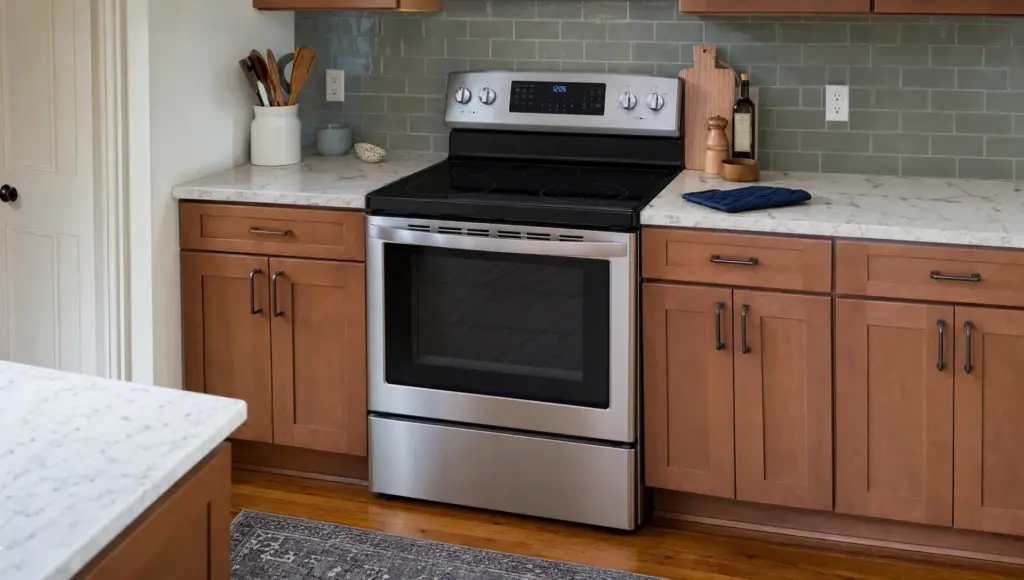
If your electric stove keeps clicking, the sound may be harmless cycling from a relay, but it can also point to moisture, a failing switch or an electrical fault that should not be ignored. The key is to separate normal appliance sounds from warning signs like sparks, a burning smell, breaker trips or a burner that will not turn off.
Electric ranges are designed to make some noises. Smooth-top ranges click as internal relays cycle power to the heating elements. Induction cooktops may click when cookware is detected or power levels change. Coil-top stoves can make small ticks as metal expands. A repeated, fast, new or louder clicking sound is different, especially if it continues after the stove is off.
The safest approach is simple: stop cooking, let the appliance cool, check what you can see without opening the stove and call a qualified technician when the symptoms suggest an electrical problem.
Safety First: When Clicking Means Stop Using the Stove
A single click when a burner turns on or off is usually not an emergency. Repetitive clicking with other symptoms can be dangerous. The National Fire Protection Association lists cooking equipment as the leading cause of home fires and home fire injuries, so stove problems deserve a cautious response.
Turn the burner off and stop using the stove if you notice any of these signs:
- Sparks, flashes or popping from a burner, outlet or control area
- Burning plastic, electrical or smoky smells
- A breaker that trips when the stove is turned on
- A burner that stays hot after the knob is set to off
- Clicking that continues when every control is off and the stove is cool
- A hot wall outlet, scorched plug or damaged power cord
- Error codes, a blank display or controls that do not respond normally
If any of those happen, shut the stove off at the controls. If the appliance appears unsafe or will not turn off, switch off the correct breaker only if you can do so safely. Do not pull the range out, remove panels or touch damaged wiring while the stove is energized.
Why an Electric Stove Keeps Clicking
The cause depends on the stove type, the timing of the sound and what else is happening. A clicking electric stove is not diagnosed the same way as a gas cooktop with an igniter, so start by confirming whether the appliance is truly electric.
Normal Relay Cycling on Smooth-Top Ranges
Many radiant glass-top ranges click as relays switch power to the elements. This is part of normal temperature control. You may hear a click when you turn a burner on, when it cycles to hold a lower heat setting or when the oven element turns on and off during baking.
Normal relay clicking is usually occasional, even and tied to heating cycles. It should not come with sparks, burning smells or loss of heat control. If the clicking is rapid, erratic or paired with a burner that overheats, the control system may need service.
Metal Expansion and Cooling Sounds
Electric burners, drip pans, metal brackets and oven cavities expand as they heat. They contract again while cooling. That movement can sound like ticks, pops or clicks. This is common after a burner has been on high or after the oven has preheated.
Expansion noises should fade as the appliance stabilizes. They also should not continue for long periods after the stove is off. If the sound repeats from one specific burner every time, inspect that area once the range is completely cool.
Moisture or Spills Near Controls
Spills can travel under knobs, around the edge of a glass cooktop or into control areas. In Phoenix kitchens, monsoon humidity and evaporative cooling can also leave appliances exposed to more moisture than usual. Moisture can create intermittent contact, sizzling sounds or clicking from switches and relays.
Do not use heat to force-dry internal parts and do not spray cleaners directly into the control panel. Let the stove cool, wipe visible moisture, leave the controls off and allow time for drying. If clicking continues after everything is dry, there may be a switch or wiring issue.
Failing Infinite Switch or Burner Control
Traditional electric surface burners often use an infinite switch behind each knob to regulate heat. When this switch wears out, the burner may click repeatedly, fail to heat, heat only on high or stay on even when the knob position changes.
A burner that does not respond predictably is not a minor annoyance. The switch controls electrical power to the heating element, so a fault can become a safety issue. Replacement requires testing, correct parts and proper wiring.
Loose Coil Element or Damaged Socket
On coil-top stoves, a plug-in surface element connects to a receptacle under the cooktop. If the element is loose, corroded, cracked or not fully seated, the connection can arc or click. You may also see uneven heating, flickering red spots or discoloration around the socket.
A visibly damaged coil or receptacle should not be used. Replacing the coil may be simple, but replacing the receptacle involves wiring and should be handled carefully.
Control Board or Relay Problems
Modern electric ranges use electronic boards to control burners, oven elements, timers and safety functions. A relay can click as the board tries to send power. Repeated clicking with no heat, random display behavior or error codes may mean the board is failing or receiving poor voltage.
This is not a good DIY guessing game. Control board problems can mimic bad elements, bad switches or supply issues, so a technician will usually test voltage and components before recommending a part.
Match the Clicking Pattern to the Likely Cause
The table below can help you describe the problem clearly if you call for service. It is not a substitute for electrical testing, but it helps narrow the possibilities.
| Clicking pattern | More likely cause | What to do first |
|---|---|---|
| One click when turning a burner on or off | Normal relay or switch operation | Monitor for other symptoms |
| Occasional clicks while a glass-top burner cycles | Normal temperature regulation | Keep cooking if there are no warning signs |
| Clicking after high heat, then fading | Metal expansion or cooling | Let the stove cool and listen again |
| Rapid clicking from one burner area | Loose element, bad socket or switch fault | Stop using that burner |
| Clicking with sparks or burning smell | Arcing, damaged wiring or outlet issue | Turn the stove off and avoid use |
| Clicking when all controls are off | Stuck switch, control board fault or wiring issue | Shut off power if needed and call a pro |
| Clicking after a spill | Moisture near controls or switches | Dry visible moisture and wait before retrying |
If the sound seems more like a gas igniter clicking, your appliance may be gas or dual-fuel. In that case, use the dedicated guide to stovetop burners that will not ignite instead, because the safety checks are different.
Safe DIY Checks Before Calling for Service
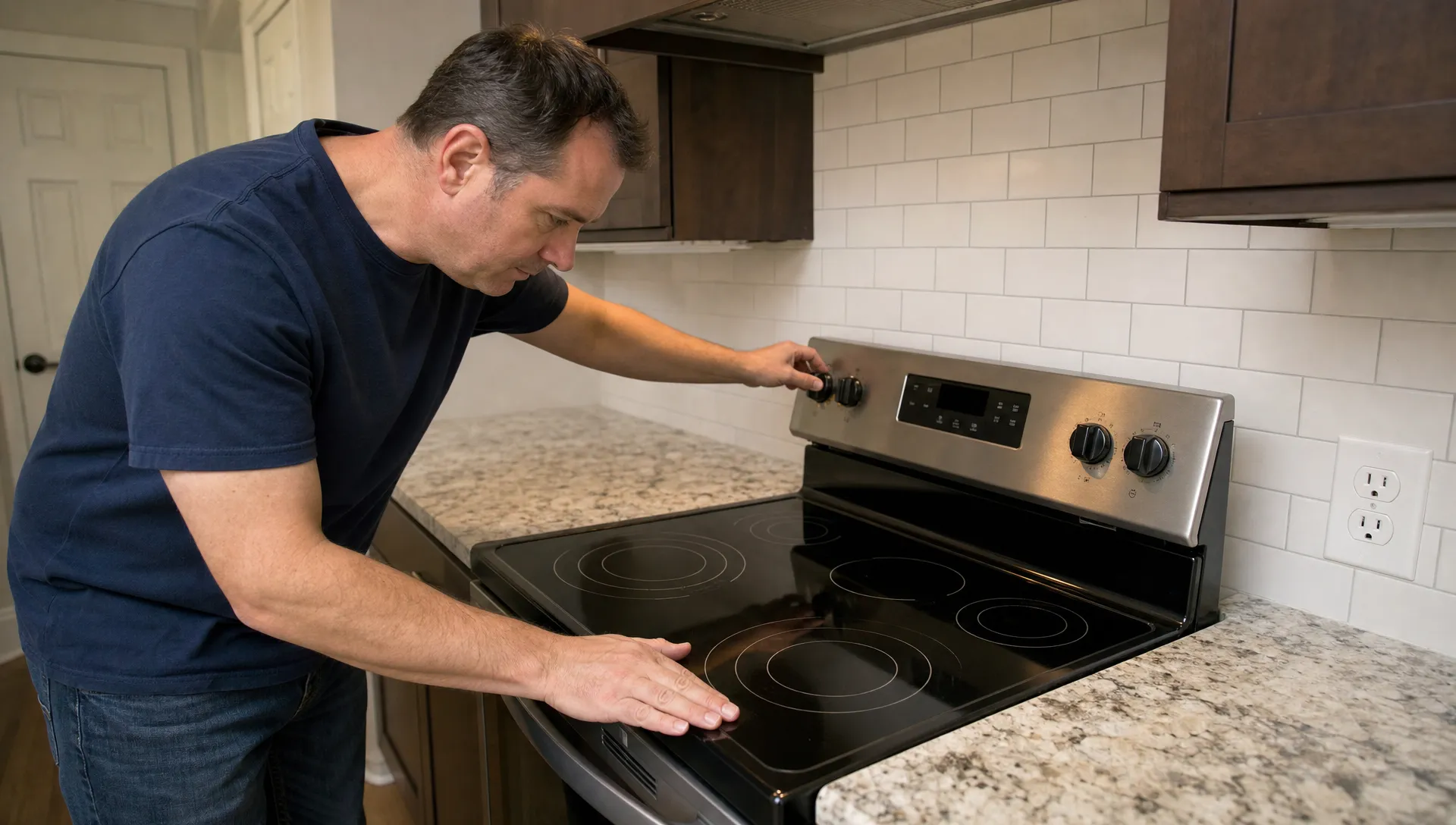
If your electric stove keeps clicking but there are no sparks, smells, hot outlets or breaker trips, you can do a few basic checks. Keep them visual and non-invasive. Do not remove panels or test live electrical parts unless you are trained to do so.
Confirm the Stove Is Off and Cool
Turn all knobs to off, cancel any oven cycle and wait for the hot surface lights to go out. Some ranges continue relay or fan activity briefly after cooking, so give the appliance time to settle.
If clicking continues after the stove is fully cool and off, that is a stronger sign of a stuck control, board issue or electrical fault. At that point, further use is not recommended.
Clean and Dry the Surface
Wipe spills from the cooktop, knobs and trim using a lightly damp cloth, then dry the area. Remove food debris from around coil drip bowls only after everything is cool. Avoid flooding the cooktop with cleaner, especially near seams and controls.
For smooth-top ranges, use a cleaner made for ceramic glass when the surface is cool. Sugary spills should be cleaned promptly because they can damage the glass surface, but safety comes first if the stove is still hot.
Check Knobs and Control Settings
A knob may look off while the switch shaft is slightly engaged. Turn each knob firmly to off. If a knob is cracked, loose or hard to align, remove only the knob, not the control panel, and inspect the plastic insert.
A broken knob can cause confusing symptoms, but it does not explain sparks, burning smells or breaker trips. Those symptoms need professional attention.
Inspect Coil Elements Without Forcing Anything
For a coil-top range, wait until the element is completely cool. Check whether it sits level and appears fully seated in its socket. Look for pitting, burn marks or melted areas near the plug-in ends.
If the coil seems loose, gently reseating it may help, but never force it. If the socket is scorched or the element has damaged terminals, stop using that burner until it is repaired.
Look at the Outlet and Cord Area
Some electric ranges use a large 240-volt cord and outlet. You should not touch bare wiring or pull the stove out if it is heavy or hard-wired, but you can look for obvious signs like a scorched plug face, loose outlet, heat damage or a cord pinched behind the range.
For a broader routine that applies to other appliances too, use these monthly home electrical safety checks to spot problems before they become urgent.
What Not to Do When a Stove Clicks
A clicking stove tempts many homeowners to start taking things apart. That can turn a manageable repair into a shock, fire or damaged appliance problem.
Do not keep using a burner that clicks and sparks. Do not cover a suspicious outlet with tape, bypass a switch, bend element terminals or keep resetting a breaker that trips again. A breaker is a safety device, not an obstacle to work around.
Also avoid online part-swapping if you have not confirmed the failed component. A bad infinite switch, element socket, control board or supply connection can produce overlapping symptoms. Replacing the wrong part wastes money and may leave the unsafe condition in place.
If you want a general repair safety refresher before touching any appliance, review these common household appliance repair mistakes so you know where the DIY boundary should be.
When to Call a Qualified Appliance Technician
Call for service when the clicking is new, frequent, loud or tied to poor burner control. You should also call if the problem returns after cleaning and drying, affects more than one burner or shows up with display errors.
A technician may check the supply voltage, inspect the terminal block, test burner switches, examine coil receptacles and verify whether the control board relays are operating properly. On coil-top models, the repair may involve an element or receptacle. On smooth-top and induction models, diagnosis can involve sensors, boards and wiring under the glass surface.
Local conditions matter. In Phoenix homes, heat, dust and seasonal humidity can stress connections, control panels and range ventilation. If the stove is older, has had repeated breaker trips or was recently moved for flooring or cleaning, mention that when scheduling service.
How to Prevent Clicking Problems From Coming Back
Not every click can be prevented because normal cycling is part of how electric ranges operate. You can reduce avoidable electrical and moisture-related issues with better habits.
Keep the cooktop dry, clean spills after the surface cools and avoid letting liquid run under knobs. Use cookware that fits the burner size so heat is not directed toward controls or trim. For induction stoves, use compatible flat-bottom magnetic cookware because pan mismatch can cause extra noises and uneven performance.
Do not plug high-load cooking appliances into power strips or extension cords. If your range outlet feels loose, looks discolored or sits where the cord is strained, have it inspected. A secure electrical connection is one of the simplest ways to prevent arcing and nuisance clicking.
Finally, pay attention to pattern changes. A stove that has always clicked softly during heating is different from one that suddenly clicks rapidly, smells hot or no longer controls temperature. That change is the signal to stop guessing.
Frequently Asked Questions
Is it normal for an electric stove to click? Yes, some clicking is normal, especially from relays on smooth-top ranges or from metal expanding and cooling. It should be occasional and should not include sparks, burning smells or loss of heat control.
Can I use my stove if it keeps clicking? Use caution. If the clicking is normal cycling and there are no other symptoms, it may be safe. If the clicking is rapid, new, loud or continues when the stove is off, stop using it until the cause is identified.
Why does my electric stove click when it is turned off? A few cooling clicks can be normal after cooking. Continued clicking after the stove is cool may indicate a stuck switch, control board fault, moisture problem or wiring issue.
Can a spill make an electric stove click? Yes. Moisture near switches, knobs or control panels can cause clicking or erratic behavior. Turn the stove off, dry visible moisture and wait. If the problem continues after drying, do not keep using the appliance.
Should I reset the breaker if my stove clicks? You can reset a breaker once if it tripped and there are no visible hazards, but do not keep resetting it. Repeated trips mean there is a problem that needs diagnosis.
What is the difference between electric stove clicking and gas stove clicking? Electric clicking usually comes from relays, switches, expansion or electrical faults. Gas stove clicking often comes from the igniter system. The troubleshooting steps are different, especially because gas introduces fuel and flame safety concerns.
The Safe Bottom Line
A clicking electric stove is not always a crisis, but it should never be ignored when the sound is repetitive, new or paired with heat control problems. Start with simple checks, keep power safety in mind and avoid opening the appliance unless you are qualified.
If the sound points to a switch, socket, wiring or control board problem, the safest solution is a proper diagnosis before the next meal turns into a bigger repair.