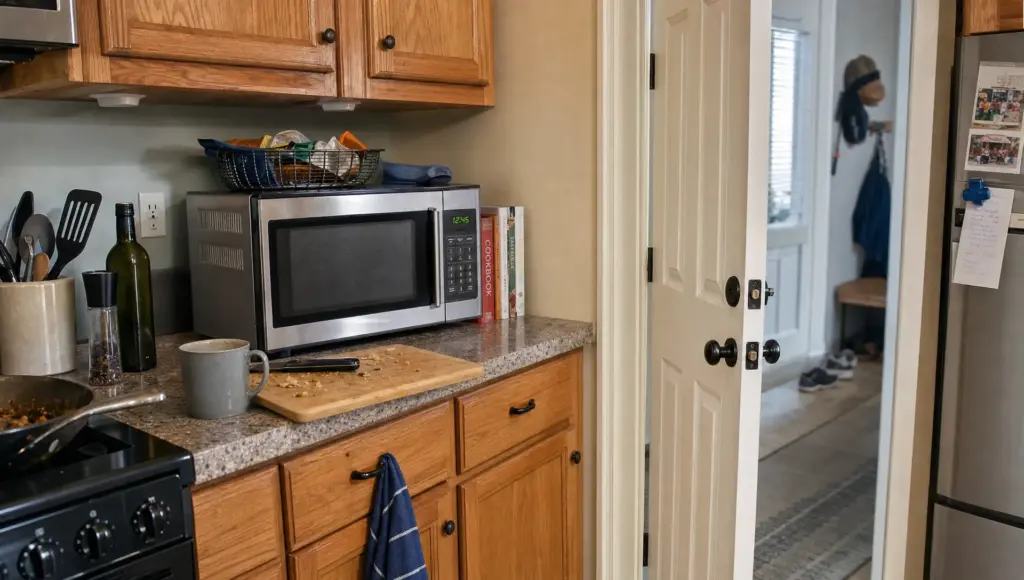
When a microwave door opens by itself, the problem is usually mechanical: the latch hooks are not catching, the door is sitting out of alignment or the release mechanism is sticking. It may look like a small annoyance, but the door latch is part of the microwave’s safety system, so this is not a repair to ignore or work around with tape.
For Phoenix homeowners, the practical question is simple: can you safely clean and inspect the latch area yourself, or is it time to call a technician? This guide explains what is happening inside the door latch assembly, what you can check without opening the microwave cabinet and when the microwave should stay unplugged until it is repaired.
Why a Microwave Door Opens by Itself
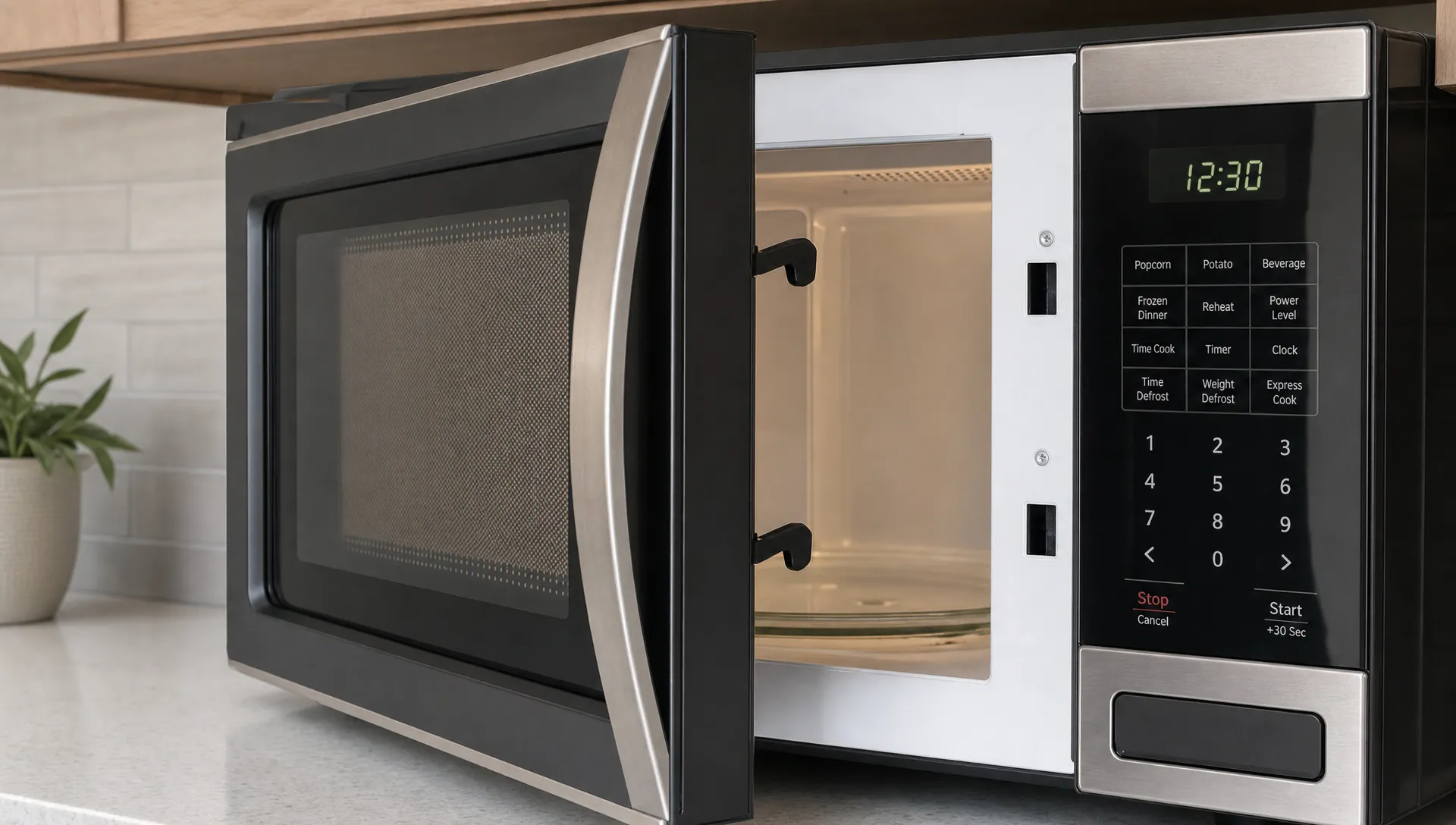
A microwave door is held shut by latch hooks on the door that slide into a catch or latch bracket inside the front frame. When everything is aligned, the hooks click into place and the door stays closed until you press the release button or pull the handle.
If the microwave door opens by itself, one of those parts is failing to hold. The latch hooks may be worn, the catch may be cracked, the door may be sagging or the release button may not be springing back fully. On over-the-range microwaves, a slightly twisted mounting frame can also keep the door from seating evenly.
Microwaves also use door interlock switches. These switches are designed to prevent the oven from operating when the door is open, but they are not the same as the physical latch. A switch problem may stop heating or cause intermittent operation, but a door that physically pops open usually starts with the latch, hinges or door alignment.
| Part | What it does | Common symptom when failing |
|---|---|---|
| Latch hooks | Lock the door into the frame | Door pops open or will not click shut |
| Door catch or bracket | Receives the latch hooks | Door feels loose, uneven or unreliable |
| Release button and lever | Pushes the latch open | Button sticks or door releases too easily |
| Hinges | Keep the door square to the frame | Door sags, rubs or closes unevenly |
| Interlock switches | Confirm the door is safely closed | Microwave may not start or may stop heating |
Safety First: Do Not Tape, Force or Bypass the Door
A microwave with a door that will not stay closed should not be used. The U.S. Food and Drug Administration advises against operating a microwave if the door does not close firmly or if the door, hinges, latches or seals are damaged.
Do not tape the door closed, wedge something against it or slam it harder to make it latch. These shortcuts can damage the latch assembly further and may keep the safety switches from working as intended.
Also avoid removing the outer cover of the microwave. Even when unplugged, a microwave can contain high-voltage components that are dangerous. Homeowner checks should stay outside the cabinet: cleaning, visual inspection, leveling and basic door movement checks.
Common Latch Issues That Make the Door Pop Open
Worn or broken latch hooks
Most microwave doors have two plastic latch hooks. Over time, the tips can wear down, crack or lose the sharp edge that helps them catch. If a hook is chipped, the door may seem to close at first and then pop back open after a second.
You may notice a weak click, no click at all or a door that closes only when lifted slightly. A broken latch hook usually means the door latch assembly needs replacement rather than adjustment.
Dirty latch openings
Grease, crumbs and sticky residue can build up around the latch openings, especially on microwaves installed above a stove. In Phoenix kitchens, fine dust can mix with cooking grease and create a stubborn film around small moving parts.
If the latch hooks cannot slide cleanly into the catch, the door may bounce back. This is one of the safest problems to check because it only requires careful cleaning of the visible latch area with the microwave unplugged.
Misaligned door or sagging hinges
A microwave door must meet the front frame squarely. If one side sits low, the hooks may hit the edge of the catch instead of entering it cleanly. This can happen after years of use, repeated slamming or pressure placed on the open door.
Never lean on an open microwave door or use it as a small shelf. Even light downward pressure can affect alignment on some models.
Sticky release button or handle mechanism
Button-style microwaves use an internal lever that pushes the latch hooks out when you press the button. If the button sticks inward or the lever does not return fully, the door may release too easily.
Handle-style doors can also develop latch wear, but the symptom may feel different. Instead of a sticky button, you may feel extra looseness in the handle or a door that opens with very little pull.
Cracked door catch or frame bracket
The latch hooks connect with a receiver inside the microwave frame. If this catch is cracked, loose or shifted, the hooks may have nothing solid to grab. This problem is less obvious from the outside, but you might see plastic fragments, uneven gaps or a latch opening that looks distorted.
A damaged catch often requires a technician because the repair may involve disassembly near safety interlock components.
Safe DIY Checks Before You Call for Repair
Before scheduling service, there are a few safe checks you can do without opening the microwave cabinet. Unplug the microwave first if you will be cleaning or inspecting the latch area closely.
- Clean the latch openings: Use a soft cloth, mild dish soap and a cotton swab to remove grease around the latch holes. Avoid spraying cleaner directly into the openings.
- Inspect the latch hooks: Look for chips, cracks, missing plastic or hooks that do not move smoothly. Compare the upper and lower hook if both are visible.
- Check door alignment: Close the door slowly and watch whether the top and bottom edges meet the frame evenly. A sagging corner points to hinge or alignment trouble.
- Test the release button: Press and release it several times with the microwave unplugged. It should return freely and should not feel stuck halfway in.
- Confirm the microwave is level: A countertop microwave should sit flat on all feet. An over-the-range model should not feel loose, tilted or separated from the cabinet above.
If your door problem comes with heating issues, a blank display or intermittent operation, the latch may only be one part of the diagnosis. Our guide to a microwave that runs but does not heat explains safe checks for those symptoms without opening the cabinet.
When the Latch Is Not the Only Problem
A microwave door opens by itself most often because of latch wear, but other symptoms can point to a broader issue. If the microwave starts and then stops when the door moves slightly, the interlock switches may not be engaging consistently. If the display flickers when you touch the door, there may be an electrical issue that should not be handled as a DIY repair.
A door that looks bent, warped or separated from the inner panel is also more serious than a dirty latch. The door is part of the containment design of the appliance. If it is physically damaged, replacing a latch alone may not restore safe operation.
Pay attention to smells and sounds too. Buzzing, arcing, burning odors or breaker trips are not normal latch symptoms. In those cases, leave the microwave unplugged and have it inspected before using it again.
Repair or Replace: How to Think Through the Decision
Whether a microwave is worth repairing depends on the style, age and part availability. Countertop microwaves are often less expensive to replace, especially if they are older basic models. Over-the-range and built-in units are usually more involved to replace, so a latch or door repair may make more sense.
| Situation | Repair may make sense when | Replacement may make sense when |
|---|---|---|
| Countertop microwave | The unit is newer and the latch part is available | The appliance is old, low-cost or has multiple issues |
| Over-the-range microwave | The door, latch or switch assembly is the main problem | The fan, control board and heating system also have problems |
| Built-in microwave | Matching the surrounding trim matters | Parts are discontinued or the door is structurally damaged |
| Door damage | Damage is limited to replaceable latch components | The door is bent, cracked or no longer sits flush |
A good rule is to compare the repair estimate with the cost of a suitable replacement, including installation if it is mounted. For over-the-range units, removal and installation can be more work than many homeowners expect, especially when cabinetry or venting is involved.
What a Technician Will Usually Check
A technician will start with the same visible clues: latch hooks, door fit, release action and frame condition. From there, they may remove panels to inspect the latch bracket, monitor switches and wiring safely.
The key difference is that a qualified technician can test interlock switch operation without bypassing safety features. This matters because a microwave can appear to have a simple door problem while also having a switch that fails to register the door position correctly.
If you are comparing Phoenix appliance repair services, ask whether the technician works on your microwave type and brand. Also describe the symptom clearly: “the door pops open after closing,” “the release button sticks” or “the microwave stops when I touch the door” gives better information than simply saying the microwave is broken.
For any appliance repair Phoenix homeowners try to handle themselves, it is worth reviewing the common household appliance repair mistakes that can turn a small repair into a bigger safety problem.
How to Prevent Microwave Door Latch Problems
The easiest prevention is gentle use. Close the door firmly but do not slam it. Press the release button fully on button-style models instead of pulling the door while the latch is still engaged.
Keep the latch area clean, especially if the microwave sits above the range. Grease splatter can harden around the latch openings and make the door harder to close. Wipe the frame, door edge and visible latch hooks during routine kitchen cleaning.
Do not hang towels, pot holders or decorations from the handle. This is especially important on over-the-range models, where the door is opened frequently during cooking. Extra weight and repeated tugging can contribute to hinge wear.
It also helps to include the microwave in a broader home safety routine. Checking cords, outlets, hot plugs and unusual appliance smells once a month can catch problems early, and this monthly electrical appliance safety checklist is a practical place to start.
When to Stop Using the Microwave Immediately
Stop using the microwave and unplug it if the door opens during cooking, does not close firmly or appears bent. Also stop if the microwave runs with the door open, even for a moment. That is a serious safety failure.
You should also pause use if you see cracks around the latch openings, if the door glass or inner panel is damaged or if the appliance makes buzzing or popping sounds when the door moves. These signs go beyond a sticky latch and need professional diagnosis.
If the unit is mounted above the range and feels loose when you open the door, do not keep pulling on it. A mounting issue can create both door alignment problems and a physical hazard.
Frequently Asked Questions
Is it dangerous if my microwave door opens by itself? Yes, it can be. A door that will not stay closed means the latch system is not working reliably. Stop using the microwave until you identify whether it is a simple cleaning issue or a repair problem.
Can I tape the microwave door shut temporarily? No. Tape does not repair the latch and can interfere with the door’s safety design. If the door will not latch normally, the microwave should not be operated.
Why does the door pop open right after I close it? The most common causes are worn latch hooks, a dirty latch opening, a sticky release button, a cracked catch or a sagging door. If cleaning does not fix it, the latch assembly or hinge alignment may need service.
Can a bad interlock switch make the microwave door open? Usually no. Interlock switches monitor whether the door is closed, but they do not normally push the door open. A switch problem can cause starting, stopping or heating issues, often alongside a mechanical latch problem.
Is a microwave door latch repair a DIY job? Cleaning and visual inspection are reasonable DIY steps. Replacing latch assemblies, door catches or interlock switches often requires disassembly near high-voltage components, so it is safer to use a qualified technician.
Should I repair or replace a microwave with a bad door latch? It depends on the microwave’s age, type and condition. A newer over-the-range or built-in model may be worth repairing, while an older countertop unit may be more economical to replace.
The Bottom Line on Microwave Door Latch Problems
A microwave door that pops open is not just annoying. It is a sign that the latch, catch, hinge alignment or release mechanism is no longer holding the door the way it should. Start with safe checks: clean the latch area, inspect the hooks, look for sagging and confirm the release button returns normally.
If the door still opens by itself, if the microwave has electrical symptoms or if the door is visibly damaged, stop using it and get a professional diagnosis. A small latch issue is usually easier to deal with before repeated forcing, slamming or unsafe workarounds make the repair more complicated.